Rayne Dog Treats: The Top 10 Veterinary-Formulated Options for 2026 [Special Diets]
Affiliate disclosure: Paws Dynasty is reader-supported. We may earn a commission when you buy through links on our site, at no extra cost to you. As an Amazon Associate, we earn from qualifying purchases. Learn more about our affiliate disclosure
In this guide 21 sections
If your veterinarian just uttered the words “prescription diet” or “novel-protein protocol,” you already know that the treat jar is about to get a lot more scientific. Rayne Nutrition has spent two decades translating clinic-level nutrition into rewards you can actually hand out without derailing a therapeutic plan. In 2025, their catalogue spans hydrolyzed kangaroo, single-pollock strips, low-fat rabbit crisps, and even renal-support biscuits that smell like cinnamon—not cardboard. Below, we unpack how to navigate the maze of SKUs, decode label claims, and match a Rayne reward to every special-diet dog that lands in your kitchen.
Before you add anything to cart, remember: the best veterinary-formulated treat is the one that 1) keeps your dog’s specific biomarkers in the green zone and 2) still wags the tail. Use the next sections as a living blueprint you can revisit every time your vet tweaks the menu.
Top 10 Rayne Dog Treats
Quick picks
10 picks comparedAdvertiser disclosure: We may earn a commission from links on this page, at no extra cost to you. How we review




Prices and availability can change. Check Amazon for the current price and details.
Detailed Product Reviews
1. BRUTUS & BARNABY Sweet Potato Dog Treats – Support Sensitive Stomachs with USA-Grown, Hypoallergenic Treats That Smell as Good as They Taste
Overview: BRUTUS & BARNABY Sweet Potato Dog Treats deliver single-ingredient goodness from North Carolina farms straight to your pup’s bowl. These thick-cut, USA-grown sweet potato slices are dehydrated without fillers, glycerin, or preservatives, making them ideal for dogs with sensitive stomachs or allergies.
What Makes It Stand Out: The brand controls the entire supply chain—farm to FDA-registered facility—so traceability is bullet-proof. The seasonal variation in thickness and texture is marketed as a feature, not a flaw, proving you’re getting real produce rather than reconstituted mash. A soft-chew sibling product is available for seniors or tiny jaws.
Value for Money: At $27.42/lb you’re paying a premium, but it’s justified by domestic sourcing, third-party certifications, and the fact that one pound equals dozens of low-calorie chews that last longer than biscuits.
Strengths and Weaknesses:
Pros: single ingredient, hypoallergenic, highly digestible, odor pleasantly sweet rather than “dog-treat funky,” thick slices extend chew time.
Cons: price stings versus DIY dehydrating, slices can arrive overly hard in winter batches, resealable strip sometimes fails so bag needs clipping.
Bottom Line: If your dog battles food sensitivities—or you simply want a chew you can pronounce—this is one of the cleanest, safest options on the market. Budget-minded owners might reserve these for special rewards rather than daily snacking.

2. Davie’s Sweet Potato Dog Treats – Healthy, Natural Dog Chews, Low Fat, 1 lb. Bag
Overview: Davie’s Sweet Potato Dog Treats offer another one-ingredient, low-fat chew carved from North Carolina tubers. Dehydrated into russet-orange strips, they give dogs the jaw satisfaction of rawhide minus the choking hazard or mysterious origins.
What Makes It Stand Out: Family-farm sourcing keeps the supply chain short, and the strips are purposely cut thinner than competitors, creating a crisp “chip-like” bite that’s gentler on puppy or senior teeth while still providing chew time.
Value for Money: $22.49/lb lands mid-range for single-ingredient chews. Because the slices are lighter, you get more pieces per pound, stretching the bag further during training sessions.
Strengths and Weaknesses:
Pros: vegetarian rawhide swap, rich in beta-carotene and fiber, no preservatives/grain, easy to snap into smaller portions, dogs love the sweet aroma.
Cons: thin cuts can shatter into sharp shards when dried excessively, inconsistent sizing (some bags 30% crumbs), grease marks possible if sweet potato was cut near the skin.
Bottom Line: A solid everyday chew for households seeking simple, USA-grown nutrition. Check each strip before handing it over, and consider pairing with a dental bone for heavy chewers who finish these quickly.

3. Portland Pet Food Company Pumpkin Dog Treats Healthy Biscuits for Small Medium & Large Dogs – Grain-Free, Human-Grade, All Natural Cookies, Snacks & Puppy Training Treats – Made in The USA – 5 oz
Overview: Portland Pet Food Company’s Pumpkin Biscuits bake organic pumpkin, peanut butter, garbanzo flour, molasses, and cinnamon into crunchy, grain-free cookies. The five-ounce pouch is geared toward training or small-dog households that want human-grade snacking without the filler.
What Makes It Stand Out: These treats are double-baked like Italian biscotti, yielding a light, snap-able texture that doesn’t crumble in pockets. The pumpkin base soothes tummies while cinnamon adds anti-inflammatory flair—rare in commercial biscuits.
Value for Money: Translating to $31.97/lb they’re pricey, but you’re funding organic produce, small-batch baking, and BPA-free packaging. Five ounces lasts surprisingly long because each 12-calorie biscuit can be broken into four training bits.
Strengths and Weaknesses:
Pros: limited, recognizable ingredients, great for sensitive stomachs, vegan, smells like human cookies, snaps cleanly.
Cons: high per-pound cost, molasses makes them slightly sticky in humid climates, not chewy enough for power chewers who expect a workout.
Bottom Line: Ideal for picky or allergy-prone dogs, especially during obedience sessions where aroma and quick consumption matter. Stock up on sale or subscribe-and-save to blunt the sticker shock.

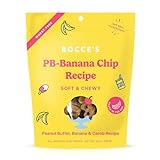
4. Bocce’s Bakery PB Banana Chip Recipe Treats for Dogs, Wheat-Free Everyday Dog Treats, Real Ingredients, Baked in The USA, All-Natural Soft & Chewy Cookies, Peanut Butter, Bananas, & Carob, 6 oz
Overview: Bocce’s Bakery PB Banana Chip cookies are soft-baked, wheat-free squares marrying oat flour, peanut butter, banana, and carob. At 14 calories each, they suit everyday treating for dogs of any size, from toy breeds to treat-motivated giants.
What Makes It Stand Out: The texture is deliberately cake-like—no cracking or crumbs—so senior dogs, puppies, or picky eaters with dental issues can gum them happily. The recipe started in a NYC apartment oven, and the company still bakes in small USA batches, keeping quality tight.
Value for Money: $21.28/lb sits comfortably in the mid-tier natural treat bracket. You receive roughly 30 soft cookies per six-ounce bag, enough for two weeks of daily “good-dog” rewards.
Strengths and Weaknesses:
Pros: short, clean ingredient panel, soft texture eliminates breaking step, resealable pouch keeps cookies moist, aroma entices even finicky dogs.
Cons: softness means they mold quickly if left unsealed, carob drizzle can smear light-colored furniture, not a long-lasting chew for vigorous jaws.
Bottom Line: A lovable staple for households that value palatability and gentle mouths. Store properly and you’ll have a tail-wagging, guilt-free cookie jar that smells good enough for humans—though you should still let the dog have them.

5. Bocce’s Bakery Jerky Stick Dog Treats, Wheat-Free, Made with Limited-Ingredients, Baked in The USA with No Added Salt or Sugar, All-Naural & High-Protein, Turkey & Sweet Potato, 4 oz
Overview: Bocce’s Bakery Jerky Sticks blend hormone-free USA turkey and sweet potato into a pliable, wafer-thin strip. Free of added salt, sugar, corn, soy, or wheat, they deliver high-protein rewards geared toward walks, crates, or agility drills.
What Makes It Stand Out: Only five ingredients hit the recipe list—turkey, sweet potato, vegetable glycerin, vinegar, and rosemary extract—creating a soft jerky that tears effortlessly into pea-size training bits without greasy residue on fingers.
Value for Money: At $43.96/lb these are boutique expensive, yet the four-ounce pouch contains roughly 24 six-inch sticks. Because each stick can be subdivided into 20+ pieces, the cost per reward ends up comparable to mid-range biscuits.
Strengths and Weaknesses:
Pros: high protein/low fat, soft enough for seniors, no off-putting jerky odor, USA-sourced turkey, resealable bag prevents drying.
Cons: steep headline price, sticks sometimes fuse into a block during shipping, thinner dogs can inhale pieces if not torn, only 4 oz means heavy trainers burn through fast.
Bottom Line: Perfect for pet parents who prioritize clean, meat-first incentives and don’t mind paying for convenience. Tear, train, and savor the drama-free ingredient list—just budget accordingly or reserve for high-value moments.

6. Pupford Freeze Dried Training Treats for Dogs & Puppies, 475+ Three Ingredient Bites (Beef Liver, 4 oz)
Overview: Pupford Freeze-Dried Beef Liver Treats deliver single-protein rewards in tiny, calorie-light cubes. With only beef liver, mixed tocopherols, and rosemary extract, the 4-oz pouch yields 475+ pieces ideal for repetitive training.
What Makes It Stand Out: The freeze-drying process locks in aroma while eliminating grease; cubes crumble between fingers for micro-rewards without dirtying pockets or treat pouches.
Value for Money: At $67.56/lb the sticker shock is real, yet each cube costs ~3.5¢ and keeps dogs riveted, making the bag cheaper per successful cue than many lower-priced biscuits you’ll waste on a distracted pup.
Strengths and Weaknesses:
Pros – virtually zero mess, ultra-high palatability, fewer than 1 kcal per piece, single ingredient suits allergy dogs.
Cons – expensive by weight, cubes shatter if carried loose, strong liver scent may offend humans, bag empties fast with large breeds.
Bottom Line: For committed trainers who reward dozens of times per session, Pupford is the cleanest, lowest-calorie motivator on the market—budget watchers should reserve it for high-value moments only.

7. MOUNTAIN WILD Venison Jerky Training Treats for Dogs – Elk & Deer Meat Protein Dog Treat High-Value Reward – All-Natural, No Fillers, Grain-Free, No Preservatives – 8 oz (1 Pack)
Overview: Mountain Wild Venison Jerky squares pack 100% free-range elk & deer meat enhanced with bone-meal calcium. Each 8-oz resealable pouch contains ~100 soft 8-calorie squares designed for high-impact rewards.
What Makes It Stand Out: Wild game sourcing delivers a novel protein most dogs have never tasted, while gentle low-temp baking preserves micronutrients and creates a tender, tearable texture even seniors can chew.
Value for Money: $37.78/lb sits mid-range for premium jerky; ethical wild harvest and added calcium justify the price versus grocery-store meat sticks filled with soy.
Strengths and Weaknesses:
Pros – single-source novel protein, calcium boost for joints, low calorie, easy to tear, no grains or preservatives.
Cons – stronger odor, squares can dry out if left open, limited retail availability, pricey for multi-dog households.
Bottom Line: Owners battling allergies or boredom with standard proteins will see instant enthusiasm; rotate less-costly treats during low-distraction drills to stretch the pouch.

8. Jungle Calling Chicken & Sweet Potato Dog Treats – Gluten-Free, Grain-Free, High-Protein Natural Chews for Medium/Large Breeds, Edible Pet Snacks,10.6 oz
Overview: Jungle Calling wraps skinless chicken breast around dehydrated sweet-potato ropes, creating 10.6 oz of chewy, rawhide-free twists sized for medium and large mouths.
What Makes It Stand Out: The dual-texture design satisfies chewing drive while fiber-rich sweet potato aids digestion; twists snap into smaller segments without crumbling, converting a leisure chew into a training jackpot.
Value for Money: $18.13/lb undercuts most meat-first chews; given the dental scrubbing action and high protein, the bag offers solid functional value.
Strengths and Weaknesses:
Pros – grain/gluten-free, long-lasting chew, helps clean teeth, single visible ingredients, resealable bag.
Cons – too large for toy breeds, can stain light carpets, aroma noticeable, calorie count higher than pea-sized treats.
Bottom Line: Excellent multitasker: use whole for quiet-time chewing, break into strips for class rewards. Keep a cheaper low-calorie option handy to avoid overfeeding during rapid-fire drills.

9. Blue Buffalo Health Bars Crunchy Dog Biscuits, Oven-baked Dog Treats Made with Natural Ingredients, Bananas & Yogurt, 16-oz Bag
Overview: Blue Buffalo Health Bars bake oatmeal, banana, and yogurt into crunchy 16-oz biscuit boxes. Oven-baked texture appeals to crunch-loving dogs while added vitamins & antioxidants support daily wellness.
What Makes It Stand Out: The bakery-style crunch and dessert-like flavor give a “cookie” experience without poultry by-products, corn, wheat, or soy—rare in mainstream grocery biscuits.
Value for Money: $6.36/lb is near-budget territory yet ingredient quality rivals boutique brands, making it the cheapest “clean” crunchy biscuit widely available.
Strengths and Weaknesses:
Pros – inexpensive, no common allergens, fortified with vitamins, hard texture aids plaque control, resealable bag keeps crunch.
Cons – 54 kcal per biscuit limits training frequency, some bags arrive with breakage, not suitable for tiny puppies or seniors with dental issues.
Bottom Line: Perfect everyday “good dog” cookie or occasional high-value reward; break into shards for training variety, but monitor waistlines—those calories add up fast.

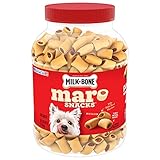
10. Milk-Bone MaroSnacks Small Dog Treats With Bone Marrow, 40 Ounce Container
Overview: Milk-Bone MaroSnacks marry a crunchy biscuit shell with a real bone-marrow core. The 40-oz tub doles out calcium-rich bites sized for small mouths yet scalable to big dogs.
What Makes It Stand Out: Dual texture delivers both the snap dogs crave and the rich marrow flavor typically reserved for messy bones—without the cleanup.
Value for Money: $4.59/lb is bargain-bin pricing for a marrow-inclusive treat; the tub equates to ~200 pieces, costing pennies per serving.
Strengths and Weaknesses:
Pros – unbeatable price, widely available, added calcium, resealable tub prevents staleness, dogs adore marrow center.
Cons – contains wheat and meat by-products, 20 kcal per piece, artificial colors, tub is bulky for travel, some batches have inconsistent filling.
Bottom Line: A classic crowd-pleaser best used as a “life’s little paycheck” rather than a repetitive training pellet; keep a pocketful of lower-calorie treats for rapid cues and save MaroSnacks for jackpot moments.
Why Veterinary-Formulated Treats Matter More Than Ever
The Rise of Canine Chronic Conditions
Allergic dermatitis, chronic pancreatitis, early-stage CKD—2025 prevalence data show that nearly 42 % of dogs over age three now manage at least one long-term ailment. Standard “grain-free” or “limited-ingredient” snacks can still carry mineral loads, fat levels, or cross-contaminating proteins that push a delicate case into the red. Veterinary-formulated lines start with the disease first and reverse-engineer the macro- and micronutrient ceiling accordingly.
Regulatory Landscape in 2025
AAFCO’s new “therapeutic pet food” monograph finally separates clinic-only SKUs from over-the-counter look-alikes. Rayne was one of three companies that helped pilot the auditing protocol, meaning every 2025 bag carries a scannable QR that links to batch-specific digestibility and safety studies—handy ammo when your vet asks for “proof of claim.”
How Rayne’s Approach Differs From OTC “Limited-Ingredient” Brands
Rayne builds on a veterinary practice partnership model: the same board-certified nutritionist who formulates the kibble also designs the companion treat, ensuring a matched nutrient ceiling. Compare that to mainstream brands that often outsource treat R&D to a separate team—or worse, to a co-packer—creating subtle but critical gaps in phosphorus, sodium, or fat that can throw off a therapeutic diet in as little as two weeks.
Key Nutritional Principles Behind Prescription Treats
Macronutrient Ceilings and Floors
Therapeutic diets set both upper and lower limits: protein must be low enough to spare kidneys yet high enough to prevent muscle wasting; fat must be restricted for pancreatitis patients but not so low that coat quality tanks. Rayne mirrors those ceilings in treat form so that up to 10 % of daily calories can come from rewards without busting the prescription.
Micronutrient Precision
When a dog is on a phosphate binder every morning, a single biscuit that adds 0.15 % DM phosphorus can erase the medication’s benefit. Rayne batches are mineral-mapped to the same ppm tolerance as the corresponding diet, something you will rarely find in even premium OTC biscuits.
Allergen Management: Hydrolyzed vs. Novel Proteins
Hydrolyzation chops proteins into fragments too small to cross-link IgE antibodies, ideal for severe adverse food reactions. Novel proteins—think kangaroo, pollock, or rabbit—work by avoidance, but they must be factory-segregated to prevent microscopic cross-contact. Rayne operates a dedicated novel-protein line that runs on a 48-hour purge cycle, longer than the industry standard 12-hour flush.
Digestibility Standards You Should Demand
Look for ≥ 87 % dry-matter digestibility in extruded treats and ≥ 90 % in freeze-dried strips. Anything lower increases colonic fermentation, which can skew fecal consistency and defeat the purpose of a low-residue GI diet. Rayne prints digestibility on every 2025 bag; if the number isn’t there, it’s not a genuine clinic SKU.
Texture & Palatability: Matching Treat Format to Dog Demographics
A 12-year-old Chihuahua with Stage-2 CKD may need a soft, gingival-friendly strip, while a food-allergic Labradoodle puppy still in the chew-everything phase benefits from a crunchy biscuit that doubles as dental abrasion. Rayne’s 2025 texture matrix runs from air-dried “cloud” bits (5 kg bite force) to dense, freeze-dried cubes (35 kg bite force), each coated with species-specific palatant powders that don’t alter the nutrient profile.
Caloric Density & Feeding Math: Keeping Portions Prescription-Perfect
Treats should never exceed 10 % of daily calories, but that rule of thumb is meaningless if you don’t know the dog’s resting energy requirement (RER). Rayne’s new feeding calculator auto-imports your dog’s current therapeutic-diet data and spits out a gram allowance; all you do is weigh the treats on the mini-scale printed inside every box.
Renal Support: Phosphorus, Sodium & Potassium Guardrails
Renal formulas aim for ≤ 0.5 % DM phosphorus and a sodium:potassium ratio between 1:1.2 and 1:1.8. Anything outside that window can accelerate progression of CKD. Rayne’s renal biscuits are batch-tested at three production points and again after the 30-day stability chamber, ensuring the numbers you see on the bag are still valid at the best-by date.
GI-Friendly Options: Fiber Type, Fermentability & FODMAP Load
Soluble beet pulp plus 1 % psyllium husk is the Goldilocks combo for colitis dogs: enough fermentable fiber to nourish colonocytes, not so much that you trigger flatulence. Rayne’s GI strips use that exact ratio and are screened for FODMAP stacking, a 2025 buzzword that refers to the cumulative osmotic load of short-chain carbs.
Pancreatitis & Low-Fat Protocols: What “Ultra-Low” Actually Means
“Low-fat” OTC snacks can still hover at 9–12 % DM fat—dangerous territory for a dog recovering from acute pancreatitis. Veterinary ultra-low targets are ≤ 5 % DM. Rayne achieves 3.8 % by spray-drying hydrolyzed poultry liver onto a pea-protein base, capturing flavor without the triglyceride load.
Dermatology Diets: Omega-3 Index & Antioxidant Synergy
A 2025 study showed that combining 0.3 % DM DHA with 150 ppm vitamin E and 50 ppm lutein reduced pruritus scores 28 % faster than DHA alone. Rayne’s derm treats mirror that antioxidant triad and are packaged under nitrogen flush to prevent lipid oxidation—the hidden reason many high-O3 snacks stop working halfway through the bag.
Joint & Mobility Support: Collagen Peptides vs. Green-Lipped Mussel
Undenatured type-II collagen (UC-II) works by oral tolerance, down-regulating autoimmune joint inflammation at 10 mg/day for a 25 kg dog. Green-lipped mussel supplies ETA and EPA omega-3s but must be stabilized with mixed tocopherols. Rayne’s mobility line offers both actives in separate SKUs so you can rotate or double-target based on radiographic progression.
Transitioning Safely: 7-Day Protocol to Avoid GI Upset
Even a “perfect” treat can cause osmotic diarrhea if introduced too fast. Swap 25 % of the old treat volume every two days, and add a pinch of the dog’s usual therapeutic kibble to the treat pouch so the scent profile stays consistent. Rayne’s transition card includes a QR code to a symptom tracker that uploads data to your vet’s portal in real time.
Reading the Bag: Label Red Flags & Certifications to Trust
Skip anything that lists “natural flavor” without a species source—cross-contamination risk. Look for the 2025 “Vet-TFF” hologram (Veterinary Therapeutic Food Facility) and a batch URL that opens an ISO-17025–accredited COA. If the guaranteed analysis panel omits ash or magnesium, the mineral math is incomplete; request the nutrient profile before feeding.
Cost-per-Calorie Analysis: Budgeting Without Compromising Care
A $28 8-oz bag of freeze-dried rabbit sounds steep until you realize each strip is 2 kcal and your 10 kg dog gets only 8 kcal of treats per day. That’s 35 days—$0.80 daily—cheaper than the average latte. Rayne’s website now auto-sorts SKU price per 100 kcal so you can comparison-shop without a spreadsheet.
Sustainability & Sourcing: Traceability in Veterinary Diets
Rayne’s 2025 kangaroo is wild-harvested under Australia’s EPBC Act quota system, and every pollock lot traces back to a Marine Stewardship Council–certified trawler. Bags are mono-polyolefin, meaning they can be recycled at store drop-off locations—rare in the prescription space where multi-layer foil is the norm.
Storage & Shelf-Life Hacks to Preserve Potency
Omega-3–rich treats lose 15 % potency when stored above 80 °F for 30 days. Keep the bag in the freezer and decant a week’s supply into an amber jar with a desiccant packet. Rayne added a resealable one-way valve in 2025; squeeze the air out before zipping to drop oxidative rancidity markers by 40 %.
Telemedicine & Follow-Up: When to Re-Check Labs After Treat Introduction
Introduce a new treat on the same day you run baseline labs, then recheck at 6 weeks. For renal cases, add a mid-cycle SDMA screen at 3 weeks if you’ve pushed beyond 7 % of daily calories from treats. Rayne’s portal auto-schedules the recheck reminder and emails a dietitian if any value drifts > 10 %.
Frequently Asked Questions
Can I use Rayne treats if my dog is not on a prescription diet?
They’re safe, but the restricted nutrient profile may be unnecessarily low for a healthy dog; consult your vet first.
How do I know if my dog’s condition requires hydrolyzed versus novel protein?
Hydrolyzed is preferred for documented severe IgE reactions; novel is usually step-one for elimination trials.
Are Rayne treats raw or cooked?
All proteins are cooked to commercial sterilization per FDA low-acid canned food standards, then dehydrated.
Can I break the biscuits into smaller pieces without altering dose accuracy?
Yes—calories and nutrients are homogenously mixed, so gram weight is all that matters.
Do I need a prescription to purchase?
Rayne operates under the “veterinary authorization” model; you need a one-time approval that renews annually.
What happens if my dog accidentally eats the whole bag?
Call pet poison control; for renal or ultra-low-fat lines the biggest risk is mineral or fat overload, not toxicity.
Are these treats appropriate for puppies?
Yes, but adjust the 10 % calorie rule to puppy RER and ensure the calcium:phosphorus ratio aligns with growth diets.
How long after opening is the bag good?
30 days at room temp, 90 days if refrigerated, 6 months frozen—always reseal immediately.
Can cats eat Rayne dog treats?
Nutrient profiles are dog-specific; cats need higher taurine and vitamin A—use Rayne’s feline line instead.
Where can I find the batch-specific lab report?
Scan the QR code on the back panel; the PDF opens to the COA hosted on an independent third-party server.
The short version
Still deciding? Start with our #1 pick.
BRUTUS & BARNABY Sweet Potato Dog Treats – Support Sensitive Stomachs with USA-Grown, Hypoallergenic Treats That Smell as Good as They Taste
Ranked first out of 10 picks in this guide.

Keep reading
More in Dog Treats
Training Treats: How Many Is Too Many for a Dog? (2026)
Treats should be about 10% of your dog's daily calories. Here is how to size them,…
Freeze-Dried vs. Jerky Dog Treats: What to Look For (2026)
Freeze-dried and jerky treats are made very differently. Here is how each is produced, how they…
Top 10 Trixie Dog Treats Your Pup Will Go Crazy For [2026 Review]
If your dog lights up at the crinkle of a treat pouch, you already know the…