Kong Small Dog Toys: The 10 Best for Tiny but Mighty Chewers [2026]
Affiliate disclosure: Paws Dynasty is reader-supported. We may earn a commission when you buy through links on our site, at no extra cost to you. As an Amazon Associate, we earn from qualifying purchases. Learn more about our affiliate disclosure
In this guide 18 sections
Tiny dogs have a big secret: their jaws can generate up to 200 pounds of pressure per square inch, yet most “small-breed” toys are little more than plush novelties that unravel in minutes. If your pocket-sized power-chewer has turned slippers, couch legs, and even so-called durable toys into confetti, you already know the struggle is real. The good news? Kong’s reputation for ultra-tough enrichment isn’t reserved for Labs and Shepherds—its small-dog line packs the same aerospace-grade engineering into palm-sized packages designed for 5- to 25-pound warriors. In this guide you’ll learn how to match polymer hardness, toy geometry, and treat-dispensing mechanics to your particular tiny terror so you can finally stop wasting money on cute but doomed playthings.
Top 10 Kong Small Dog Toys
Quick picks
10 picks comparedAdvertiser disclosure: We may earn a commission from links on this page, at no extra cost to you. How we review




Prices and availability can change. Check Amazon for the current price and details.
Detailed Product Reviews
1. KONG Classic Stuffable Dog Toy – Fetch & Chew Toy for Dogs – Treat-Filling Capabilities & Erratic Bounce for Extended Play Time – Durable Natural Rubber Material – for Small Dogs
Overview: The KONG Classic is the gold-standard of durable dog toys, engineered from natural red rubber to survive average chewers while doubling as a treat puzzle. Its hollow core accepts kibble, peanut butter, or KONG’s own fillers, turning a simple fetch toy into a boredom-busting occupation that vets and trainers have endorsed since 1976.
What Makes It Stand Out: The unpredictable, erratic bounce keeps dogs guessing during fetch, and when stuffed and frozen it becomes a long-lasting mental enrichment tool that curbs chewing, barking, and separation anxiety in one reusable package.
Value for Money: At $8.49 for the small size, you’re buying a multi-purpose training aid, chew soother, and meal feeder that outlasts most plush toys by months—making the per-play cost pennies.
Strengths and Weaknesses: Virtually indestructible for moderate chewers; dishwasher-safe cleanup; Made in USA quality. However, power chewers may eventually gnaw off small pieces, and the small size can be swallowed by larger dogs if not sized up.
Bottom Line: If you own a small or average-chewing dog, this is the single most versatile toy you can buy—stuff it, freeze it, fetch it, repeat.

2. KONG Low Stuffing with Squeaker Dog Toy, X-Small, 3 Animals, Bear, Duck, Frog
Overview: KONG’s Low-Stuffing trio delivers three palm-sized plushies—bear, duck, and frog—with just enough filling to keep shape while minimizing the exploded-toy mess most owners dread.
What Makes It Stand Out: Each toy ships with two squeakers (one already inside, one spare) that can be popped out and replaced when the inevitable chomp-through occurs, extending the life of the toy without sewing skills.
Value for Money: $14.19 for three X-small toys breaks down to under $5 apiece—cheaper than most Starbucks visits and far less than replacing couch cushions your terrier would otherwise shred.
Strengths and Weaknesses: Ultra-light and perfect for toy-breed mouths; low fluff means less vacuuming; replaceable squeakers add longevity. Yet the plush fabric is no match for moderate chewers, and determined dogs will gut a critter in minutes.
Bottom Line: Ideal for puppies, tiny breeds, or dogs who treasure squeaky companions over destruction—just remove them when the ripping starts.

3. KONG Wild Knots Bears Durable Dog Toys Size:Small/Med Pack of 2 Small Breeds
Overview: Wild Knot Bears hide a knotted rope skeleton inside a softly stuffed, squeaky plush shell, giving small-to-medium dogs the satisfaction of rope-chewing without the frayed mess.
What Makes It Stand Out: The internal rope satisfies natural shake-and-kill instincts while the minimal stuffing means less white-fluff snowfall across your living room when play gets rough.
Value for Money: Two bears for $21.99 positions these in the premium plush bracket, but the rope core effectively gives you a rope toy and a squeaker toy in one—halving the usual toy budget.
Strengths and Weaknesses: Rope interior adds durability and dental benefits; assorted earthy colors hide dirt; squeaker keeps interest high. Still, heavy chewers can pierce the plush skin quickly, and you can’t choose the color you receive.
Bottom Line: A smart hybrid for moderate chewers who love plush but need something tougher—supervise the first few sessions to gauge durability.
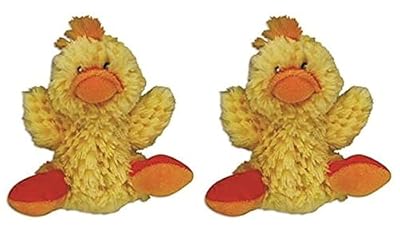
4. Kong Low Stuffing with Squaker dog Toy Small Color:Duck Size:Pack of 2
Overview: This two-pack of low-stuffing duckies targets small dogs that adore squeakers but disembowel standard plush toys in record time.
What Makes It Stand Out: The flat, almost pancake-like body leaves little material to rip out, while the embedded squeaker is recessed deep inside, buying extra minutes before surgical removal.
Value for Money: $11.32 for two small toys lands squarely in impulse-buy territory—less than a deli sandwich and far more entertaining for your pup.
Strengths and Weaknesses: Slim profile fits tiny mouths; minimal fluff equals minimal mess; price is right for multi-dog households. On the flip side, there’s no spare squeaker, fabric tears easily under determined jaws, and the single-character design can bore picky dogs.
Bottom Line: A cheap, cheerful option for dainty chewers or as a rotation filler—just don’t expect survival beyond gentle play.

5. KONG Puppy Tires – Dog Chew Toy for Puppies – Stuffable Dog Toy for Treats & Snacks – Natural Rubber Chew Toy for Teething Puppy – for Small Puppies – Randomly Provided Color
Overview: KONG Puppy Tires adapts the legendary Classic rubber into a donut-shaped teether sized for baby jaws, with a stuffable inner track that can be frozen to soothe sore gums.
What Makes It Stand Out: The soft puppy-rubber compound is 25 % gentler than the adult version, giving emerging teeth a pliable surface to dent without fracture risk, while the tire shape rolls unpredictably for chase games.
Value for Money: Price is unlisted, but KONG puppy items typically retail around $7–9. Given that it redirects chewing from furniture and speeds crate training, the cost is easily offset by saved shoes and sanity.
Strengths and Weaknesses: Freezable channel extends chew sessions and numbs gums; lightweight for tiny mouths; satisfaction guarantee backs durability. Yet aggressive puppy chewers can still shave off rubber, and the random color may clash with your aesthetic.
Bottom Line: An essential starter toy for new puppy parents—freeze, stuff, and watch the little shark choose the tire over your fingers every time.

6. KONG CoreStrength Bone – Dog Dental Chew Toy – Durable, Multi-Layered Dog Toy for Enrichment Play & Dental Care – with Textured Body for Teeth Cleaning – for Small/Medium Dogs
Overview: The KONG CoreStrength Bone is a dual-purpose chew toy engineered for small-to-medium power chewers who need dental care baked into playtime. Its layered construction fuses a rigid nylon skeleton with a softer, textured outer shell that massages gums while scraping plaque.
What Makes It Stand Out: Unlike single-material chews, the multi-layer core gradually reveals new textures, keeping dogs interested far longer than standard nylon bones. The ridged silhouette acts like a canine toothbrush, reaching molars that rope or smooth toys miss.
Value for Money: At $9.99 you’re essentially getting a dental scaler and fetch toy in one; comparable vet dental chews cost twice as much and last half as long.
Strengths and Weaknesses:
Pros – floats for pool play, no squeaker to annoy humans, dishwasher-safe.
Cons – aggressive chewers can flake off rice-sized pieces (safe to ingest but messy), not sized for toy breeds under 10 lb.
Bottom Line: Buy it if your dog destroys plush but still needs gum stimulation; skip if you have a determined giant breed that can swallow chunks.

7. KONG Snuzzles Dog Toy, Plush Squeaker, Crinkle Sounds, Soft Durable Indoor Play (Elephant, Small)
Overview: KONG Snuzzles Elephant is an indoor-only plush that marries three sensory triggers—deep squeak, crinkle film, and marshmallow-soft fabric—into one prey-sized package for small dogs.
What Makes It Stand Out: The oversized squeaker diaphragm produces a low honk rather than the typical high-pitched shriek, sparing human ears while still flipping the “hunt” switch inside your dog’s brain.
Value for Money: $13.99 lands in the middle of the plush market, but reinforced seam taping gives it 2–3× the lifespan of supermarket plushes, evening out the cost per play session.
Strengths and Weaknesses:
Pros – no stuffing to explode, flat shape ideal for shaking, machine-washable.
Cons – canvas trunk can fray into strings, squeaker can be drowned if the toy gets soaked.
Bottom Line: Perfect rainy-day entertainment for gentle-to-moderate chewers; power shredders will still gut it within minutes.

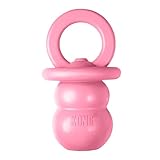
8. KONG Puppy Binkie – Pacifier Dog Toy for Puppies – Stuffable Treat Chew Toy for Treats – Durable Natural Rubber for Teething Puppy – for Small Puppies – Pink
Overview: Shaped like a baby pacifier, the KONG Puppy Binkie uses proprietary soft rubber to soothe teething gums while introducing young pups to treat-dispensing puzzles.
What Makes It Stand Out: The hollow bulb accepts mashed banana, kibble, or frozen broth, turning the toy into a cold compress that numbs sore gums and extends crate time for new owners.
Value for Money: At $8.99 you’re buying a teether, slow feeder, and crate soother—three tools breeders routinely recommend—inside one dishwasher-safe piece.
Strengths and Weaknesses:
Pros – lightweight for tiny jaws, freezer-safe, pastel colors hide drool stains.
Cons – too small for large-breed puppies past 15 lb, rubber can be chewed through once adult teeth erupt.
Bottom Line: An essential first toy for small-breed puppies; graduate to the classic KONG once the permanent teeth arrive.

9. KONG Goodie Bone – Classic Durable Natural Rubber Dog Bone, Supports Mental Engagement – Treat Dispensing – Red – for Small Dogs
Overview: The KONG Goodie Bone is a straight-barrel alternative to the snowman-shaped classic, sized for small jaws and equipped with patented Goodie Grippers at each end to hold biscuits or paste.
What Makes It Stand Out: The bone’s cylindrical body rolls erratically when nudged, keeping dogs guessing during solo play, while the gripper ports prevent treats from dropping out in seconds.
Value for Money: $8.99 mirrors the puppy binkie but offers more rubber volume, giving aggressive chewers more material before replacement.
Strengths and Weaknesses:
Pros – fits most crate slots, can be tethered to furniture for pull games, freezer-safe.
Cons – smooth ends glaze over with drool and slide under couches, not ideal for dogs who prefer vertical chewing angles.
Bottom Line: A solid second-stage KONG for small dogs that have outgrown puppy toys yet still need an edible incentive to chew appropriately.

10. KONG Senior – Dog Toy with Gentle, Natural Rubber – Durable Dog Toy for Older Dogs – Use Treats with Stuffable Chew Toy – Treat Toy for Chewing & Fetching – for Small Dogs
Overview: KONG Senior re-engineers the iconic hollow toy with a softer, springier rubber compound that yields under worn teeth and tender gums while still accepting treats for mental stimulation.
What Makes It Stand Out: The pastel-blue rubber is 25 % more flexible than the classic version, letting arthritic mouths compress the toy without risking tooth fractures—a common vet visit trigger for geriatric dogs.
Value for Money: At $7.49 it’s the cheapest KONG in the lineup and the only one purposely built to protect expensive senior dental work.
Strengths and Weaknesses:
Pros – gentle on gums, bounces low to protect stiff joints, pairs well with senior-formula pastes.
Cons – super-flexible material sacrifices durability; heavy chewers can notch it within weeks, not sized for dogs over 35 lb.
Bottom Line: A must-have comfort toy for aging small breeds; supervise closely and replace at first deep gouge to prevent swallowing rubber slivers.
Why Kong Engineering Matters for Toy-Sized Power Chewers
When a three-pound Chihuahua clamps down, tooth pressure concentrates on a surface area smaller than a pencil eraser. Kong’s Small-Dog R&D team uses computed tomography (CT) scans of miniature-breed dentition to map stress points, then prototypes rubber compounds until the wall thickness resists that pinpoint force without becoming brittle. Translation: the brand’s puppy, senior, and “small dog” formulas aren’t merely downsized classics—they’re reengineered from the molecule up.
Understanding the Kong Rubber Spectrum: From Puppy to Extreme
Kong’s color coding is more than marketing; it reflects graduated Shore A durometer readings. Puppy (pink or blue) sits at 50–55, classic red at 60–65, senior purple at 55–60, and black Extreme at 75–80. For many small dogs, the red zone is the sweet spot, but heavy-chewing terriers often need black. Anything softer and you’ll see imprinted molars within days; anything harder and you risk dental slab fractures.
Size vs. Strength: Avoiding the Two Most Common Mistakes
First, owners overestimate size and buy a “Small” Kong meant for 15- to 35-pound dogs; second, they underestimate strength and choose puppy rubber for a ten-month-old Jack Russell. Always cross-reference weight ranges with the chew-intensity chart on Kong’s packaging, then downsize one notch if your dog gulps—safety first, enrichment second.
Dental Dynamics: How Tiny Mouths Differ from Large Breeds
Miniature breeds have a higher tooth-to-jaw ratio, meaning more enamel contacts the toy at once. Look for Kongs with longitudinal ridges that sweep plaque away without jamming into tight interdental spaces. Avoid deep grooves that can entrap lower canines—a common ER visit for Brussels Griffons and Japanese Chins.
Stuffing Strategies That Turn Chew Time into Brain Time
A frozen Kong buys you 20–40 minutes of quiet, but stuffing for small mouths requires micro-dicing. Use an immersion-blender to purée kibble, goat milk, and a thumbnail of banana, then layer in reverse order of density: liquids first, freeze 20 min, add crunchy toppers, freeze solid. This prevents suction-lock that can frustrate tiny tongues and create destructive chewing frenzies.
Freezing Techniques for Extended, Safe Play
Silicone mini-muffin trays are your freezer hack: pre-portion 1–2 tablespoon Kong fillings, freeze, then pop the puck into the toy cavity. The smaller mass freezes faster and prevents the “ice-cream headache” that makes some small dogs drop the toy and never return.
When to Upgrade (or Downgrade) Rubber Hardness
Replace the toy when you see daylight through the walls, but also watch for behavioral cues: if your dog stops engaging, the rubber may be too hard; if chunks disappear, it’s too soft. Rotate a puppy, classic, and extreme version for 48-hour test cycles to pinpoint the Goldilocks compound.
Interactive Play: Rope, Bounce, and Fetch Variations
Thread a ⅛-inch cotton rope through the small Kong’s hollow to create a flingable projectile that sails 30 feet yet weighs under two ounces—perfect for Yorkie fetch indoors. Knot the rope inside so it doesn’t become a linear foreign body if swallowed.
Cleaning Hacks for Kongs That Have Seen Better Days
Dishwasher top-rack is fine, but for lingering biofilm, microwave the Kong in a bowl of water plus a teaspoon of white vinegar for 60 seconds. Steam loosens leftover fat molecules; vinegar breaks bacterial polysaccharides. Air-dry upside-down on a baby-bottle rack to prevent mildew at the base.
Travel-Friendly Kongs: TSA-Approved Enrichment
The Kong Safestix and small Classic both fit into a 16-ounce barista cup for coffee-shop calm. Pre-stuff, freeze overnight, then slip into a silicone pouch with an ice pack; TSA considers frozen dog toys “cool packs” rather than liquids, so you’ll clear security without a hiccup.
Budgeting: Cost per Chew Hour vs. Replacing Destroyed Plush
A $9 small Kong breaks down to roughly $0.03 per minute of engaged chew time over its six-month lifespan, compared with $0.40 per minute for the average plush toy that dies in ten. Track usage with a phone timer for one week; the math will convert even frugal pet parents.
Safety Checkpoints: Wear Patterns That Signal Retirement
Inspect under LED light weekly for “half-moon” cracks at the opening—stress fractures that precede full splits. Also check for matte whitening along seam edges, indicating polymer fatigue. When either appears, demote the Kong to a stuffing-free fetch toy and introduce a new one for unsupervised chewing.
Eco Angle: Recycling Worn Kongs into Garden Tools
Kong’s natural rubber is biodegradable industrial-grade, so retired toys can become slug-proof seedling collars or drip-irrigation grommets. Slice the sidewall into ¼-inch rings; they flex around delicate stems while releasing trace zinc—an essential micronutrient for tomatoes.
Expert Tips for Multi-Dog Households with Varying Jaw Strengths
Color-code with non-toxic nail polish: one dot for puppy, two for classic, three for extreme. Feed dogs in separate crates to prevent resource guarding, and rotate toys on a 12-hour cycle so each dog associates “new” with calm crate entry, not competition.
Integrating Kong Play into a Daily Enrichment Schedule
Pair each Kong session with a contrasting activity: post-walk frozen Kong for decompression, midday unfrozen for gentle teething, evening stuffed-with-kibble for pre-bed satiety. Log sessions in a planner; small breeds thrive on predictability, and you’ll spot emerging dental or behavioral issues faster.
Frequently Asked Questions
Can a Kong really survive a teething Pomeranian’s needle-sharp canines?
Yes—choose puppy rubber and freeze to add soothing resistance while protecting immature enamel.
How do I know if my small dog needs the Extreme black version?
If red Classic shows deep puncture marks within a week or pieces flake off, graduate to black, but always consult your vet first to rule out dental abnormalities.
Is it safe to leave a stuffed Kong in a crate overnight?
For healthy adult dogs under 25 lb, yes—provided the toy is size-appropriate and inspected daily for wear. Remove any rope attachments to prevent entanglement.
What’s the healthiest low-calorie stuffing for weight-prone Dachshunds?
Pureed green beans, plain pumpkin, and a teaspoon of their regular kibble soaked in sodium-free chicken broth—under 30 calories total.
My dog ignores a frozen Kong; how can I build interest?
Start unfrozen with high-value liver paste, gradually shorten the thaw window over two weeks until the dog works for 30 seconds longer each day.
Are there any Kong small-dog toys made for aggressive tug play?
The Kong Safestix in mini size doubles as a tug toy but always supervise—tiny jaws can torque dangerously if left to self-play.
How often should I replace a small-breed Kong?
Every six to nine months for daily chewers, sooner if you see cracks, or immediately if the toy becomes sticky or emits a sour odor (a sign of rubber oxidation).
Can I microwave a Kong to warm stuffing in winter?
Ten seconds maximum on 50 % power; overheating degrades rubber polymers and can burn your dog’s mouth.
Do Kongs help with small-dog separation anxiety?
When paired with a systematic departure protocol, a frozen long-lasting Kong acts as a positive predictor of alone time, reducing cortisol spikes measured in salivary tests.
Where can I recycle old Kongs responsibly?
Kong’s Colorado facility accepts clean returns for playground mulch; alternatively, contact local community gardens—many repurpose them as eco-friendly plant stakes.
The short version
Still deciding? Start with our #1 pick.
KONG Classic Stuffable Dog Toy - Fetch & Chew Toy for Dogs - Treat-Filling Capabilities & Erratic Bounce for Extended Play Time - Durable Natural Rubber Material - for Small Dogs
Ranked first out of 10 picks in this guide.

Keep reading
More in Dog Toys
![Puppy Chewing Everything In Sight: Top 10 Solutions That Work [2026]](https://m.media-amazon.com/images/I/51Qd6T4RegL._SL400_.jpg)
Puppy Chewing Everything In Sight: Top 10 Solutions That Work [2026]
Your new puppy’s adorable until you discover they’ve turned your vintage sofa into modern art. Chewing…

10 Best Natural Dog Toys Made from Eco-Friendly Materials (2026)
Your dog’s tail starts wagging the second you reach for a toy, but have you ever…

The 10 Best Oscar Dog Toys for Hollywood-Level Fun (2026 Brand Spotlight)
Lights, camera, wag-tion! If you’ve ever watched a beloved movie star pooch strutting the red carpet…