Fluval ProVac & More: The 10 Best Aquarium Gravel Cleaners of 2026
Affiliate disclosure: Paws Dynasty is reader-supported. We may earn a commission when you buy through links on our site, at no extra cost to you. As an Amazon Associate, we earn from qualifying purchases. Learn more about our affiliate disclosure
In this guide 18 sections
Keeping an aquarium sparkling clean isn’t just about crystal-clear glass—it starts where most debris hides: the substrate. A gravel cleaner is the unsung hero that prevents toxic gas pockets, keeps fish waste from fermenting, and preserves the delicate balance of beneficial bacteria. Whether you’re tending neon tetras in a 10-gallon rimless cube or managing a reef-ready 180-gallon showpiece, the right cleaner can cut water-change time in half while safeguarding livestock and live plants from dangerous ammonia spikes.
Below, we’ll dive deep into what separates an average gravel vac from a true pro-level tool. You’ll learn which features impact suction, how vacuum heads affect mulm removal without uprooting stems, why integrated water changers matter, and how smart technology is quietly revolutionizing routine maintenance. By the time you finish, you’ll know exactly what to look for—no arbitrary “top 10” lists required—so the next substrate siphon you buy will feel tailor-made for your setup.
Top 10 Fluval Provac Petsmart
Quick picks
2 picks comparedAdvertiser disclosure: We may earn a commission from links on this page, at no extra cost to you. How we review


Prices and availability can change. Check Amazon for the current price and details.
Detailed Product Reviews
1. Fluval ProVac Dual Density Filter Pad – 4 pack
Overview: The Fluval ProVac Dual Density Filter Pad 4-pack is a purpose-built replacement set designed exclusively for the Fluval ProVac gravel vacuum system. These pre-cut pads slot into the quick-change cartridge to trap floating debris during water changes, eliminating the tedious netting that usually follows a gravel-cleaning session.
What Makes It Stand Out: Unlike generic filter floss, each pad combines a coarse top layer for large waste with a fine bottom layer that polishes water crystal-clear. The die-cut shape pops in without trimming, and the 4-pack covers roughly 8–12 typical cleanings, depending on tank bioload.
Value for Money: At $9.99 for four, the cost averages about $2.50 per session—less than a single bottle of water-conditioner. Considering the time saved re-vacuuming cloudy water, the pads pay for themselves after the first use.
Strengths and Weaknesses: Strengths: perfect fit, dual-stage filtration, sturdy enough to rinse and reuse once for light jobs. Weaknesses: not biodegradable, only compatible with the ProVac model, and a single heavily stocked tank can clog a pad in minutes.
Bottom Line: If you already own the Fluval ProVac, stockpile these pads. They’re inexpensive, effective, and turn a messy chore into a one-step process. Without them, the vac’s key advantage disappears.
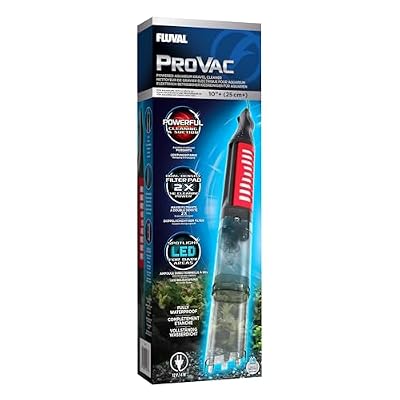
2. Fluval 11077 ProVac Powered Aquarium Gravel Cleaner – Aquarium Gravel Vacuum
Overview: The Fluval 11077 ProVac is a mains-powered gravel vacuum that turns water changes into a near-effortless plug-and-play operation. No buckets, no battery fade—just lower the telescoping wand, select speed, and watch mulched waste ride up the clear barrel and into the snap-in dual-density filter pad while clean water returns to the tank.
What Makes It Stand Out: A built-in LED spotlight illuminates shadowy corners where detritus hides, and the pause button instantly stops suction, releasing any gravel that’s traveled too far up the tube. An included extender reaches 24-inch-deep tanks without torso-twisting yoga poses.
Value for Money: At $52.69 the unit costs about twice a manual vac plus pump, but it slashes maintenance time by half and pays for itself in saved water treatments and fish stress. Replacement pads are inexpensive, and the motor carries a 2-year warranty.
Strengths and Weaknesses: Strengths: consistent suction, no clog gravel guard, ergonomic pistol grip, optional hose adapter for larger water changes. Weaknesses: cord limits mobility, not submersible past the handle, and the motor housing is bulky in small nano tanks.
Bottom Line: For anyone with tanks 20 gallons and up, the ProVac is the closest thing to a “self-cleaning” aquarium. Buy it, stock the pads, and enjoy gravel cleaning that feels less like plumbing and more like power-washing.
The Critical (and Often Underestimated) Role of Gravel Cleaners
Substrate acts like a coffee filter: it traps uneaten food, plant detritus, and fish waste. Left undisturbed, these organics decompose into hydrogen sulfide, nitrate spikes, and phosphate bombs that trigger algae blooms. A gravel cleaner mechanically lifts this sludge before it mineralizes, making it the first line of defense against poor water chemistry. Without regular vacuuming, even frequent water changes become mere dilution, not detoxification.
Mechanical vs. Chemical Filtration: Where the Gravel Vacuum Fits
Canister filters polish water, and UV clarifiers zap green water, but neither can separate sludge locked between granules. A gravel vacuum supplies the physical agitation needed to dislodge particulates so your filter can finish the job. Think of it as the pre-wash cycle; skip it and mechanical media clogs faster, reducing flow and starving beneficial bacteria of oxygen-rich water.
Siphon Physics 101: How Gravel Cleaners Actually Lift Mulm
A gravel cleaner works on a simple principle: pressure differential. Raising the discharge hose above tank level creates a low-pressure zone at the vacuum bell mouth, pulling water—and whatever’s suspended in it—out. The trick is controlling that flow so sand isn’t catapulted into your bucket while mulm is. Diameter, length, and head design all tweak velocity, dictating whether you deep clean a coarse planted substrate or tickle delicate pool-filter sand.
Manual vs. Battery-Powered vs. Electric: Choosing the Right Energy Source
Hand-siphon gravel vacs rely solely on gravity, making them silent and affordable but potentially tiring over large volumes. Battery models add a micro impeller for automatic priming and debris suction, ideal for turtle tanks where swift waste removal keeps shell rot at bay. Fully electric units pair pumps with integrated filters, returning cleaned water to the tank—perfect for cold-water aquariums where matching tap temperature is tricky. Your stock list, tank size, and even your own back health should steer this decision.
Understanding Flow Rate: Balancing Power With Substrate Safety
Aggressive flow can uproot carpeting plants and stress scaleless bottom dwellers, while weak flow merely rearranges detritus. Manufacturers express flow in gallons or liters per hour (GPH/LPH), but the figure you really need is effective velocity at the intake slits. A bell with diffusion grids or a guard plate tames velocity while maintaining suction. Adjustable valves let you throttle output to suit fine sand one day and river rock the next.
Vacuum Head Design: Slotted Intakes, Grate Guards, and Pick-Up Tubes
Slim cylindrical pick-up tubes target corner waste, but their narrow mouth clogs quickly. Wide rectangular heads cover more surface area per plunge, while elliptical bells with staggered slots allow lateral suction—handy for heavily rooted aquascapes. Grate guards stop curious cory cats from kissing the impeller and keep cryptocoryne runners from vanishing down the hose. Tool-free snap-on heads adapt to both shallow nano setups and deep reef beds.
Hose Length & Diameter: Avoiding Kinks, Clogs, and Back Strain
A hose that’s too short forces you to lift buckets above tank level, risking arm strain and water spills. Too long, and friction dramatically saps suction. Aim for a run that reaches your sink plus two extra feet—enough slack to loop over a tank brace but not so much that the hose coils into kinks. Inner diameters between ½” and ¾” balance debris passage (even small snail shells) with manageable water flow; anything narrower invites chronic blockages.
Built-In Water Changers: Combining Siphoning With Freshwater Return
Premium systems integrate a submersible pump that not only vacuums but sends aged water to the drain, then flips a valve to draw treated replacement water from a reservoir, returning it through the same hose. This eliminates lugging buckets, reduces temperature shock, and aerates new water under surface agitation. Look for models with a priming window so you can dose de-chlorinator immediately, ensuring no free chlorine hits your biofilter.
Filtration Stages Inside Gravel Cleaners: From Sponge to Fine Floss
Some electric gravel cleaners carry integrated filter cartridges. A coarse sponge grabs snail poop and plant scraps, fine floss polishes suspended particulates, and optional activated media strips dissolved organics—useful when detritus clouds would otherwise smear your viewing panels. Disposable pouches are convenient, but reusable foams lower long-term cost and keep excess waste out of landfills.
Smart Sensors & Automated Features: Are They Worth It?
Cutting-edge units include optical sensors that pause suction when water level drops below the heater, protecting pumps from dry-run meltdowns. Others sync with aquarium controllers to log how many gallons you exchange weekly, tracking nitrate trends on a phone. While hobbyists with one tank may find this overkill, automated logging solves disputes between family members over whose turn it is for maintenance—and prevents tragic double-dosing of fertilizers after one partner already did a change.
Pairing Gravel Cleaners With Sand, Gravel, or Soil-Based Substrates
Sand compacts into anaerobic zones, so a gentle hover technique lifts detritus without suctioning grains. Small-diameter bells keep flow velocity low. Coarse gravel allows deeper plunges that stir colonies of mulm percolating at the bottom. Nutrient-rich aqua soils crumble under aggressive agitation—use an outlet reducer and pulse suction to protect pellet integrity. Prevent soil clouds by positioning the intake just above the substrate; you’ll capture fish waste while leaving the laterite intact.
Noise, Vibration, and Household Considerations
Impeller-driven cleaners transmit vibration through tank glass, which can startle timid discus or distort aquascape silicon seams. Rubber-coupled motor housings dampen resonance, while DC brushless pumps run quieter than older AC varieties. If your aquarium doubles as a living-room conversation piece, opt for units rated under 45 dB—about the hush of a quiet library—and schedule cleanings during daylight when ambient noise masks any remaining hum.
Maintenance & Sterilization: Preventing Muck Build-Up in the Tool Itself
A gravel cleaner becomes a breeding ground for bacteria if you stash it wet. After each use, run a diluted bleach solution (1:20) for two minutes, then rinse with de-chlorinated tap until the chlorine smell dissipates. Allow all parts to air-dry completely—mold thrives in dark hoses. Disassemble impeller shafts monthly; hairline algae strands wrap around the rotor, straining the motor and shortening battery life.
Budgeting for Longevity: Replacement Parts, Batteries, and Warranty
Check availability of consumables: O-rings, impeller blades, filter socks, and battery packs. A cheap unit with pricey proprietary cartridges may eclipse the cost of a top-tier model over three years. Opt for brands with a two-year warranty on motors and a five-year spares guarantee; nothing is worse than shelving a $150 device for want of a $2 valve diaphragm. User forums often flag companies that honor—or evade—warranty claims.
Safety Tips: Heaters, Fry, and Electrical Code Around Water
Always power down heater stats and canister filters before inserting a powered gravel cleaner; stray voltage can arc to stainless elements. Use a GFCI outlet, and if an extension cord is unavoidable, elevate connections on a drip loop to avoid immersion. In fry-rearing tanks, fit a fine mesh breeder net over the intake to guard newborns that resemble specks of dust. Wear closed-toe shoes in case of catastrophic hose detachment—90 gallons on bare feet is no joke.
Frequently Asked Questions
How often should I gravel-vac my aquarium?
For lightly stocked planted tanks, every two weeks is sufficient. Heavily stocked cichlid or goldfish setups benefit from weekly passes.
Will siphoning remove beneficial bacteria?
Most nitrifying bacteria colonize filter media and hardscape, not loose mulm in substrate, so routine vacuuming actually supports biofilter health by reducing oxygen demand.
Can I use a gravel cleaner in a salt-water reef?
Yes, provided the model is rated for marine use—corrosion-proof impellers and seals prevent salt creep from seizing moving parts.
Do battery-powered models run the risk of leaking voltage?
Reputable units feature fully sealed DC motors, but you should still plug any powered device into a GFCI outlet for peace of mind.
How do I avoid sucking up aquarium plants?
Use a vacuum head with a guard grate, employ a swirling motion instead of deep plunges, and pinch the hose to reduce flow near delicate stems.
Is tap-water chlorine exposure during water changes harmful?
If you dose a quality de-chlorinator into the tank just before refilling, residual chlorine will be neutralized before it harms beneficial bacteria or fish.
What’s the best way to start a siphon without mouth-priming?
Fill the vacuum bell in the tank, lift and drain into the hose until water reaches the sink, then lower—it creates a continuous flow without tasting fish water.
Can gravel cleaners help fight algae?
By exporting nutrient-laden detritus, they lower phosphate and nitrate levels—key triggers for green-water blooms and filamentous algae outbreaks.
Why does my gravel vac keep clogging?
Likely culprits are snail shells, plant roots, or excess sludge; choose a wider-diameter hose and swap to a head with larger intake slots.
Are smart gravel cleaners Bluetooth or Wi-Fi dependent?
Most entry-level smart features use Bluetooth for localized control; only premium models log data via Wi-Fi. Neither function is mandatory—you can still operate them manually.
The short version
Still deciding? Start with our #1 pick.
Fluval ProVac Dual Density Filter Pad - 4 pack
Ranked first out of 2 picks in this guide.
