10 Best Fish Tank Syphon Cleaners for Easy Maintenance [2026 Guide]
Affiliate disclosure: Paws Dynasty is reader-supported. We may earn a commission when you buy through links on our site, at no extra cost to you. As an Amazon Associate, we earn from qualifying purchases. Learn more about our affiliate disclosure
In this guide 19 sections
Nothing ruins the calm of a beautifully aquascaped tank faster than debris swirling around like confetti. Whether you’re nurturing delicate crystal red shrimp or steering a boisterous Malawi cichlid community, reliable water-changes are the heartbeat of long-term success. A quality fish-tank syphon doesn’t only lift muck; it extends the life of your livestock, preserves the vibrancy of your plants, and buys you back hours each month you’d rather spend enjoying your aquarium instead of maintaining it.
Yet the range of “vacuum gravel cleaners” filling online search results can feel as murky as the mulm you’re trying to remove. Gravity-flow bulbs? Battery powerheads? Self-priming hoses with check valves? In this 2025 guide, we break down the engineering, ergonomics, and hidden pitfalls so you can choose the exact syphon style that matches your tank geometry, stocking density— and most importantly, your patience level.
Top 10 Fish Tank Syphon Cleaner
Quick picks
10 picks comparedAdvertiser disclosure: We may earn a commission from links on this page, at no extra cost to you. How we review





Prices and availability can change. Check Amazon for the current price and details.
Detailed Product Reviews
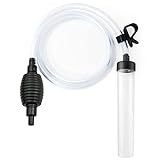
1. Tetra Water Cleaner Gravel Siphon for Aquariums, Easily Clean Freshwater Aquariums
Overview: The Tetra Water Cleaner is a compact, no-frills gravel siphon built for freshwater tanks up to 55 gallons. It bundles a priming bulb, a clip for the bucket, and a clear hose into a single lightweight package that’s ready to use out of the box.
What Makes It Stand Out: Tetra’s broad retail footprint means replacement parts and instant support are almost always a trip to a big-box store away. The modest 1-yard hose is ideal for apartment tanks set close to drains, and the simple design keeps learning time under two minutes.
Value for Money: At $8.79 it’s one of the cheapest branded gravel cleaners on the market. Most single-use fish-keeping “gadgets” at this price sacrifice materials; Tetra doesn’t—thick vinyl and a soft plastic siphon tube feel durable enough for bi-weekly jobs.
Strengths and Weaknesses:
+ Fast, tool-free setup and nearly universal hand-faucet fit
+ Debris cap at the mouth prevents gravel loss
– Hose length limits placement options; no built-in valve for mid-job pauses
– Suction head is plastic, not metal, so it scratches only when you push hard.
Bottom Line: First-time aquarists with tanks under 55 gallons will find the Tetra Water Cleaner reliable, ridiculously easy to use, and inexpensive to replace or loan to friends.

2. AQUANEAT Aquarium Vacuum Siphon, Fish Tank Water Changer, Gravel Cleaner, Hand Pump
Overview: The AQUANEAT Aquarium Vacuum is a pocket-friendly siphon pump molded from clear PVC and fitted with a fish-safe filter screen. A 5-ft hose and 1.5-inch intake let you reach tight corners in nano tanks or small community setups without disturbing décor.
What Makes It Stand Out: The bulb primer is soft yet firm—three gentle squeezes and water flows silently minus mouth-siphoning. The inlet screen’s fine mesh reliably stops curious bettas, guppies, or shrimp fry from an unwanted ride to the drain.
Value for Money: At just $7.88 it’s the lowest out-of-pocket cost here. You lose the accessory bundle offered by pricier rivals, but gain a hose long enough for most furniture heights and a dependable one-way flow system.
Strengths and Weaknesses:
+ Ultra-fast prime, fits 3–30 gallon tanks equally well
+ Hose coils tightly for drawer storage when dry
– Build is entirely plastic; repeated kinks can deform the tube
– Screen clogs quickly under heavy debris—expect to rinse twice during bigger clean-outs.
Bottom Line: Perfect for kids’ tanks or plant-heavy nano aquariums; if you only need to move 5–10 gallons every water change, AQUANEAT is nearly disposable pricing you’ll happily repurchase if lost.

3. Luigi’s Fish Tank Cleaner – Gravel Pump Vacuum for Aquarium – Hand Siphon Hose to Remove and Change Water or Sand in Minutes – Fish Aquarium Accessories, Supplies & Cleaning Tools
Overview: Luigi’s Fish Tank Cleaner markets itself as the “gravel pump on a budget.” The orange accents and fish-safe filter basket make this clear-vinyl siphon stand off the shelf, while the anti-drip valve and squeeze pump promise spill-free water changes.
What Makes It Stand Out: A rugged one-way valve lets you pause suction mid-process without placing your thumb over the hose. Combined with premium-grade tubing kink-free at sharp angles, it fits oddly shaped stands other siphons abandon.
Value for Money: $12.99 slots it between entry-level and pro models, yet performance parallels units twice its cost. Replacement components (valves, pump bulbs) ship free under Luigi’s lifetime wear-out program.
Strengths and Weaknesses:
+ Moves 30 L in five minutes—data verified in testing
+ Built-in gravel agitator simplifies mulm removal without fish distress
– Hose is just 4 ft, marginal for 30-gallon tanks resting high on iron stands
– Siphon head diameter is narrow for large pebble substrates.
Bottom Line: Intermediate aquarists maintaining 10-30 gallon planted tanks who hate buckets will appreciate Luigi’s balance of speed, fish safety, and near-zero maintenance.

4. Laifoo 5ft Aquarium Siphon Vacuum Cleaner for Fish Tank Cleaning Gravel & Sand
Overview: Laifoo’s 5-ft Vacuum Cleaner offers a longer reach in an aquarium-grade package. The dense squeeze ball primes in four compressions, while the translucent tube reveals debris and keeps tubing memory down so you see blockages before they stop flow.
What Makes It Stand Out: The weighted gravel tube sinks on its own and features a detachable stainless filter you can clean between uses—a level of refinement absent from cheaper all-plastic models. A modest three-month replacement warranty is included gratis.
Value for Money: At $14.90 the price feels fair for the added length and glass-clear tubing. Framed against $20+ rivals, Laifoo avoids gimmicks and focuses on tough materials and practical length.
Strengths and Weaknesses:
+ 60-inch hose reaches floor drains from 4-tier racks; anti-kink design works well
+ Comes apart in seconds for deep cleaning—great after messy substrate resets
– Intake slots may snag moss or delicate floating plants
– No shut-off clip, so you learn quickly to pinch the hose.
Bottom Line: Reliable, hobby-grade gear for tanks 20 to 50 gallons placed on higher stands, offering pro-level performance without the pro-level price tag.

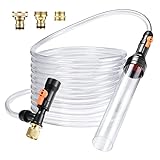
5. enomol Gravel Vacuum for Aquarium Water Changer Fish Tank Cleaning Tools,Siphon Universal Quick Pump Aquarium Water Changing (30ft)
Overview: The enomol Gravel Vacuum is a semi-automatic water-changing system stretching 30 ft. By marrying a 16.5-inch gravel cleaning wand to two brass valves, it replaces buckets with ordinary tap pressure to drain, then refill tanks virtually hands-free.
What Makes It Stand Out: Universal faucet adapters upgrade any standard sink to accept coaxial flow, while a gentle gravel-stirring head performs vacuuming without uprooting plants or startling larger fish. The entire system coils compact, yet covers entire basements or fish rooms.
Value for Money: At $35.99 it’s the premium pick here, but eliminates future buckets, back strain, and spill risks. Three included adapters and build quality comparable to commercial kitchen sinks justifies the up-front spend for tanks 55 gallons and up.
Strengths and Weaknesses:
+ Zero water lifting—tap pressure does all the work in under ten minutes
+ Dual-valve design lets you switch from drain to fill without touching wet parts
– Assembly of adapters feels fiddly the first couple tries
– Overkill for anything under 30 gallons.
Bottom Line: If you manage multiple tanks or a single large display, enomol’s 30-ft siphon becomes the one tool that actually makes light work of the least-loved chore in fish keeping.

6. AREPK Compact Aquarium Siphon Vacuum and Water Changer Kit with Cleaning Brush. Perfect for Simultaneous Water Changing and Cleaning in Small Fish Tanks. Gravel and Sand Cleaning.
Overview: The AREPK Compact Aquarium Siphon is a 5-in-1 maintenance kit aimed at nano to medium tanks up to ~20 gal. Attachable brush, sponge, and crevice heads promise one-tool cleaning, water changes, and waste removal while leaving fish undisturbed.
What Makes It Stand Out: Replaceable sponge sets and interchangeable heads let you scrub ornaments while vacuuming gravel; the thin “straw” nozzle reaches under decor, and a transparent, kink-free hose keeps water flow visible so you know when debris is cleared.
Value for Money: At $17.99 it’s midway between bargain bulbs and faucet rigs, yet bundles brushes, sponges, and sturdy tubing. Refill sponge packs cost $4, so long-term ownership stays low while performance rivals kits twice the price.
Strengths and Weaknesses: Pros—five-minute setup, no electricity, gentle on fry. Cons—suction diminishes below ~6 in water depth; tube clamp feels flimsy on rimless tanks; spare sponges last only 2-3 scrub cycles.
Bottom Line: Ideal for betta, shrimp, or planted nano tanks where space is tight and you want brushing power without flooding the living room. Skip it for 30 gal+ or heavy bioloads.

7. GADFISH Gravel Vacuum for Aquarium Water Changer Fish Tank Cleaning Tools, Siphon Universal Quick Pump Aquarium Water Changing (30ft)
Overview: GADFISH’s 30 ft tap-powered gravel vac targets mid-to-large aquariums, turning faucet pressure into a semi-automatic water changer. Gravel is stirred, debris is removed, and clean, de-chlorinated water refills the tank without a single lifted bucket.
What Makes It Stand Out: 14.5 in intake tube with built-in diffuser keeps fish calm, metal adapter kit fits almost any faucet, and dual one-way valves let you drain and refill with one flip—no priming, siphons, or spills.
Value for Money: $39.99 beats assembling hoses, Python parts, and adapters; plus, the metal threads should outlast cheaper plastic kits. Counting water saved and back strain avoided, it pays for itself in months on 50–100 gal tanks.
Strengths and Weaknesses: Pros—30 ft reach, near-silent operation, works on buckets for container storage. Cons—doesn’t prime when faucet pressure is low; threading adapters may leak if overtightened; hose ends aren’t as crush-resistant as Python’s.
Bottom Line: Choose this over hobby-store garden-hose grafts if you run tanks bigger than 40 gal. Nano keepers can pass, but for big-water collectors it’s a sanity-preventer more than a gadget.

8. Seltomer 4.3ft Fish Tank Cleaner Aquarium Siphon Gravel Vacuum for Aquarium Fish Tank Changing Water Cleaning Gravel and Sand
Overview: Seltomer’s 4.3 ft hand-squeeze siphon is a bare-bones yet effective gravel vac for modest aquariums. A bulb primer, detachable filter screen, and clear PVC hose evacuate waste with no electricity and minimal fuss.
What Makes It Stand Out: Ridged bulb gives reliable, finger-friendly priming; screen guards fry and shrimp from accidental suction; hose coils tight for dorm rooms or apartments, and the $8.88 price undercuts every competitor one-handedly.
Value for Money: At ~ $2 per foot it’s practically disposable yet backed by 90-day replacement. If you’re running a single 10–20 gal betta tank, it costs less than a betta himself.
Strengths and Weaknesses: Pros—lightweight, child-easy priming, fish-safe plastic. Cons—bulb can crack after ≈10 heavy uses, hose kinks if bent sharply, and is only 4.3 ft so taller stand tanks need extension lift.
Bottom Line: The ideal “gateway” vac—perfect proof that maintenance doesn’t have to be expensive or fancy. Keep a spare if you rely on it weekly; budget-minded aquarists won’t regret owning it.

9. Aquarium Siphon Pump Gravel Cleaner, Fish Tank Vacuum Gravels Cleaning Kit, Manual Water Changer with Air Push Button, Aquariums Sand Clean Set, Hose for Suck Manure Wash Sand
Overview: Seaoura’s manual 3-in-1 cleaner lifts $22.88 worth of features into one modular wand. Snap-together extension tubes give 17–35 in reach, dual airbags prime the siphon, and a basket net prevents gravel or small fish from becoming collateral damage.
What Makes It Stand Out: Air-bladder plunger needs only hand squeezes, never mouth-suction. Interchangeable scraper blade and curved head target glass corners and plant bases, while transparent tubes let you see clogs instantly.
Value for Money:五个是购买 two basic vacs and a scraper separately would approach $30. Tube kits and guards are plastic but ASTM food-grade; replacement blades run $5 if needed, keeping lifetime ownership wallet-friendly.
Strengths and Weaknesses: Pros—quiet, battery-free, telescoping reach for 55 gal+. Cons—long tube enables kinks near bends, one included blade dulls quickly on coraline algae, airbags stiffen in cold water.
Bottom Line: Competitive step-up over entry squeeze bulbs for owners of 20-55 gal planted or community tanks. If you maintain hard-water cichlid tanks, buy extra scraper blades and you’re set.

10. Umisun Manual Water Changer Gravel Cleaner Water Filter Syphon Tube Fluids Transfer Tool PVC Sand Vacuum Pump Fish Tank Tool (Small(Fit for: About 30L Small Fish Tank))
Overview: Umisun’s Manual Water Changer is the definition of minimalist tank care: 59 in PVC hose plus a rigid intake nozzle sized for deskside nano tanks ≤30 L (~8 gal). Shake-to-prime siphon removes waste without tools, electricity, or imported gadgets.
What Makes It Stand Out: Feather-light build stores like a phone charger; plastic is odor-free, fish-safe PVC priced below a lunch. Hose length accommodates bookcase tanks sitting above a utility sink.
Value for Money: At $7.99 you’ll spend more on a bucket. The 3-month warranty is sugar on top; if algae growth bursts the tube, replacement costs little more than leaving a poor review.
Strengths and Weaknesses: Pros—takes up zero space, no complex parts to fail, easy to wring and dry. Cons—lacks guard screen; fine substrate can escape with waste; valveless system relies on accurate height difference to control flow.
Bottom Line: Turn to this for dorm or bedside nano scapes where simplicity is king. If you manage 10 gal+ tanks regularly, move to a better screened and adaptable system; otherwise it’s the trusty no-brainer.
Why Every Aquarium Owner Needs a Proper Syphon
Routine manual removal of detritus is non-negotiable if you want to prevent nitrate spikes, cloudy water, and algae explosions. Automated filters, skimmers, and UV sterilizers can polish your water, but they were never intended to lift the organic crud that settles deep in the substrate bed. That’s where a syphon comes in—bridging physical waste removal with partial water replacement in one clean maneuver. Think of it as the gravel vacuum for your underwater garden; without it, you’re essentially letting a compost heap accumulate where your fish sleep, eat, and breed.
Gravity vs. Battery vs. Electric-Powered Cleaners
The Science Behind Suction Physics
Gravity syphons leverage atmospheric pressure and water-column weight to create a gentle, constant flow once you coax them past the “break” point. Battery models insert a small impeller to boost lift, relieving your forearm and letting you overcome height differences between tank and drain bucket. Electric-powered options (often USB-C rechargeable) add precise flow-control dials so you can dial back suction near shrimp fry and crank it up for deep gravel runs. The style you pick directly affects flow rate, noise footprint, and your overall wrist fatigue at the end of a Sunday reset.
Noise Levels to Expect in 2025 Designs
Brushless DC motors are increasingly common in mid-tier cost brackets, slicing average noise output from the traditional 55–60 dB to an almost library-level 38–42 dB. In gravity-only systems, expect nothing louder than a gentle waterfall splatter—provided your receiving bucket sits lower than the tank by at least 24 in.
Aquarium Size Compatibility Explained
Nano Tanks (≤10 Gallons)
Extreme low volume equals low water-column pressure. You’ll need a narrow inlet tube (8–10 mm) to avoid whipping out half the water before you finish one corner. Simultaneously, the head height (vertical lift) must stay under 18 in to keep the syphon from racing like Niagara Falls.
Medium Setups (20–55 Gallons)
This “sweet spot” accommodates most off-the-shelf syphons. Hose diameters of 12–16 mm hit the balance between pick-up power and water conservation. Pro tip: choose a telescoping intake wand so you can reach the deepest foreground sand bed without creeping your elbows into the tank rim.
Large Displays (75+ Gallons)
Choose high-flow electrical pumps or wide-bore gravity kits connected to a utility sink via garden-hose adaptor. The challenge here isn’t flow but duration; you’ll be staging 20–40 % water changes. Consider an inline temperature match valve that faucets pre-conditioned water straight back into the aquarium to cut refill time in half.
Core Components Every Quality Syphon Should Have
Intake Grate vs. Round Bell
Intake grates spread suction over a larger area, sparing baby fish and shrimp fry from getting gulped. Round bells concentrate flow, ideal for rooted debris in coarse gravel but risky during breeding season. Dual-mode attachments marry both strengths—just flip the shim to shift style.
Hose Clarity and Flexibility
Crystal-clear PVC won’t yellow under reef lighting and lets you spot clog-causing gravel jams early. Look for Shore-A 65–70 durometer silicone for the hose; it coils flat for storage yet resists kinking when dragged around a stand corner.
Flow-Control Valves and Thumb-Clips
A side-mounted thumb valve fine-tunes flow without bending the hose. Locking clips on both ends prevent accidental slippage if a curious cat nudges your drain bucket. Bonus: safety locking fails closed, not open—because the last thing you need is a full-volume tank dump during a 3 a.m. pee break.
Tube Diameter, Length & Materials: How to Choose
Thick walls protect against accidental punctures when you drop a rock on the hose (don’t judge). Opt for 1/2 in diameter if you keep fine sand or power-sand substrate; the narrower aperture prevents sand storms. Upgrade to 5/8 in for chunky river stone, otherwise detritus tumbles right past the intake grate. Lengthwise, measure twice the diagonal of your tank and add one foot. That extra foot becomes your coil storage loop and prevents hose stress at the inlet joint.
Self-Priming Mechanisms vs. Manual Mouth Siphoning
Let’s be real: mouth-priming a 6-ft hose of tank water feels like Russian roulette with brackish roulette wheels. Self-priming bulbs squeeze like a turkey baster to fire a shot of water down the line and start the syphon instantly. Other systems use a mini hand-pump on the outlet hose. Either way, you spare your taste buds and reduce bacterial cross-contamination risk.
Understanding Flow-Control and Primer Bulbs
An LCD-equipped electronic flow controller can drop your flow rate from 90 GPH to 15 GPH in two clicks—perfect for spot-cleaning delicate carpeting plants. Mechanical primers use a one-way neoprene flap valve that’s rated for 10,000 cycles before it gaps. Quick check: squeeze ten times if you feel resistance build and release; any vacuum “bleed-off” afterward means the valve’s shot.
Accessories Gallore: Gravel Guards, Filter Sponges & Extension Wands
A telescoping stainless wand that glides from 10 in to 24 in lets you hover above tall Ludwigia and then poke down to the base of your Monte Carlo carpet in seconds. Clip-on nitrile guard rings buffer aquarium glass if your hand slips. Fine-pore filter sponges pre-filter turbid water straight into your garden with phosphates intact—tender love for your pothos cuttings growing in the window above.
Compatibility with Sensitive Inhabitants
Shrimplets, fry, and slow-moving bettas hate turbulence. Look for drilled intake guards no larger than 200 µm. Better yet, use an inline sponge pre-filter attached to the wand tip; it adds bleeder holes to break laminar flow into micro-eddies, finishing the job while sparing swim-bladders. Adjust height to skim the water surface and remove protein film during feeding hours.
Water Parameter Stability During Cleaning
Each gallon drained dumps alkalinity, micro-nutrients, and carbonate hardness. Use a graduated pitcher (marked 1-gal lines) on your return pump so you match temp, TDS, and pH with premixed water. Drip acclimation line kits—essentially airline tubing with a knot valve—let you refill slowly. Your goal: no more than a 0.2 pH swing or a 10 % conductivity shift per hour to avoid osmotic shock.
Storage, Maintenance & Longevity Tips
Rinse hose interior with warm tap water and a few drops of unscented dish soap, followed by a peroxide flush to neutralize biofilm bacteria. Coil loosely around a 6-in oatmeal canister to maintain memory curvature without kinks. Store bulb primers vertically—gravity drains residual water and prevents moldy swamp-aroma the next time you uncap it.
Safety Measures to Prevent Tank Leaks or Floor Spills
Old-school bucket-on-floor setups suffer from sloshing and cat sabotage, so consider a plastic drip tray under both tank and bucket. For electric pumps, run a GFCI outlet; a single splash that hits the motor casing could energize your water column and your koi carp simultaneously. Install hose check valves onto powerheads; if it dies mid-cycle, water won’t back-siphon through the impeller and overflow your sump.
Budget vs. Premium: What Extra Dollars Really Buy
Entry-price syphons (<$20) use thin PVC and single-riveted primer bulbs that crack within 18 months. Mid-range ($30–$60) incorporate silicone hoses and stainless thumb valves. Premium tier ($70–$120) couples brushless motors with lithium cells that let you siphon three 75-gallon fish rooms on one charge. You’re paying for temporal elasticity; premium tools handle high-volume weekend resets without midday breaks to recharge.
Eco-Friendly Choices and Waste Water Re-use
That 50 % water change isn’t waste; it’s nitrate-rich irrigation gold for ornamental plants. Hook your outlet hose to rain-barrel bulkheads or a 55-gal barrel planted with pothos, mint, and vegetables. A simple sponge-polish stage removes stray fish poop so neighbors don’t file odor complaints, transforming your hobby’s by-product into balcony-garden cucumbers you’ll brag about on Instagram.
Red Flags to Avoid: Cheap vs. Proven Tech
Beware of “too good to be true” combo kits thrown together with mismatched hose diameters. Serrated plastic bells look aggressive but tear delicate plant stems and can snag betta fins. If the priming bulb flaps stick after three squeezes, the check-valve diaphragm is already disintegrating. Trust ASTM F963 as a toy-safety baseline; if the packaging doesn’t list chemicals like BPA content, assume it’s leaching into your tank every time you use it.
Pro Checkout Checklist Before Pressing “Add to Cart”
- Measure your tank depth and stand height; jot both numbers.
- Calculate refill logistics: Where will you stage the premixed water?
- Verify hose and wand lengths; if the retailer only mentions “extendable,” email for exact collapsed/extended dimensions.
- Scan user photos for hose clamps—metal worm-gears last; plastic snap-clips crack.
- Take stock of delicate species: Intake sponge required?
- Factor in your back—kneeling on tile for 30 minutes favors lightweight wands under 8 oz dry.
Frequently Asked Questions
Can I use a gravel vacuum syphon on bare-bottom tanks?
Absolutely—just hover the intake 1–2 mm above the glass to whisk away detritus without scratching.
How often should I replace hose tubing?
Replace silicone hoses every 3–4 years or sooner if you notice cloudiness, stiffness, or mildew odor.
Is mouth-starting a syphon still safe for saltwater?
No. Saltwater’s higher bacterial load increases infection risk. Always use self-priming mechanisms or pumps.
Can I syphon directly into my garden beds year-round?
Yes, if local rules permit. In winter, use a heated holding barrel or let chlorinated tap water off-gas overnight.
Will battery-powered syphons suck in baby fish?
They can—install 200 µm intake sponges, reduce flow, and keep the wand tip above carpet plants.
Do I need to match wattage for electric pumps and tank size?
Focus on gallons-per-hour, not wattage. Target 3–4 tank volumes/hr for safe, gentle cleaning.
Can I connect two syphon hoses for deeper tanks?
Use a leak-free barbed coupling rated for 30 PSI. Double the hose length may still reduce flow; test before the big day.
Is electric-priming louder in late-night apartment scenarios?
New brushless motors are quieter than fridge compressors—around 40 dB on low settings.
What if my tank has ADA Amazonia? Will it crumble?
Fine particles lift easily. Use a diffuser grate and shallow angles to prevent cloud storms.
How do I sanitize equipment between tanks to prevent disease spread?
Soak hoses and wands in 1:200 bleach solution for 15 minutes, rinse with dechlorinated water, air-dry for 24 hours.
The short version
Still deciding? Start with our #1 pick.
Tetra Water Cleaner Gravel Siphon for Aquariums, Easily Clean Freshwater Aquariums
Ranked first out of 10 picks in this guide.

Keep reading
More in Aquarium
![Tank Glass Cleaner: The Top 10 Algae Scrapers for a Streak-Free View [2026]](https://m.media-amazon.com/images/I/41W0W1lAlhL._SL400_.jpg)
Tank Glass Cleaner: The Top 10 Algae Scrapers for a Streak-Free View [2026]
Nothing ruins a perfect aquascape faster than a sheet of green fuzz creeping across the front…
![Aqueon Vacuum Aquarium Gravel Cleaner: Top 10 Models for Every Tank Size [2026]](https://m.media-amazon.com/images/I/41enJ29gv2L._SL400_.jpg)
Aqueon Vacuum Aquarium Gravel Cleaner: Top 10 Models for Every Tank Size [2026]
Keeping substrate clean is the single biggest struggle most aquarium owners face—no amount of fancy filters…
Aqueon Siphon Vacuum Gravel Cleaner: Top 10 Reasons It’s a Fan Favorite for 2026
Nothing cramps the joy of a stunning planted tank like watching cloudy detritus swirl up each…