The 10 Best Enrichment Toys to Prevent Dog Boredom (2026)
Affiliate disclosure: Paws Dynasty is reader-supported. We may earn a commission when you buy through links on our site, at no extra cost to you. As an Amazon Associate, we earn from qualifying purchases. Learn more about our affiliate disclosure
In this guide 21 sections
Does your canine companion suddenly decide the couch is a chew toy, or launch into an Olympic-level zoomie circuit at 2 a.m.? These antics often boil down to one culprit: boredom. A dog who isn’t mentally stimulated is like a computer left idling with fifty browser tabs open—eventually something overheats. The right enrichment toy can turn that idle energy into healthy curiosity, calm restlessness, and even strengthen the bond you share. Before you wade through the endless jungle of squeakers, puzzles, and tech gadgets slated for 2025, it helps to understand why certain features make tails wag while others flop. Below, we unpack the science, the shopping smarts, and the safety angles you need to make the best choice—no generic rankings, just expert-grade guidance that tailors toy selection to your dog’s unique needs and lifestyle.
From calorie-minded puzzles for couch-potato Bulldogs to rugged tugging rigs for rangy Shepherds, the enrichment universe has exploded in intricacy. Today we separate signal from noise so that when you do add a specific item to that shopping cart, it’s not a gamble—it’s a calculated upgrade for your dog’s physical and mental well-being.
Top 10 Enrichment Toys
Quick picks
10 picks comparedAdvertiser disclosure: We may earn a commission from links on this page, at no extra cost to you. How we review



Prices and availability can change. Check Amazon for the current price and details.
Detailed Product Reviews
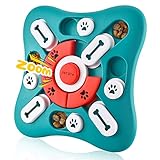
1. Dog Puzzle Toys – Interactive, Mentally Stimulating Toys for IQ Training & Brain Stimulation – Gift for Puppies, Cats, Dogs
Overview: A 10-inch square interactive puzzle board designed to challenge dogs and cats through three distinct difficulty levels and a central squeak button that keeps pets focused on sliding disks to uncover hidden treats.
What Makes It Stand Out: Anti-slip pads grip any floor, built-in pieces never fall off to pose a choking hazard, and a 16-hole maze can stretch feeding past 20 minutes—great for fast eaters. Dishwasher-safe and non-toxic construction rounds out a truly pet-safe design.
Value for Money: At $13.99 you’re getting a slow-feeder and mental gym in one; equivalents with removable parts cost more and create safety concerns. The durability and extended feeding time easily justify the price.
Strengths and Weaknesses: PRO—no lost pieces, squeaker maintains interest, robust ABS plastic. CON—fixed sliders can’t be repositioned for new puzzles, and large paws occasionally overshoot.
Bottom Line: Ideal for owners wanting a sturdy, low-maintenance puzzle that works for both dogs and cats; buy without hesitation.

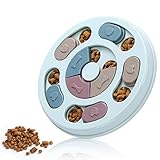
2. DR CATCH Dog Puzzle,Dogs Food Toys for IQ Training & Mental Enrichment,Dog Treat Puzzle(Blue)
Overview: A compact 9.44-inch blue plastic labyrinth where treats are revealed by sliding panels, marketed mainly to small dogs and cats that need slowed eating or quick brain exercise.
What Makes It Stand Out: Lightweight footprint suits apartments and meal trays, pastel color hides scuffs, smooth edges are gentle on tiny snouts, and the price promises low-risk experimentation for first-time puzzlers.
Value for Money: $9.99 makes this one of the cheapest entry-level puzzles; if the toy is chewed you’re not out much, yet functional sliding still delivers mental stimulation comparable to costlier boards.
Strengths and Weaknesses: PRO—portable, budget-friendly, satisfies basic fetch-and-find play. CON—thin plastic flexes under larger breeds, non-skid feet are almost useless on tile, manufacturer admits it isn’t indestructible.
Bottom Line: Good starter toy for toy breeds and cats; skip if you have a strong chewer or heavy dog.

3. BoYoYo Interactive Dog Puzzle Toys for Boredom, Dogs Enrichment Toy to Keep Them Busy, Treat Dispensing Slow Feeder
Overview: A rolling treat-dispensing orb featuring two adjustable gates and a spiral interior inside a rubber-coated shell, designed to let pets bat, roll, and problem-solve until kibble pops out.
What Makes It Stand Out: Sound-dampening rubber lowers rolling noise, dual valves let you dial difficulty from avalanche to trickle, and the spherical shape turns ordinary feeding into an active chase game for any size dog—or cat.
Value for Money: $12.99 secures a noise-controlled orb that replaces both dog treat balls and slow bowls, yielding long stretch-outs of play and slower intake without added accessories.
Strengths and Weaknesses: PRO—compact, quiet on hardwood, adjustable flow. CON—aggressive chewers can crack the ABS seams, circular design sometimes wedges under couches requiring retrieval.
Bottom Line: A versatile, living-room-friendly roller that keeps most pets occupied; supervise power chewers.

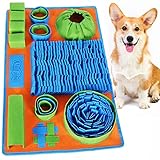
4. Vivifying Snuffle Mat for Dogs, Interactive Dog Puzzle Toy for Boredom and Mental Stimulation, Enrichment Feeding Game Sniff Mat Helps Slow Eating and Keep Busy
Overview: A 26×16.5-inch felt snuffle mat mimicking tall grass where owners hide kibble among folds, strips, and pockets, encouraging dogs to use their nose rather than speed to fill their stomachs.
What Makes It Stand Out: Eight distinct hiding zones turn every squish and sniff into a treasure hunt, the felt is machine washable, and built-in straps let the whole mat roll like a yoga mat for travel or storage.
Value for Money: At $18.99 you get an enrichment surface that also doubles as a floor saver; comparable fabric puzzles cost several dollars more and lack the same durable stitching.
Strengths and Weaknesses: PRO—great for scent-work training, soft on gums, folds to pocket size. CON—aggressive chewers may shred felt threads, larger pieces of food shift too far to be found.
Bottom Line: Outstanding for gentle chewers needing olfactory stimulation; use under supervision with vigorous shredders.

5. KILIN Dog Enrichment Toys 6 Pack – Dog Toys to Keep Them Busy, Lick Mat, Ball & Bowl with Peanut Butter, Frozen Treat Puzzle Dispenser for Anxiety Relief, Reduce Boredom, Perfect for Bathing Grooming
Overview: A six-piece silicone set—two lick mats, one lick ball, ice tray, bowl, and spatula—engineered to fight boredom, slow eating, and soothe anxiety through scented pastes, frozen treats, and textured licking.
What Makes It Stand Out: Four suction bases stick to crates or tiles even during storms, the kit doubles as a bath-time distraction, and rigorous freezer and dishwasher tolerance make cleanup effortless. Unique tilted bowl design helps flat-faced breeds eat longer, safer.
Value for Money: $19.99 for six tools routinely sold separately delivers 40 % longer engagement plus a 90-day warranty—best-in-class return on dollar per play minute.
Strengths and Weaknesses: PRO—multi-function, freezer-safe, suction cups stay put. CON—foods high in dye stain light silicone, and pieces are prone to chewing if suction fails.
Bottom Line: Must-have for anxious, bored, or bathtime-averse dogs; invest once, watch the lifetime of enrichment follow.

6. CIIVURR Snuffle Ball for Dog Toys Unbreakable Upgrade Ball Interactive Toy Foraging Snuffle Mat Puppy Treat Dispenser Slow Feeder Dog Puzzle Toys for Small, Medium, Large Pets (Red Rainbow)
Overview: CIIVURR’s Snuffle Ball is a rainbow–red, rubber-reinforced foraging toy that asks dogs to untuck fleece strips to release hidden treats.
What Makes It Stand Out: The “2.0 upgrade” merges chew-proof natural rubber with gentle polar fleece, creating a ball that’s soft on mouths yet tough on jaws. Rolls up like a burrito for camping trips and doubles as a slow feeder in one pocket-sized bundle.
Value for Money: At $13.99 you’re getting an indestructible spirit inside a snuffle mat—comparable toys are either flimsy mats or hard shells, rarely both. Replacement cloth arches are re-tied instead of replaced if one tears, stretching its lifespan.
Strengths and Weaknesses: Breath-through fleece is washer-safe and mint-scent free, while hidden rubber ribs deter tearing. However, strong chewers can still shred loose cloth ends if unsupervised and portions larger than kibble refuse to fit inside the thin strips.
Bottom Line: Ideal scent-work starter for active pups under supervision; great travel feeder. Check often for loose threads.

7. Outward Hound Large Snoop Interactive Treat Dispensing Dog Toy, Slow Feeder Puzzle Ball for Mental Stimulation & Boredom Relief, Mint-Scented, BPA-Free, 5-Inch, Blue
Overview: Outward Hound’s 5-inch Snoop is a mint-scented, squishy Orbee-Tuff sphere that dispenses kibble as dogs nudge, bounce, and squeeze it.
What Makes It Stand Out: The translucent blue pocket turns inside-out, instantly resetting the puzzle without disassembly. Made in the USA from BPA-, lead- and phthalate-free TPE and infused with peppermint oil for fresher breath during play.
Value for Money: At $13.06 it’s among the few American-made treat balls under fifteen bucks; comparable models ship from overseas and lack the mint feature.
Strengths and Weaknesses: Thick TPE survives moderate chewing, floats in pools, and can be paired with an optional Nook Ball for extra complexity. But aggressive chewers can notch openings and very small kibble leaks too quickly for true slow-feeding.
Bottom Line: A resilient, breath-freshening puzzle for average chewers—rotate after ten-minute sessions for maximum life.

8. Outward Hound by Nina Ottosson Dog Brick Treat Puzzle Enrichment Toy, Level 2 Intermediate Game, Blue
Overview: The Nina Ottosson “Dog Brick”—a Level 2 blue plastic puzzle board—hides treats under sliding disks, flip-top lids, and removable bone pegs.
What Makes It Stand Out: Interchangeable difficulty makes it beginner-friendly yet scalable; keep lids open for puppies, add bones for brainiacs. Provides 15 mental minutes experts equate to a 30-minute walk—perfect for rainy days.
Value for Money: Ten-ninety-five buys you three puzzle styles in one: sliders, flippers, and pegs. Cheaper than multiple single-mechanism toys yet still dishwasher-safe.
Strengths and Weaknesses: Non-slip feet keep it on hardwood and it stores flat in a drawer. Lightweight plastic, however, can be chewed if left out; small parts risk under large jaws once lids pop loose.
Bottom Line: Terrific boredom-busting bargains for supervised learners; store post-play to extend life.

9. BSISUERM Dog Puzzle Toy Adjustable Treat Dispensing Ball Food Dispenser Tough Slow Feeder Puppy Enrichment Training Toy Pet Interactive Chase Toys for Small Medium Large Dogs to Keep Them Busy, Green
Overview: BSISUERM’s lime-green adjustable treat ball rolls like a mini barbell, dispensing kibble through two variable apertures as dogs chase it.
What Makes It Stand Out: Dual independent sliders let owners fine-tune kibble size and flow rate—close them for tiny training treats, open wide for dental sticks. Non-chew design limits intake deliberately, turning meals into brain games rather than gorge fests.
Value for Money: At $9.99 it’s the cheapest slow feeder reviewed, yet its threaded halves hide no irreplaceable mechanisms—if lost, it’s a painless re-buy.
Strengths and Weaknesses: Bright color and rolling design entice most dogs; lightweight ABS won’t mar floors. Critics note it’s not a chew toy—teething pups will dent rims, compromising flow accuracy.
Bottom Line: Best budget adjustable dispenser for supervised play and portion-controlled diets.

10. Forfon 9 Pack All-Around Dog Puzzle Toy Set -Mentally Stimulating Dog Enrichment Toys for Small to Medium Smart Dogs, Includes Dog Lick Mat with Suction Cups
Overview: Forfon’s nine-piece enrichment set outfits small-to-medium dogs with two lick mats (plus suction cups), three treat balls, a sliding-puzzle board, spatula, grooming brush, and two poop-bag carriers.
What Makes It Stand Out: Three escalating difficulty levels—from lick-mat smears to flip-lid games—extend the coaching value as pups graduate. Silicone spatula simplifies peanut-butter loading, and suction cups anchor mats to tubs for stress-free bath time.
Value for Money: Twenty-one dollars nets roughly three dollars per tool, equipping indoor rainy days and outdoor garden hunts in one weather-resistant kit.
Strengths and Weaknesses: Wide variety delays boredom; combo storage pouch keeps pieces tidy. Chew-prone pieces (puzzle lids, thin balls) wear out first, and larger jaws may outsmart the small puzzle board.
Bottom Line: A starter pack for building a mentally stimulated dog—replace worn parts individually and you’ve got months of cheap enrichment ahead.
Why Mental Stimulation Beats Extra Minutes on the Walk
Longer walks sound virtuous, but repetitive leash loops can become the canine equivalent of walking on a treadmill while scrolling your phone. For most dogs, what’s missing isn’t steps; it’s novel challenges. Mental stimulation lights up the brain’s seeking system—the same circuitry triggered when wild canids track a scent or solve the puzzle of opening a carcass. Ten focused minutes of sniff-and-think can take more edge off than an hour of pacing the same neighborhood block. Enrichment toys give you a repeatable way to deliver that cognitive workout inside the living room, at the airport pet relief area, or while your conference call runs long.
The Neuroscience Behind Canine Boredom
Inside every canine skull sits a pack-animal brain finely tuned to problem solving. When the environment under-delivers new information, dopaminergic neurons dial down, and cortisol creeps up. Chronic boredom can morph into generalized anxiety, compulsive licking, or reactivity on leash. Researchers at Eötvös Loránd University’s Family Dog Project found that dogs exposed to daily puzzle feeding showed improved frustration tolerance and shorter recovery time after stressors. Think of enrichment toys as neurochemical moderators, not just “stuff to keep them busy.”
Core Categories of Enrichment Toys
Enrichment tools fall into five broad families: food-dispensing puzzles, scent-based games, motor-skill manipulatives, social-interaction toys, and digital or tech toys. Each taps a different sensory and cognitive channel. For example, slow-feeder bowls primarily prolong licking—a soothing, endorphin-releasing activity—while scented snuffle mats stimulate the olfactory cortex, which occupies up to 12% of a dog’s total brain mass. Mixing categories keeps neural circuits balanced and prevents habituation.
Durability vs. Destruction: Material Guide
A toy that lasts twenty minutes inside a power-chewer’s jaws is just an expensive snack. Start by decoding material labels. FDA-grade silicone strikes a balance between gentleness for gums and resistance to puncture. Natural rubber with Shore-A hardness above 70 will stand up to molars but still have bounce. Avoid phthalates, BPA, and latex if your dog has sensitive skin. Woven rope toys should specify ultra-high-molecular-weight polyethylene fiber rather than cheap cotton if you want to cut down on stringy digestive hazards.
Safety First: Choking, Toxins, and Supervision Tips
Even the sturdiest materials can’t override poor supervision. A rule of thumb from veterinary dentists: if a toy can fit through a paper-towel tube, it can get lodged in a 40-lb dog’s airway. Err on the side of oversized. Check for two independent safety certifications: ASTM F2928-20 for pet toy durability and CPSIA for children’s toy standards (a solid proxy for toxin testing). Rotate toys weekly; constant novelty keeps interest high and gives you the chance to inspect for rogue squeakers, delaminating seams, or hairline cracks that could slice gums.
Size Matters: Matching Toy Geometry to Dog Physique
A puzzle that’s too large risks jaw strain or, worse, tooth fractures when your dog performs vertical “head-butt” bites to extract kibble. Conversely, tiny sliders can be swallowed whole. Toy diameters should exceed the breadth of your dog’s closed jaw by at least 10%. For brachycephalic breeds like French Bulldogs, opt for low-profile boards with shallow wells so flattened faces can still access treats without friction burns on the nose leather.
Difficulty Levels and How to Scale Them
Imagine giving a novice sudoku master a weekend New York Times grid—frustration spikes and the puzzle ends up shredded. Beginner puzzles feature large open reservoirs or removable cups labelled “Level 1.” Intermediate versions add sliding discs, rotational layers, or weighted flaps. Expert tiers employ sequential steps: your dog must press one lever to uncover another lever, then nose-flip a cylinder. Observe the 85% rule: if your dog succeeds 85% of the time, bump the difficulty. If success drops below 60%, dial back.
Food-Based Puzzles: Calories vs. Cognitive Gain
Kibble-dispensing toys turn meals into mental marathons, but calories still count. A one-cup Kong load can exceed 15% of a Beagle’s daily energy allowance. Swap standard treats for dehydrated veggie crisps, freeze-dried liver dust, or simply use part of the normal meal ration. For weight-management cases, invest in toys with millimeter-sized vents or adjustable flow gates to slow output to mere atoms of scent, delivering brain work without caloric load.
Tech Toys: Smart Gadgets and App Integration
Canine wearables now extend beyond GPS collars to AI-powered treat pods that learn barking patterns and dispense rewards for quiet behavior. Look for WPA-3 Wi-Fi security to fend off hijacked feeders, opt for toys that store settings locally (in case the cloud hiccups), and confirm the motor noise stays below 50 dB so anxious dogs aren’t startled by what sounds like a garage door opening in their living room. Firmware should be open to updates for future security patches—you don’t want last year’s pet bot becoming 2025’s ransomware victim.
DIY Enrichment: Repurposing Household Items
Activated cardboard rolls can become scent logs when stuffed with breakfast kibble and folded ends. Cut snuffle holes in a fleece sweater sleeve to create a miniburrito of olfactory intrigue. Always remove tape, staples, or plastic windows first, and supervise for ingested fibers. Rotate creations weekly; dogs map object permanence faster than you’d expect, and a snuffle sweater left on the floor becomes just another throw rug in three days.
Portability: Travel-Ready Solutions for Mobile Dogs
Folding silicone snuffle mats like camping bowls compress into a zip pouch, while modular puzzle cubes pack flat into carry-ons. Avoid puzzles with loose sliders if you’ll be on a moving subway; dogs can punish errant physics with over-correction bites. Collapsible lick mats serve double duty as calming devices in hotel crates—just smear a tablespoon of goat milk yogurt and freeze for a plane-safe anxiety buffer.
Cleaning and Maintenance: Hidden Hygiene Traps
Biofilms can colonize treat reservoirs within 24 hours, harboring everything from salmonella to brewer’s yeast. Dishwasher-safe toys labeled silicone and ABS plastic withstand 165 °F sanitize cycles. Look for removable rubber gaskets; crevices are bacterial high-rises. Rope seekers should air-dry completely to prevent mold blooms—try a salad spinner to fling out residual moisture before the sun finish-dries.
Signs It’s Time to Level-Up or Replace a Toy
Duration of engagement is a better indicator than visible wear. If your Labrador dismantles a three-step puzzle in 45 seconds when it used to take five minutes, the cognitive pay-off has expired. Other red flags: cracked crevices that hide rancid fats, squeaker volume dropping like a blown-out headphone, or an exposed RFID reader you can pry with a fingernail. One thumb-squeeze test: if your thumb catches on burrs or sharp edges, it’s landfill time.
Balancing Cost and Longevity
Novelty addiction doesn’t mean you must buy a new toy weekly. Select modular systems where you can swap lids, lock segments, or buy replacement flaps instead of entire boards. Premium upfront costs often amortize; a $30 rubber core that lasts two years beats a $7 plush that survives one afternoon. Check brand sustainability: are replacement parts sold individually? Are materials recyclable? Economical doesn’t have to mean ecological disaster.
Eco-Friendly Materials and End-of-Life Recycling
Natural rubber, hemp fiber rope, and recycled ocean-bound plastic offer kinder carbon pawprints. Certifications to trust include Global Recycled Standard (GRS) and Forestry Stewardship Council (FSC) tags on cardboard inserts. Some brands run take-back programs—send destroyed toys for grinding into playground turf. Verify shipping labels aren’t carbon-wash; if your toy travels 9,000 miles to reach you, any biodegradability benefit may be offset by jet fuel.
Multi-Dog Households: Preventing Resource Guarding
Parallel play works only if each dog feels its puzzle is its own. Use visual dividers like baby gates or staggered feeding schedules to reduce competition. Select opaque containers so one dog can’t visually appraise another’s treasure. Teach a rock-solid “trade” cue—if Dog A finishes first and eyes Dog B’s stash, a calm swap to a higher-value jackpot diffuses tension. Rotate high-value toys out of sight when play ends to prevent lingering stare-downs.
Breed-Specific Considerations
Sight hounds crave chase games—look for roller-type puzzles that shoot kibble across hardwood floors. Scent-heavy hounds may ignore those rollers entirely in favor of multi-chamber sniff mats. Terriers, bred for paw manipulation, relish digging trays filled with non-toxic cornstarch peanuts. Northern breeds acclimate well to tech toys that unpredictably launch snowball-sized plushies—feeding the “prey cycle” without the need for live squirrels.
Avoiding Common Buyer Pitfalls
• Impulse buying based on viral videos populated by “unicorn” dogs who never shred.
• Ignoring return policies for electronic failures.
• Selecting toys sized for puppy teeth, forgetting your 9-month mastiff is now 75 lbs.
• Overlooking sound sensitivity—a sudden squeak can imprint fear that generalizes to all enrichment objects.
• Chasing “limited-edition” sets at inflated prices when plasma-tough generics exist.
Tailor baby steps: start small, test interest in store if possible, and document engagement time, weight impact, and any behavioral shifts.
Frequently Asked Questions
Can I leave my dog alone with any enrichment toy?
Generally, reserve unsupervised access for the most durable, one-piece devices. Anything with removable sliders, batteries, or plush elements warrants human eyes.
How do I calculate calorie load from puzzle feeders?
Weigh kibble pre-load; most toys hold 60–120 kcal in dry food. Subtract that from daily meal allowance rather than “adding” treats on top.
Are smart toys safe for puppies?
Yes, provided they don’t emit loud servos and battery compartments are screw-locked. Limit continuous motion cycles to <5 minutes at a stretch to prevent overstimulation.
What’s the ideal rotation schedule?
Cycle out 50% of toys every three days; complete refresh every two weeks to maintain novelty without cluttering your living space.
Can enrichment toys replace training?
They’re excellent supplemental outlets but cannot teach impulse control, recall, or leash manners. View them as cross-training, not substitution.
How do I sanitize rope or fabric toys monthly?
Submerge in a ¼-cup vinegar per gallon warm water bath for 15 minutes, rinse thoroughly, and sun-dry. Avoid bleach; it irritates mucous membranes.
Are digital toys compatible with anxious dogs?
Choose models starting with low LED brightness and <40 dB motor noise. Pair the toy with classical counter-conditioning: the toy appears, a pea-sized treat lands nearby.
My senior dog has arthritis. Any enrichment recommendations?
Look for flat lick mats raised on a low table to reduce neck strain or stationary sniff boards that require gentle nose work rather than paw shoving.
Can small parts ever be safe for large dogs?
In limited, locked contexts—think sealed treat capsules sized beyond swallowing threshold—yes. Free-floating? Never.
Is there a “one size fits all” toy?
Short answer: no. Breed, age, dentition, diet, and anxiety level all recalibrate the equation. Treat every enrichment purchase like a custom prescription, not a universal supplement.
The short version
Still deciding? Start with our #1 pick.
Dog Puzzle Toys - Interactive, Mentally Stimulating Toys for IQ Training & Brain Stimulation - Gift for Puppies, Cats, Dogs
Ranked first out of 10 picks in this guide.

Keep reading
More in Dog Toys
![Puppy Chewing Everything In Sight: Top 10 Solutions That Work [2026]](https://m.media-amazon.com/images/I/51Qd6T4RegL._SL400_.jpg)
Puppy Chewing Everything In Sight: Top 10 Solutions That Work [2026]
Your new puppy’s adorable until you discover they’ve turned your vintage sofa into modern art. Chewing…

10 Best Natural Dog Toys Made from Eco-Friendly Materials (2026)
Your dog’s tail starts wagging the second you reach for a toy, but have you ever…

The 10 Best Oscar Dog Toys for Hollywood-Level Fun (2026 Brand Spotlight)
Lights, camera, wag-tion! If you’ve ever watched a beloved movie star pooch strutting the red carpet…