Dog Treats For Kidney Disease: 10 Best Low-Phosphorus Options for 2026
Affiliate disclosure: Paws Dynasty is reader-supported. We may earn a commission when you buy through links on our site, at no extra cost to you. As an Amazon Associate, we earn from qualifying purchases. Learn more about our affiliate disclosure
In this guide 19 sections
Few things feel more unfair than watching a beloved dog slow down because of kidney trouble. One minute you’re tossing treats during training, the next you’re scanning labels like a scientist, terrified that the wrong snack will tip fragile lab work into the danger zone. The good news? Kidney-friendly treats aren’t the bland, cardboard-like pellets of yesteryear. Food scientists, integrative vets, and canine nutritionists have spent the past decade refining low-phosphorus recipes that still make tails thump. Below, you’ll learn exactly how to spot those options, what “low-phosphorus” really means on a practical level, and how to future-proof your treat jar for whatever 2025 brings—from stricter labeling laws to novel protein technologies.
Top 10 Dog Treats For Kidney Disease
Quick picks
10 picks comparedAdvertiser disclosure: We may earn a commission from links on this page, at no extra cost to you. How we review


Prices and availability can change. Check Amazon for the current price and details.
Detailed Product Reviews
1. Mattie’s Treats: 10oz Box, Mini Treats; Low Protein, Low Phosphorus, Low Sodium Dog Treats
Overview: Mattie’s Treats 10 oz. box delivers heart-shaped, crunchy mini biscuits engineered for dogs battling kidney, heart, or liver issues. Six human-grade ingredients—light rye flour, tapioca, pumpkin, cinnamon, fish oil, and canola oil—keep phosphorus, protein, and sodium minimal while preserving palatability.
What Makes It Stand Out: The smaller hearts are perfect for toy breeds, training rewards, or calorie-conscious seniors; every purchase funds actual canine-kidney-disease research, turning a simple snack into a donation.
Value for Money: At $25.57/lb you’re paying boutique-bakery prices, yet comparable prescription treats require vet approval and still cost $20–30/lb. The transparent ingredient list and built-in philanthropy justify the premium for owners who want “clean” low-phosphorus rewards.
Strengths and Weaknesses:
Pros: only six recognizable ingredients; no dairy, eggs, soy, or meat proteins that strain kidneys; crunchy texture helps clean teeth; resealable 10 oz. box stays fresh.
Cons: higher per-pound cost than bigger boxes; crunch may be too hard for dogs with severe dental disease; pumpkin scent is mild—some picky dogs still walk away.
Bottom Line: If you need a vegan, low-phosphorus, low-sodium cookie that’s safe for most renal, cardiac, or allergic dogs, Mattie’s mini hearts are worth the splurge—especially when you factor in the research donation and portion-controlled size.

2. Kidney Restore Bacon Flavor Dog Treats: Low Protein Dog Treats for Kidney Health. Kidney Dog Treats for Kidney Function for Dogs. Renal Friendly Low Protein
Overview: Kidney Restore Bacon Flavor dog treats merge snack time with supplemental therapy. Each plant-based “bacon” morsel carries a functional blend of B-vitamins, potassium, cranberry, cordyceps, rehmannia, astragalus, turmeric, and vitamins C & E to support renal blood flow, reduce inflammation, and scavenge free radicals.
What Makes It Stand Out: The treats double as a kidney supplement—no pill pockets needed—and the smoky bacon aroma comes from yeast and natural smoke, keeping crude protein low (claimed <10 %).
Value for Money: $26.95/lb is steep versus grocery biscuits, but inexpensive compared to buying separate renal supplements, which can run $15–40 monthly. A 60-day money-back guarantee removes risk.
Strengths and Weaknesses:
Pros: one-step “treat + supplement” convenience; anti-inflammatory herb stack; resealable pouch; suitable for small or large breeds; free eBook and coach hotline.
Cons: proprietary herb amounts aren’t disclosed—hard to gauge true dosage; smell is strong (owners love or hate it); texture is semi-moist and can crumble in pockets; price climbs fast for big dogs.
Bottom Line: For guardians who struggle to pill their dog or want an all-in-one renal reward, these bacon-flavored functional bites are a smart, albeit pricey, addition to a prescription kidney diet—just monitor your vet’s overall nutrient targets.

3. Hill’s Prescription Diet Soft Baked Dog Treats, Veterinary Diet, 12 oz. Bag
Overview: Hill’s Prescription Diet Soft-Baked treats are the only baked reward officially calibrated to pair with Hill’s k/d, h/d, c/d, l/d, and w/d veterinary diets. The 12 oz. bag contains chewy, nickel-sized squares fortified with controlled phosphorus and sodium to avoid counteracting therapeutic nutrition.
What Makes It Stand Out: Being vet-exclusive means the formulation is clinically tested not to spike electrolytes or protein when fed at 10 % of daily calories—reassurance generic “low-protein” treats can’t give.
Value for Money: $18.65/lb undercuts both Mattie’s and Kidney Restore while offering pharma-level quality control; if your dog already eats Hill’s prescription food, these integrate seamlessly without extra vet visits.
Strengths and Weaknesses:
Pros: soft texture ideal for seniors, post-dental patients, or dogs with jaw issues; scientifically balanced for concurrent prescription-diet feeding; widely stocked at vet clinics.
Cons: requires veterinary authorization—extra hassle if your vet prefers another brand; ingredient list includes corn and chicken fat, problematic for allergy dogs; only one flavor profile (stew-like) may bore picky eaters.
Bottom Line: For dogs already on a Hill’s Prescription Diet, these soft-baked morsels are the safest, easiest way to treat without unbalancing therapeutic nutrition. All others should compare ingredient sensitivities and authorization logistics before committing.

4. Mattie’s Treats: 1 Pound Box; Low Protein, Low Phosphorus, Low Sodium Dog Treats
Overview: Mattie’s original 1 lb. box delivers the same six-ingredient, heart-shaped crunch as the 10 oz. mini version, just in standard size and double the weight. Designed for households with multiple dogs or medium-to-large breeds, the cookies remain low in protein, phosphorus, and sodium to spare compromised kidneys.
What Makes It Stand Out: The brand’s personal origin story—created for a beloved family dog with kidney disease—plus a donation to canine-kidney research with every box fosters trust and emotional buy-in.
Value for Money: At $19.98/lb you save roughly 22 % versus the smaller package, bringing cost in line with mass-market “healthy” biscuits while still offering boutique, limited-ingredient transparency.
Strengths and Weaknesses:
Pros: simple, plant-based recipe free of common allergens; pumpkin-cinnamon aroma dogs accept readily; sturdy hearts survive shipping; 16 oz. supply lasts large dogs two weeks or small dogs a month.
Cons: crunch requires good teeth; calorie count (≈18 kcal/treat) can add up for giant breeds; no added EPA/DHA beyond fish oil—less potent than combo-treat/supplements.
Bottom Line: Owners seeking a clean, low-phosphorus reward that doubles as a training cookie will appreciate the pound-box economy and charitable angle. Just ensure your dog’s mouth can handle the crunch and factor calories into daily totals.

5. Kidney Restore Chicken Dog Treats for Kidney Support. Low Protein Supports Kidney Health. Kidney Function Treats for Kidney Dog Diet
Overview: Healthy Kidney Inc.’s Chicken Flavor treats layer real chicken, cranberry, pumpkin, turmeric, cordyceps, rosemary, and vitamins C & E into a low-protein “functional food.” Each strip pledges to reduce renal inflammation, neutralize free radicals, and encourage appetite in dogs battling kidney disease.
What Makes It Stand Out: Unlike the company’s bacon version, these sticks use limited chicken for flavor yet still keep protein low (label shows 9 % min), appealing to carnivorous dogs that reject vegetarian biscuits.
Value for Money: $1.68/oz translates to $26.88/lb—mirrors the bacon SKU and positions the product as treat-priced supplementation. The 60-day refund window and bundled eBook add tangible extras.
Strengths and Weaknesses:
Pros: palatable chicken scent drives acceptance in picky or nauseous renal dogs; includes organic turmeric & cordyceps for documented anti-inflammatory support; soft enough to break for tiny jaws; compatible with most medications.
Cons: chicken is a top allergen—unsuitable for food-allergic dogs; exact nutrient levels (phosphorus, sodium) undisclosed, complicating precise veterinary calculations; bag size (16 oz.) disappears quickly for multi-dog homes.
Bottom Line: If your kidney-compromised dog craves meat flavor but needs reduced protein, these herb-boosted chicken strips are a convenient, low-risk trial—just confirm phosphorus compatibility with your vet and watch for poultry allergies.

6. Choolip Squeeze Vita Stick Lickable Treats for Dogs & Cats. 7 Kidney Support Sticks with Essential multivitamins. Soft and Tasty Paste for All Life Stages, Supporting Kidney Health
Overview:
Choolip Squeeze Vita Sticks are kidney-support lickable treats created by Korean vet Dr. Eric. Each 0.5-oz stick delivers EPA/DHA, CoQ10, B-vitamins and electrolytes in a tuna-cod-pumpkin-blueberry purée that both dogs and cats can lap straight from the pouch or smear on a lick-mat.
What Makes It Stand Out:
Formulated by a veterinarian for renal patients, the recipe is thickened only with tapioca—zero carrageenan, guar, xanthan or artificial anything. The 83 % moisture and 9 % protein profile suits cats prone to urinary crystals and dogs on low-phosphorus diets, while still tasting like fish pudding.
Value for Money:
$14.99 buys seven sticks; that’s $2.14 per serving. Comparable renal gels cost $25–30 for the same number of doses, so the price is fair for therapeutic ingredients you can pronounce.
Strengths and Weaknesses:
Strengths: vet-designed, truly gum-free, dual-species, travel tubes.
Weaknesses: single-use plastic, strong fish smell (humans notice), cats may devour it faster than dogs.
Bottom Line:
If your vet has flagged early kidney issues or you simply want a clean, hydrating reward, Choolip is the tastiest medicine your pet will think is dessert.

7. Fruitables Baked Dog Treats, Healthy Pumpkin Treat for Dogs, Low Calorie & Delicious, No Wheat, Corn or Soy, Made in the USA, Pumpkin and Banana Flavor, 7oz
Overview:
Fruitables Baked Dog Treats combine pumpkin purée and banana into 8-calorie, half-inch crunchy squares. The 7-oz resealable pouch holds roughly 90 treats and is baked in Texas using USA-sourced ingredients.
What Makes It Stand Out:
The CalorieSmart promise keeps every piece at 8 kcal—half the count of most biscuits—while pumpkin fiber firms stools and banana aroma hooks picky pups.
Value for Money:
$4.49 per bag equals five cents per treat; cheaper than baby carrots and far less messy.
Strengths and Weaknesses:
Strengths: wheat/corn/soy-free, crunchy texture cleans teeth, scent drives dogs wild, pocket-size for training.
Weaknesses: bag is only 7 oz (gone fast with big dogs), pumpkin not organic, crumbs settle at bottom.
Bottom Line:
For guilt-free repetition in obedience class or waistline-watching households, Fruitables delivers gourmet bakery flavor at a fast-food price.

8. Blue Buffalo Health Bars Crunchy Dog Biscuits, Oven-Baked With Natural Ingredients, Pumpkin & Cinnamon, 16-oz Bag
Overview:
Blue Buffalo Health Bars oven-bake oatmeal, pumpkin and cinnamon into crunchy 16-oz biscuit bags. Each bone-shaped bar can be snapped for small mouths or given whole to large breeds.
What Makes It Stand Out:
Blue’s “no by-product, no BHA, no corn/wheat/soy” stance in a grocery-aisle brand means you get premium claims without specialty-store hunting.
Value for Money:
$4.98 for a full pound undercuts most 12-oz “natural” bags, landing cost at ~12 ¢ per biscuit.
Strengths and Weaknesses:
Strengths: widely available, fortified with vitamins/minerals, hearty cinnamon smell, satisfying crunch.
Weaknesses: 30 kcal per bar (not ideal for training), some batches arrive overly browned, cinnamon can irritate ultra-sensitive stomachs.
Bottom Line:
A dependable pantry staple: crunchy, fragrant and wallet-friendly for everyday good-dog moments.

9. PETIPET Plant-Based Pumpkin Dog Treats – Pumpkin, Carrot, Apple, and Blueberry Soft & Chewy – Vegetarian, Vegan Dog Treats with Organic Ingredients – Low-Protein, Hypoallergenic, Gluten-Free
Overview:
PETIPET soft-chews roll pumpkin, carrot, apple and blueberry into 0.3-oz plant-based squares. The 5-oz pouch contains about 15 treats baked in small FDA-registered Florida batches.
What Makes It Stand Out:
Human-grade, vegan, low-protein (6 %) and low-sodium, they suit dogs with meat allergies, renal restrictions or missing teeth—categories most treats ignore.
Value for Money:
$8.49 breaks down to 57 ¢ per chew—mid-range for functional, limited-ingredient snacks.
Strengths and Weaknesses:
Strengths: silky texture seniors can gum, zero common allergens, USA-made, high fiber aids digestion.
Weaknesses: pricey by weight, pouch must be resealed tightly or treats stiffen, smell like fruit leather (some dogs expect meat).
Bottom Line:
When your vet says “low protein, no animal ingredients,” PETIPet is one of the rare treats you can happily say “yes” to.

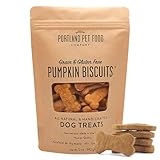
10. Portland Pet Food Company Pumpkin Dog Treats Healthy Biscuits for Small Medium & Large Dogs – Grain-Free, Human-Grade, All Natural Cookies, Snacks & Puppy Training Treats – Made in The USA – 5 oz
Overview:
Portland Pet Food Company bakes grain-free pumpkin biscuits using Bob’s Red Mill garbanzo flour, peanut butter, molasses and cinnamon. The 5-oz box yields ~25 double-baked cookies handmade in Oregon.
What Makes It Stand Out:
Human-grade, family-recipe ethics meet vegan, top-eight-allergen-free formulation in a crunchy texture you can snap for training or float on peanut-butter Kongs.
Value for Money:
$9.99 per 5 oz is steep ($31.97/lb), but you’re paying for certified organic pumpkin and USA labor; comparable boutique cookies run $12–14.
Strengths and Weaknesses:
Strengths: seven or fewer ingredients, no grains/dairy/BHT, snap cleanly, pleasant bakery aroma.
Weaknesses: high calorie (28 kcal/treat), box crushes easily, price limits daily use.
Bottom Line:
Splurge-worthy for allergy dogs, eco-conscious shoppers or gift baskets—just break them in half to stretch the box and the waistline.
Why Phosphorus Matters When Kidneys Start to Slow
Phosphorus is an essential mineral, but compromised kidneys can’t filter excess amounts efficiently. The surplus stays in the bloodstream, pulling calcium from bones and accelerating organ damage. Treats are tiny by volume, yet they’re often calorie-dense and mineral-dense; feed three or four a day and you can unknowingly push phosphorus intake past the veterinary threshold. That’s why renal diets focus on restriction across every bite, not just main meals.
Translating Vet Speak: Decoding “Low-Phosphorus” on Dog Treat Labels
There’s no regulated definition for “low-phosphorus” in pet snacks, so savvy owners need to look for two metrics: milligrams of phosphorus per 100 kcal (mg P/100 kcal) and the phosphorus-to-protein ratio. Renal specialists generally recommend staying under 0.8–1.0 g P/100 kcal for most early-to-moderate CKD cases. If the bag lists “as-fed” percentages instead, whip out your calculator—moisture content can mask the true concentration.
The Rise of Renal-Friendly Functional Treats in 2025
Expect the next wave of treats to borrow from human nephrology: phosphate-binders micro-encapsulated in soft chews, egg-white–derived peptides that blunt phosphorus absorption, and soluble fiber blends that bind urinary toxins. Regulatory bodies are also pushing for “phosphorus scoring” icons, similar to traffic-light sugar labels, making at-a-glance shopping realistic for the first time.
Protein Quality vs. Quantity: Finding the Kidney Sweet Spot
Low phosphorus often gets mistaken for low protein, but starving a dog of amino acids leads to muscle wasting. The trick is shifting from quantity to quality—high-biological-value proteins (egg, whey isolate, selected insect meals) supply essential amino acids with less nitrogenous waste and fewer phosphorus hitchhikers.
Moisture-Rich vs. Air-Dried: Texture Trade-Offs for Hydration Support
Dehydration is a silent sidekick of kidney disease. Moist treats (think pâté strips or gelatinous cubes) add water with every reward, whereas air-dried jerky offers dental scrubbing but zero hydration. Many owners now rotate: soft treats for training bursts, crunchy shards for tooth care—always netting out daily phosphorus targets.
Hidden Phosphates: Where Manufacturers Sneak Them In
“Chicken flavor,” “natural smoke,” and even “yeast extract” can be code for phosphate-laden seasoning bases. Look for the generic term “phosphoric acid” or any ingredient ending in “-phosphate.” Cheaper collagen casings and mechanically separated meats are also phosphate sponges—prime suspects when labels refuse to disclose exact amounts.
Reading Between the Lines: Guaranteed Analysis vs. Dry-Matter Math
A treat showing 0.3 % phosphorus might sound saintly—until you realize it’s 70 % moisture. Convert to dry-matter basis by dividing the phosphorus percentage by (100 % – moisture %) and multiplying by 100. Suddenly that 0.3 % becomes 1.0 %, a level many nephrologists would nix. Learning this single equation instantly upgrades you from marketing prey to informed consumer.
Homework for Homemade: Safety-First Kitchen Rules
Cooking at home lets you control phosphorus down to the milligram, but pitfalls abound. Egg yolks, dairy, and certain legumes are phosphorus bombs. Use only egg whites, favor low-phosph veggies like zucchini, and balance calcium with the help of a veterinary nutrition software (many now offer renal preset templates). Never season with garlic, onion, or bouillon—all renal no-nos.
Calorie Density & Portion Control: Keeping Snacks From Becoming Meals
A mere 30 extra calories per day can add up to a 3 % body-weight gain over a year—dangerous for dogs battling concurrent heart disease or arthritis. Use a kitchen scale; most renal-safe treats should stay under 3 % of daily caloric needs. Pre-portion into weekly pill organizers so kids, neighbors, and dog walkers can’t accidentally over-treat.
Flavor Fatigue: Rotating Proteins Without Rocking the Boat
Dogs, like humans, tire of monotony. Rotational feeding keeps enthusiasm high, but abrupt swaps can trigger GI upset and temporary phosphorus spikes. Stick to the same phosphorus mg/100 kcal window when you switch flavors, and phase new treats in over four days—75/25, 50/50, 25/75, 100—while monitoring stool quality and water intake.
Supplement-Enhanced Treats: Omega-3s, B-Complex and Potassium Binders
Look for added EPA/DHA from fish oil or algal sources; these fats reduce renal inflammation. B-vitamins compensate for urinary loss, while potassium citrate can counter metabolic acidosis. Avoid treats fortified with calcium carbonate unless your vet specifically prescribes it—excess calcium can bind with phosphorus in the gut but also raise the risk of calcification in soft tissues.
Sustainable Proteins: Insect Meal, Krill & the Eco-Kidney Link
Black soldier fly larvae and Antarctic krill meal naturally contain less phosphorus than traditional meat meals, plus they’re raised on food waste or oceanic plankton—dramatically lowering carbon pawprints. Early palatability studies show 85 % acceptance in senior dogs, making eco treats a win for kidneys and the planet.
Budgeting Without Compromising: Cost-per-Phosphorus Gram Strategies
A $24 bag of low-phosph jerky may induce sticker shock until you realize each stick delivers only 20 mg P/100 kcal, letting you use half the quantity of a cheaper 60 mg P/100 kcal biscuit. Calculate cost per allowable phosphorus gram instead of cost per ounce; premium often works out cheaper—and safer—in the long run.
Transitioning Treats When Labs Improve—or Decline
Kidney disease is a moving target. A dog whose creatinine drops after a diet tweak may tolerate slightly higher phosphorus for maintenance; conversely, acute on chronic episodes can demand zero-tolerance overnight. Keep a spreadsheet of every treat’s phosphorus value, and update your “safe list” quarterly in tandem with lab rechecks.
Vet Partnerships: Making the Most of Nutrition Consults
Bring a printed or digital photo folder of every snack label to your next appointment. Most vets can run quick dry-matter conversions and flag red-flag ingredients in minutes. Ask whether a telehealth nutrition platform is available—many specialty clinics now offer 30-minute virtual consults solely for treat selection, sparing you the guesswork.
Future-Proofing: Label Changes on the Horizon
By late 2025, AAFCO is expected to require phosphorus disclosure in mg/100 kcal on all dog treats, mirroring European guidelines. Start training your eye now; when the law hits, you’ll already know which legacy brands quietly reformulated and which ones simply slapped new graphics on old formulas.
Frequently Asked Questions
1. How low is “low-phosphorus” for a renal dog treat?
Most veterinary nutritionists suggest staying under 1.0 g phosphorus per 100 kcal, but always confirm with your vet based on your dog’s stage of CKD.
2. Can I give fruits and veggies as zero-phosphorus snacks?
They’re lower, not zero. Apples and cucumbers still contain trace phosphorus; factor them into the daily total and avoid high-phosph options like bananas or pumpkin.
3. Are prescription renal treats always safer than OTC ones?
Usually, but not universally. Always double-check the label—some prescription biscuits border the upper limit, especially if designed for early-stage CKD.
4. My dog hates the new low-phosph treats—any tips?
Warm them slightly to release aroma, crumble over a small amount of renal canned food, or use a clicker to re-establish positive association.
5. Is freeze-dried raw lower in phosphorus than baked treats?
Freeze-drying concentrates all minerals; unless the raw material is inherently low-phosph, the final product can actually be higher per kcal than baked versions.
6. How do I account for training treats when I feed a homemade renal diet?
Subtract the calories and phosphorus of treats from the diet recipe before you cook, essentially treating snacks as part of the daily formula.
7. Can phosphorus binders be added to regular treats to make them safe?
Only under veterinary direction; overuse can cause constipation and electrolyte havoc, and palatability drops fast.
8. Do dental chews come in low-phosphorus formulations?
Yes, but they’re rare. Look for cellulose-based chews or those made with egg-white protein, and verify the mg P/100 kcal before purchasing.
9. How often should I recheck blood work after switching treats?
For stable CKD dogs, every 4–6 months is typical; if you change multiple variables at once, recheck labs in 2–4 weeks.
10. Will low-phosphorus treats prevent kidney disease in healthy dogs?
No evidence supports that. Feeding balanced life-stage-appropriate food and maintaining hydration are the best preventive measures; restrict phosphorus only when renal pathology is present.
The short version
Still deciding? Start with our #1 pick.
Mattie
Ranked first out of 10 picks in this guide.

Keep reading
More in Dog Treats
![Top 10 Trixie Dog Treats Your Pup Will Go Crazy For [2026 Review]](https://m.media-amazon.com/images/I/41mCSdSOW6L._SL400_.jpg)
Top 10 Trixie Dog Treats Your Pup Will Go Crazy For [2026 Review]
If your dog lights up at the crinkle of a treat pouch, you already know the…
![Dog Salmon Treats: The 10 Best Treats for a Healthy Skin & Coat [2026]](https://m.media-amazon.com/images/I/417Nmlcl8YL._SL400_.jpg)
Dog Salmon Treats: The 10 Best Treats for a Healthy Skin & Coat [2026]
Few things turn heads at the dog park faster than a glossy, dandruff-free coat that practically…

Barkbox Treats Making Dog Sick: Top 10 Hypoallergenic Alternatives for 2026
Is your pup’s tail wagging a little less after treat time? You’re not alone. Over the…