Dog Toys On A Stick: 10 Best Flirt Poles for Interactive Play [2026]
Affiliate disclosure: Paws Dynasty is reader-supported. We may earn a commission when you buy through links on our site, at no extra cost to you. As an Amazon Associate, we earn from qualifying purchases. Learn more about our affiliate disclosure
In this guide 19 sections
Dogs don’t just want to move—they need to move with purpose. A flirt pole (think “giant cat toy for dogs”) turns your backyard, driveway, or even a hallway into a predator-vs-prey video game where your dog is both the hero and the workout machine. One three-minute session can drain more physical and mental energy than a 30-minute stroll, which explains why trainers, sporting-dog handlers, and exhausted pet parents alike keep a stick-with-a-string stashed by the door.
But not every flirt pole is ready for the way your individual dog shakes, rattles, and launches. Size, bite style, climate, and your own joint mobility all determine whether that pole becomes the best toy you ever bought—or a snapped bungee and a frustrated pup. Below, you’ll learn how to evaluate materials, safety margins, and play tactics so that when you finally click “add to cart,” you do it once and do it right.
Top 10 Dog Toys On A Stick
Quick picks
10 picks comparedAdvertiser disclosure: We may earn a commission from links on this page, at no extra cost to you. How we review


Prices and availability can change. Check Amazon for the current price and details.
Detailed Product Reviews
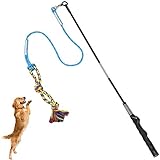
1. DIBBATU Flirt Pole for Dogs Interactive Dog Toys for Large Medium Small Dogs Chase and Tug of War, Dog Teaser Wand with Lure Chewing Toy for Outdoor Exercise & Training
Overview:
DIBBATU’s 33-inch flirt pole turns backyard play into a controlled hunt, letting dogs sprint, pivot, and tug while you barely move. The two-piece stainless-steel rod, 38-inch nylon cord, and 12-inch cotton-rope lure assemble in seconds and collapse just as fast for trunk or closet storage.
What Makes It Stand Out:
The secure swivel-eye snap hook stops the cord from kinking and keeps the lure spinning smoothly—small detail, huge frustration saver. The 33-inch handle is long enough for big dogs yet light enough for kids to join the game.
Value for Money:
At $24.99 you’re getting a full-body workout tool, impulse-control trainer, and chew-resistant lure in one; cheaper than one private training session.
Strengths and Weaknesses:
Pros: stainless hardware won’t rust, comfortable rubber grip, detachable lure doubles as standalone tug toy.
Cons: cord is non-elastic—sudden lunges can jolt your shoulder; fleece lure shredded by heavy chewers in days (buy backups).
Bottom Line:
A solid, mid-priced pole that tires high-drive dogs fast; just swap the lure for leather if you own a power chewer.

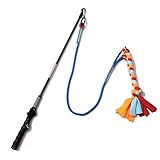
2. Interactive Flirt Pole Toy for Dogs Chase and Tug of War,Durable Teaser Wand with Pet Fleece Rope Tether Lure Toy to Outdoor Exercise & Training for Small Medium Large Dogs (Blue/Red, POLE-35 inches)
Overview:
This 35-inch blue/red teaser pole markets itself as “indestructible,” pairing 304 stainless steel sections with a 15-ton-test nylon cord and a soft fleece lure. Ten minutes of waving exhausts even hyper adolescents indoors or out.
What Makes It Stand Out:
The brand’s safety-first NON-bungee cord removes snap-back risk, while the reinforced eyelet lets the lure spin 360° without tangling—great for teaching directional changes.
Value for Money:
$27.98 lands at the premium end, but the replaceable lure system and chew-proof pole justify the spend over bargain aluminum poles that bend.
Strengths and Weaknesses:
Pros: comfortable EVA handle, machine-washable fleece, excellent for “drop-it” drills.
Cons: two-piece threading loosens after frantic sessions—check tightness often; lure not tough enough for mastiff jaws.
Bottom Line:
Best choice for safety-minded owners willing to pay a few extra dollars for tangle-free, shoulder-friendly action; keep a wrench handy for mid-play tightening.

3. YILAKO Flirt Pole for Dogs – Heavy Duty Interactive Dog Rope Toy, Agility Training Fishing Pole for Large and Small Breeds, Durable Exercise Stick with Replaceable Tails
Overview:
YILAKO’s aircraft-grade aluminum pole extends to 35 inches and ships with a squeaky, tail-like lure that crinkles and squeals to trigger prey drive. The 15-ton nylon cord and ergonomic foam handle round out the package.
What Makes It Stand Out:
Built-in squeaker inside the lure adds auditory stimulation most poles lack—great for distracted or deaf-prone dogs. Aluminum keeps weight under 11 oz, reducing arm fatigue.
Value for Money:
$21.99 undercuts stainless competitors while offering comparable strength; squeaky lure alone sells for $8 separately, so pole is essentially half-price.
Strengths and Weaknesses:
Pros: ultra-light, corrosion-proof, squeaker boosts engagement, collapses to 17 inches.
Cons: aluminum can bend if stepped on; squeaker dies after repeated chomps; cord has slight stretch that absorbs shock but shortens lifespan.
Bottom Line:
A lightweight, sensory-rich pole perfect for travel and squeak-motivated pups; just supervise chewers and keep spare lures on hand.

4. Flirt Pole for Small Medium Dogs,Interactive Chase and Tug of War Outdoor Dog Toys,Heavy Duty Dog Teaser Wand Chase Toys with Rope,Durable Flirt Stick Pole for Dogs Outside Agility Exercise & Training
Overview:
The shortest and cheapest of the group at 20.5 inches, this alloy wand targets small-to-medium dogs that don’t need the leverage of longer poles. A 43-inch cord and 15.7-inch fleece rope still provide ample chase radius.
What Makes It Stand Out:
One-piece pole-to-cord anchor eliminates the wobble common in screw-together designs—no unexpected collapse during zoomies. Price under twelve bucks makes it nearly disposable.
Value for Money:
$11.99 is impulse-buy territory; even if your terrier shreds the fleece in a week, replacement cost is negligible.
Strengths and Weaknesses:
Pros: rock-solid anchor point, lightweight, great for indoor use or tiny yards.
Cons: handle foam slips when wet; cord length may tempt big dogs to body-slam you; no swivel, so tangles happen.
Bottom Line:
Ideal starter pole for small breeds or budget-minded owners; upgrade to a longer, swiveling model once your dog outgrows the training stage.

5. SYOOY Flirt Pole for Dogs, Interactive Dog Toys Teaser Wand Play Pole with Fleece Rope Lure Chewing Toy for Small Medium Large Dogs Puppy Outdoor Exercise & Training …
Overview:
SYOOY’s two-section stainless pole ships with two colorful fleece lures and a non-slip silicone grip, promising high-energy chase and tug for dogs 10–100 lb. Bright cords double as visibility flags during dusk play.
What Makes It Stand Out:
Extra lure included out of the box—competitors make you buy backups separately. Snap-hook attachment lets you swap in tug rings or squeaky toys instantly.
Value for Money:
$15.99 sits in the sweet spot between flimsy bargain rods and over-engineered $30 models; two lures equate to roughly $6 savings.
Strengths and Weaknesses:
Pros: quick-breakdown design, vivid colors, comfortable grippy handle, generous 38-inch cord.
Cons: stainless sections can unscrew during vigorous play—apply thread tape; fleece not chew-proof, so disciplined “out” command required.
Bottom Line:
A colorful, mid-range flirt pole that keeps cash in your wallet and dogs panting; add thread-locker and you’ve got months of reliable cardio sessions.

6. AmaCielo Flirt Pole for Dogs, Interactive Toys Tug-of-war for Dogs, Durable Teaser Wand, Chase Toys with Rope Chewing Sticks, for Outdoor Exercise & Training
Overview: AmaCielo’s 5-in-1 flirt pole is a telescoping aluminum wand that ships with four natural-cotton chew toys, two spare nylon cords, and a carry bag, promising backyard-to-park cardio sessions for any size dog.
What Makes It Stand Out: The kit density is hard to beat—most rivals give you one lure; here you get two rope sticks, two ball knots, and backup tethers, all dyed with plant pigments. The 40-in reach keeps big dogs at a tooth-safe distance while still collapsing to 16 in for bike-basket storage.
Value for Money: At $26.99 you’re paying about $5 per accessory; given the aircraft-grade pole and inclusive pouch, it undercuts buying pieces separately and equals one cheap vet bill from destroyed shoes.
Strengths and Weaknesses:
Pros: silky telescopic lock, feather-light 204 g, non-slip handle, ethically dyed cotton.
Cons: printed “stop tugging” warning is mandatory—pole eyelets can bend if you ignore it; aluminum shows tooth dents after Rottweiler chomps.
Bottom Line: Best all-in-one cardio wand for multi-dog households who rotate toys daily; just remember it’s chase, not tug.

7. KOXXUD Flirt Pole Dogs, Dog Chase Toy with Squeakers Inside, Dog Fishing Pole Toy for Large Medium Small Dogs to Keep The Puppy Entertained and Physically Exhausted, Rope+Beaver, L
Overview: KOXXUD’s bargain pole is a 23-inch aluminum wand pre-threaded with a squeaky beaver and a spare rope, marketed as a ten-minute energy burner for medium-sized dogs under 60 cm shoulder height.
What Makes It Stand Out: The fixed-length design keeps things idiot-proof—no collars to twist, no phantom collapses mid-sprint. A stitched squeaker in the beaver’s tail adds sound prey drive without the slap-back danger of elastic bungee cords.
Value for Money: $15.99 is latte-money; if it saves one couch cushion, it’s already profitable. Two lures and two ropes effectively give you a backup set for free.
Strengths and Weaknesses:
Pros: dead-simple assembly, ultra-light, great for senior owners who can’t figure twist-locks.
Cons: not extendable, so face-height for Great Danes; nylon rope frays quickly with heavy chewers; company explicitly bans tug-of-war, limiting play styles.
Bottom Line: Cheap, cheerful cardio for apartments and small-to-mid dogs; power breeds should look elsewhere.

8. ASOCEA Dog Extendable Teaser Wand Pet Flirt Stick Pole Puppy Chasing Tail Interactive Toy for Small Medium Large Dogs Training Playing Exercise
Overview: ASOCEA’s no-name-looking wand stretches from 10 in to 35 in and arrives with two faux-fur tails plus two knotted ropes, positioning itself as the entry-level flirt pole for “aggressive chewers.”
What Makes It Stand Out: The company sells replacement tails separately—rare at this price—so you don’t trash the whole rig when the lure dies. Clip-on ropes let you sub in any chew toy your dog already loves.
Value for Money: $14.99 is the lowest price in the group, yet you still get four accessories; expect budget-grade aluminum that trades heft for affordability.
Strengths and Weaknesses:
Pros: feather-light for kids to wield, tails crinkle to pique curiosity, collapses small enough for jacket pocket.
Cons: twist-lock collapses under 50-lb pull, nylon cord tangles easily, no handle padding—blisters after 15 min.
Bottom Line: Perfect introductory wand to test whether your dog “gets” the flirt-pole game before investing more; supervise chewers.

9. SailStart Flirt Pole for Dogs Heavy Duty 40inch Extendable Aluminum Alloy Dog Flirt Pole for Large/Medium/Small Gogs,Interactive Dog Toys for Indoor/Outdoor
Overview: SailStart beefs up the classic flirt pole to 40 in, anodizes the aluminum, and bundles three cotton chew toys plus an elastic shock-cord section meant to spare canine necks during sudden stops.
What Makes It Stand Out: The elastic insert is subtle but smart—it stretches 3-4 in to absorb the jerk when your Malinois hits the end, reducing tooth trauma. A knit cotton ball doubles as dental floss, while the 0.44-lb overall weight keeps手腕 fatigue away during marathon sessions.
Value for Money: $31.99 is top-tier pricing, yet you receive essentially a lure-coursing starter set: pole, three lures, elastic leash link, and tote. Comparable agility equipment starts at fifty bucks.
Strengths and Weaknesses:
Pros: foam handle stays grippy when wet, elastic cord detaches if you prefer static, folds to 16.5 in.
Cons: elastic section will eventually fatigue; color-anodized shaft shows scratches; not ideal for inside low ceilings.
Bottom Line: If your dog is an athletic jumper, the shock absorption alone justifies the premium; otherwise choose a cheaper static model.

10. Flirt Pole for Dogs, Retractable Teasing Stick with Lure, Interactive Dog Toy for Outdoor Training Play Exercise, Flirt Stick for Puppy Small Medium Dogs
Overview: MUMUQ’s mid-range teaser retracts from 15 in to 27 in—shorter than most—making it purposely an indoor or sidewalk tool for puppies and small breeds that don’t need a 40-in arc.
What Makes It Stand Out: The telescopic mechanism uses metal button stops instead of twist collars, so you can lengthen mid-sprint with one hand while holding a coffee in the other. Two bright cotton rope lures are pre-tied with quick-release knots for instant swap-outs.
Value for Money: $19.99 lands in the sweet spot: cheaper than heavy-duty poles but $5 more than bare-bones versions; you pay for the one-hand adjustability and smoother painted shaft that won’t snag on coat fur.
Strengths and Weaknesses:
Pros: pocket-sized, snag-free rope surface, doubles as obedience target stick.
Cons: 27-in max reach lets big dogs crowd you; aluminum gauge is thin—bends if a terrier death-shakes the lure.
Bottom Line: Ideal city dwellers’ wand for hallway fetch and rainy-day zoomies; choose longer model for outdoor field play.
What Exactly Is a Flirt Pole (and Why Your Dog Already Loves the Concept)
A flirt pole is a rigid handle, a length of cord or bungee, and a lure that mimics prey movement. It triggers the full predatory sequence—orient, stalk, chase, grab, kill, dissect—without any real animals being involved. That matters because fulfilling innate drive in a controlled way lowers anxiety, reduces nuisance barking, and builds impulse control faster than most obedience drills.
The Science Behind Chase-Based Play: Mental Stimulation in Disguise
Chase play lights up the same neural reward centers as food. Rapid acceleration and deceleration flood the brain with dopamine, while the irregular movement patterns force split-second decision making. In other words, three minutes of flirt-pole equals a Sudoku puzzle wrapped in a HIIT workout—perfect for high-drive breeds that destroy couches when sudoku isn’t provided.
How a Flirt Pole Differs From Standard Tug Toys and Fetch Routines
Fetch is linear; tug is static resistance. A flirt pole introduces chaos—the lure darts left, climbs vertical, drops dead, then rockets away. That unpredictability recruits stabilizer muscles and fine-tunes reflexes, which is why canine conditioning coaches use poles to cross-train agility, flyball, and bite-sport dogs without extra impact on wrists and shoulders.
Core Anatomy of a Durable Flirt Pole: Handle, Cord, and Lure Explained
Handle length (usually 24–48 in) dictates leverage; material (fiberglass, aluminum, bamboo) determines weight-to-strength ratio. Cord choices range from braided nylon to stretchy bungee that absorbs shock when a 90-lb Malinois hits the end at 30 mph. The lure—faux fur, fleece, or firehose—must be replaceable because it will get eviscerated. Premium designs let you swap lures in under ten seconds so drive never drops.
Sizing Rules: Matching Pole Length to Dog Height and Handler Mobility
A pole that’s too short forces you to bend, killing your lower back; too long and torque skyrockets, risking shoulder strain. Rule of thumb: when the lure rests on the ground, the string should be 4–6 in longer than your dog’s withers height. If you have arthritis or knee issues, add another 6–8 in to the handle so you can drive movement from the wrist instead of the spine.
Materials Matter: Fiberglass vs. Aluminum vs. Carbon Fiber Handles
Fiberglass is cheap and flexible but can splinter under -20 °F temps. Aluminum is light, conducts heat (cold hands!), and kinks permanently if a dog chomps the shaft. Carbon fiber offers aerospace strength at half the weight, ideal for long sessions or handlers with wrist issues—just expect to pay 3× more. Whatever you choose, verify the wall thickness: <1 mm tubes buckle under torque from 70-lb dogs.
Cord Chemistry: Nylon, Bungee, or Paracord—Which Absorbs Shock Best?
Pure nylon transfers 100 % of hit force to your joints. Bungee cores stretch 8–12 in, cutting peak load by ~35 %, but UV rays and tooth punctures degrade latex strands in months. Paracord jackets add abrasion resistance yet zero stretch; some brands hybridize—paracord sheath over concealed bungee—to get the best of both worlds. Inspect the knot or clamp; if you see a simple overhand knot coated in glue, keep shopping.
Lure Longevity: Faux Fur, Fleece, Firehose, or Real Hide?
Faux fur moves like a squirrel tail but dies fast against power chewers. Fleece is quieter on indoor floors and washes easily, yet frays into strings that can thread intestines if swallowed. Firehose survives gnashers but flops like a wet noodle—great for drive building, poor for air-whip maneuvers. Real hide (rabbit, buffalo) supercharges drive but turns every session into a resource-guarding risk; use only under strict “drop” protocols.
Safety Thresholds: Weight Limits, Knot Integrity, and Breakaway Features
Most marketed poles quote 150-lb “pull strength,” yet that’s static tug, not a 40-lb border collie hitting the lure at full stride. Look for: (1) rated carabiners, not keychain aluminum; (2) knots backed by heat-shrink tubing; (3) optional quick-release clip near the lure so a caught tooth doesn’t become a fish-hook story. When in doubt, soak the cord overnight and test with a 2× dead-load; any slippage means retirement.
Indoor vs. Outdoor Use: Ceiling Height, Flooring Grip, and Weatherproofing
Indoor flirt sessions protect joints from frozen ground but need 9 ft of vertical clearance for jumps. Carpet adds traction; hardwood becomes an ice rink—lay down yoga mats or play “ground only” rules. Outdoors, UV-stable cords and rust-proof eyelets matter; beach sand turns nylon into 60-grit sandpaper, so rinse cords post-play and store dry. In sub-zero climates, bungee latex crystallizes; switch to static paracord for winter.
Drive Building vs. Impulse Control: Two Training Plans, One Tool
Spin the lure in crazy loops to fire up a lazy dog; end the moment he catches it—classic “drive building.” For impulse control, cue a down, then reward with one quick movement; the dog learns arousal is allowed only on cue. Alternate plans every other day to avoid pattern souring. Whichever you pick, always finish with a successful catch to prevent frustration.
Common Training Mistakes That Ruin Flirt Pole Fun (and How to Fix Them)
Mistake 1: letting the dog “win” every time → obsession skyrockets, drop cue vanishes. Fix: 8 out of 10 reps end on your terms. Mistake 2: waving the pole like a helicopter blade → shoulder tendonitis. Fix: draw figure-8s from the elbow, not the wrist. Mistake 3: playing immediately after meals → bloat risk in deep-chested breeds. Fix: wait 90 minutes post-kibble.
Maintenance Hacks: Cleaning Cords, Replacing Lures, and Storing for Longevity
Salt from slobber wicks into fibers and rots them from inside. Monthly bath: soak cord in warm water plus a dab of dog shampoo, rinse, snap-spin dry, then hang in shade. Rotate lures so one isn’t over-scented; store poles horizontally to prevent cord memory kinks. If the handle grip smells like a locker room, spritz with 1:1 vinegar-water and sun-dry—vinegar neutralizes bacteria without citrus oils that repel dogs.
Budget vs. Premium: Where Extra Dollars Actually Make a Difference
Entry poles ($20–$30) swap fiberglass for aluminum, skip bungee, and glue knots—fine for a 25-lb spaniel. Mid-tier ($40–$60) adds replaceable lures and UV-stable cord. Premium ($70–$120) invests in aerospace carbon, swivels to prevent cord twist, and modular sections that fit in a backpack. If you own a powerful working breed or plan to compete in bite sports, premium amortizes quickly when you’re not buying a new pole every season.
Eco-Friendly Considerations: Sustainable Materials and Zero-Waste Refills
Bamboo handles grow fast and sequester carbon, but check FSC certification. Some brands sell lure refill packs made from up-cycled climbing rope or upholsterer off-cuts, cutting landfill waste 40 %. Choose modular designs so a single snapped cord doesn’t trash an entire pole—look for screw-tip handles that accept standard 550 paracord spools you can buy in bulk, eliminating plastic clamshell packaging.
When NOT to Use a Flirt Pole: Health Conditions, Age Limits, and Breed Restrictions
Puppies <12 months with open growth plates risk angular limb fractures from explosive jumps. Senior dogs with spinal spondylosis can enjoy ground-only drags, but clear it with your vet first. Brachycephalic breeds overheat fast; limit sessions to 30-second bursts in <70 °F temps. Dogs recovering from cranial cruciate repair should avoid flirt poles entirely until cleared—torsion is the enemy of surgical implants.
Frequently Asked Questions
How long should a flirt pole session last?
Two to five minutes of active chasing, or until your dog’s tongue hangs half its normal length—whichever comes first.
Can I leave my dog alone with the flirt pole?
Never. unattended cords are strangulation hazards and most lures contain squeakers that can obstruct bowels if dissected.
Is a flirt pole safe for puppies?
Yes, but keep the lure on the ground, sessions under 60 seconds, and stop the moment your puppy tries to jump.
Will using a flirt pole make my dog aggressive?
No. properly structured play that includes clear rules (“drop,” “wait”) actually improves impulse control and reduces frustration-based reactivity.
How often should I replace the cord?
Inspect weekly; retire immediately if you see five or more broken sheath fibers or any exposed bungee latex.
Can flirt poles be used indoors?
Absolutely—just ensure 9 ft of vertical clearance and lay non-slip mats to prevent knee injuries on hardwood.
What’s the best way to teach a solid “drop” during play?
Freeze the lure, tuck it behind your back, and offer a high-value treat the moment the jaws open; mark with a clicker or “yes,” then restart within three seconds.
Are bungee cords better than static ropes?
For dogs >50 lb or handlers with shoulder issues, yes—bungee absorbs shock and lowers peak force by roughly one-third.
How do I clean saliva-soaked lures?
Hand-wash in mild detergent, rinse thoroughly, and air-dry; avoid fabric softeners—they contain fragrances that can deter dogs.
Can flirt pole exercise replace daily walks?
It can replace duration but not variety. Dogs still need sniff walks for mental enrichment; think of the pole as cardio, not a silver bullet.
The short version
Still deciding? Start with our #1 pick.
DIBBATU Flirt Pole for Dogs Interactive Dog Toys for Large Medium Small Dogs Chase and Tug of War, Dog Teaser Wand with Lure Chewing Toy for Outdoor Exercise & Training
Ranked first out of 10 picks in this guide.

Keep reading
More in Dog Toys
Chew Toy Safety: Size, Material, and When to Throw It Out (2026)
The wrong chew toy can crack a tooth or block an airway. Learn how to size…
Dog Enrichment Toys: How to Choose by Energy Level and Chewing Style (2026)
Match dog enrichment toys to your dog's energy level and chewing style, with session timings, rotation…
![Puppy Chewing Everything In Sight: Top 10 Solutions That Work [2026]](https://m.media-amazon.com/images/I/51Qd6T4RegL._SL400_.jpg)
Puppy Chewing Everything In Sight: Top 10 Solutions That Work [2026]
Your new puppy’s adorable until you discover they’ve turned your vintage sofa into modern art. Chewing…