Imagine coming home to a living room that hasn’t been re-decorated with couch stuffing. Picture your dog trotting over to greet you—calm, content, and pleasantly tired—instead of bouncing off the walls like a pinball. The secret isn’t a longer walk or a bigger yard; it’s giving your dog a job that fits inside her mouth. Occupying toys—purpose-built devices that engage the canine brain, mouth, and paws—turn downtime into “do time,” satisfying hard-wired instincts to scavenge, shred, solve, and chew.
In 2025, the canine enrichment market is exploding with new materials, safety standards, and design innovations, but the core mission remains the same: keep dogs busy in ways that are safe, species-appropriate, and genuinely fun. Whether you share your life with a tireless terrier or a contemplative collie, understanding how occupying toys work, what features matter, and how to introduce them strategically will save your shoes, your sanity, and maybe even your dog’s behavioral health.
Top 10 Dog Occupying Toys
Detailed Product Reviews
1. BSISUERM Dog Puzzle Toy Adjustable Treat Dispensing Ball Food Dispenser Tough Slow Feeder Puppy Enrichment Training Toy Pet Interactive Chase Toys for Small Medium Large Dogs to Keep Them Busy, Green

Overview:
The BSISUERM Dog Puzzle Toy is a bright-green barbell that wobbles across the floor while dribbling kibble from twin adjustable ports. Sized for any breed, it turns an ordinary meal into a rolling scavenger hunt that keeps dogs upright and engaged instead of inhaling food in seconds.
What Makes It Stand Out:
Dual independently-adjusted dispensing spheres let you mix two different treats/kibble sizes at once and fine-tune fall-rate from “trickle” to “jackpot,” something single-hole balls can’t match. The fixed-axis roll pattern keeps the action predictably inside one room—no chase-under-the-couch frustration.
Value for Money:
At just under ten bucks you’re getting a slow-feeder, mental-stimulation tool and boredom buster in one; comparable toys cost twice as much and do half the tricks.
Strengths and Weaknesses:
✅ Wide rubber mid-grip is quiet on hardwood
✅ Dishwasher-safe halves unscrew for quick fills
✅ Holds 1½ cups—perfect for a full meal
❌ Hard plastic can crack if used as a chew rather than a roller
❌ No rubber traction ring: skitters on tile until dust bunnies provide grip
Bottom Line:
Brilliant budget buy for turning kibble into cardio—just supervise chewers and set the aperture snugly to avoid carpet buffets.
2. BoYoYo Interactive Dog Puzzle Toys for Boredom, Dogs Enrichment Toy to Keep Them Busy, Treat Dispensing Slow Feeder

Overview:
BoYoYo’s pastel roller looks like a minimalist dumbbell but hides a spiral maze inside. ABS/nylon ends can be widened or tightened to meter kibble flow while a rubber sleeve muffles nighttime play, marketing itself as both puzzle and quiet slow feeder for polite apartment pups.
What Makes It Stand Out:
The internal cork-screw delays each treat’s exit—dogs must push, pause and push again—creating a true multi-step puzzle, not just “roll = food.” Rubberized body cuts clatter by about 70%, earning gratitude from downstairs neighbors.
Value for Money:
$12.34 lands a two-in-one slow bowl and enrichment toy that replaces messy snuffle mats; price per mental-stimulation minute is excellent.
Strengths and Weaknesses:
✅ Unique inner screw lengthens play 2–3× over standard balls
✅ Both ends accept different snack sizes simultaneously
✅ Quiet roll protects floors and ears
❌ Mid-seam can pop if a heavy chewer pries it
❌ Rubber sleeve scuffs and stains on light carpet
Bottom Line:
The best pick for owners who want brain-work without the 2 a.m. thunk-thunk soundtrack; supervise power-chewers and you’ll both sleep better.
3. Forfon 9 Pack All-Around Dog Puzzle Toy Set -Mentally Stimulating Dog Enrichment Toys for Small to Medium Smart Dogs, Includes Dog Lick Mat with Suction Cups

Overview:
Forfon’s nine-piece arsenal converts your living room into a doggy IQ test center: two suction-cup lick mats, three varied-difficulty treat balls, a slider puzzle, spatula, cleaning brush plus poop bags—basically an entire enrichment program boxed and ready.
What Makes It Stand Out:
One purchase covers every enrichment style—licking, sniffing, pawing, chasing—paired across beginner to ninja levels. You can combo lick mat + puzzle for thunder-phobic pups or scatter balls for multi-dog competition without extra shopping.
Value for Money:
$21.23 averages $2.36 per item; even dollar-store toys aren’t that cheap, and none are dishwasher-safe silicone or BPA-free ABS.
Strengths and Weaknesses:
✅ Graduated difficulty keeps puppies through seasoned puzzle-vets challenged
✅ Lick mats stick to tub or patio door for stress-free bathing/grooming
✅ Reusable silicone spatula means no peanut-butter-coated butter knives
❌ Treat balls are cat-sized; large breeds may swallow them
❌ No detailed guide: novice owners may open all difficulty gates at once and frustrate dogs
Bottom Line:
Swiss-Army kit of enrichment—just monitor size of balls and progress difficulties slowly for a tailor-made brain gym that fits any budget.
4. WOOF Pupsicle – Long-Lasting Interactive Dog Toy to Keep Your Pup Busy and Distracted – Safe for Dogs – Low-Mess Design – Dog Toys for Medium and Large Dogs 25-75 lbs

Overview:
The WOOF Pupsicle is a refillable rubber dumbbell that traps frozen “pops” or regular biscuits inside a drool-catching vessel, promising thirty calm minutes instead of the sixty-second gulp of most treat balls. Its screw-open belly and weighted base keep food off the rug and upright under heavy licking.
What Makes It Stand Out:
Freeze-ahead Pupsicle Pops turn the toy into a cold, soothing activity—think Kong but no tiny exit hole to power-wash afterward. Weighted bottom and lateral drip slots reduce drool puddles by about 90% compared with hollow toys.
Value for Money:
$19.99 feels steep until you tally vet savings on destroyed shoes and carpet cleaning; plus the mold (sold separately) lets you batch twenty pops for pennies.
Strengths and Weaknesses:
✅ Opens in middle—zero finger-cheese when stuffing
✅ Dishwasher-safe, food-grade rubber survives 75-lb jaws
✅ Accepts regular biscuits if you don’t buy refills
❌ Pops shrink and can slide out whole once half-melted
❌ Only one challenge level; smart dogs master extraction routine in a week
Bottom Line:
Top choice for owners who value easy clean-up and chilled contentment; rotate with other puzzles to keep genius dogs guessing.
5. SIHRMIU 2 Pack Dog Chew Toys for Aggressive Chewers,Boredom and Stimulating Best Dog Toys for Medium/Large Breed,Tough Almost Indestructible Dog Bones for Teeth Cleaning and Training

Overview:
SIHRMIU’s two-pack of nylon “tree-branch” chews targets merciless jaws that shred ropes and nylabones in minutes. A bacon-smoked brown fork and cedar-scented beige limb give forty-plus hours of supervised gnaw time while scraping tartar and sparing furniture.
What Makes It Stand Out:
Real hardwood smoking infuses scent through the entire core—not just a topical spray—so flavor lasts as the chew wears down. The 7.4-inch wishbone curve lets Mastiffs molar-chew without the choking risk posed by smaller nylon sticks.
Value for Money:
$11.77 for two long-haul chews undercuts single premium Nylabones by 50%; that’s cheaper than a week of rawhide and far safer.
Strengths and Weaknesses:
✅ Hardness resists pit-bull power; will not splinter
✅ Non-edible—no calorie panic for pudgy pups
✅ Raised bark texture polishes canines
❌ Rock-hard surface can fracture senior or weak teeth
❌ Nylon shards dull kitchen scissors when trimming rough ends
Bottom Line:
Indispensable for shred-happy power chewers, but screen for dental health first; pair with softer enrichment toys to balance jaw exercise and cognitive fun.
6. DR CATCH Dog Puzzle,Dogs Food Toys for IQ Training & Mental Enrichment,Dog Treat Puzzle(Blue)
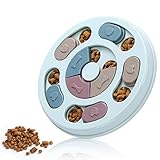
Overview: The DR CATCH Dog Puzzle is a budget-friendly, flat-panel slider puzzle designed for cats, puppies, and small dogs. Measuring 9.44″ square and just over an inch tall, it turns mealtime into a brain game by hiding kibble under sliding discs that pets must nudge with nose or paw.
What Makes It Stand Out: Its ultra-simple setup—no removable parts to vanish under the couch—makes it the easiest “first puzzle” on the market. The translucent blue lid lets animals see the food jackpot, instantly building drive, while the low profile stops energetic pups from flipping the board.
Value for Money: At $9.99 it’s one of the cheapest mental-enrichment tools available, costing less than two café lattes. If it saves one pair of shoes from teething destruction, it has already paid for itself.
👍 Pros
- Dishwasher-safe plastic
- Near-zero learning curve for owners
- And effectiveness as a slow-feed bowl that can stretch a meal to 10-15 min
👎 Cons
- Aggressive chewers can gnaw the sliders if left unsupervised
- And the fixed difficulty means brilliant dogs master it within days
Bottom Line: A perfect starter puzzle for kittens, puppies, or food-motivated small breeds; just don’t expect it to challenge Einstein-level canines for long. Supervise, swap out occasionally, and you’ll get serious enrichment per dollar.
7. HIPPIH Dog Puzzle Toy 2 Pack, Interactive Dog Toys for Treat Dispensing, Durable Puppy Toys for Teething, Dog Treat Ball for Teeth/Slow Feeder/IQ Training/Playing, Blue-2.75‘’, Green-3.14‘’

Overview: HIPPIH’s two-pack bundles a 2.75″ blue rubber treat ball with a 3.14″ green classic ball, targeting medium and large chewers. Load the green sphere with kibble, toss the blue for fetch, and you have a teething, IQ-training, slow-feed trio for under nine bucks.
What Makes It Stand Out: You receive two distinct toys—one dispensing, one bouncing—made from thick, milk-white rubber that survives serious jaws yet yields enough to protect teeth. The slight mint scent masks rubber odor and perks up picky dogs.
Value for Money: $8.99 for two durable balls breaks down to about $4.50 each, cheaper than most single-use tennis-ball packs and far longer-lasting.
👍 Pros
- Buoyant rubber that floats
- Unpredictable bounce for cardio workouts
- And internal maze that dribbles rewards to slow gulpers
👎 Cons
- Small-dog owners are out of luck—both balls are too wide for Yorkie mouths
- And heavy slobber can plug the dispensing holes
Bottom Line: A no-brainer purchase for Lab, Pittie, or Shepherd parents who want multifunctional toys without renewing a subscription box every month. Rinse, reload, repeat—these balls keep paying for themselves.
8. Chuckit! Interactive Dog Toy Ultra Fetch Stick – 12 Inch Outdoor Dog Toy for All Breed Sizes

Overview: The 12″ Chuckit! Ultra Fetch Stick is a foam-core, rubber-clad baton engineered for long-range, slobber-free fetch. Compatible with the RingChaser launcher yet equally throwable by hand, it replaces splinter-prone wood sticks for every breed from Pomeranian to Great Dane.
What Makes It Stand Out: Chuckit!’s trade-mark orange-and-blue color scheme guarantees visibility in grass, water, or snow, while the slightly squishy exterior saves canine teeth from the rigid shock of real timber. The streamlined shape sails farther than bulky dumbbells.
Value for Money: At $5.27 it costs less than a breakfast sandwich, and its durable construction outlasts several sacks of traditional sticks, making it arguably the cheapest form of exercise per hour.
👍 Pros
- Lightweight design that novice throwers can rocket 100 ft
- Floatation for lake dogs
- And smooth surface that rinses clean in seconds
👎 Cons
- It is NOT a chew toy—power chewers left alone will gnaw the ends ragged within an hour
- And the stick becomes a missile in strong winds
Bottom Line: The essential fetch upgrade for active families. Use it supervised, store it after play, and you’ll spend pennies per exhilarating sprint.
9. QGI Interactive Dog Toys, Random Path Electric Automatic Moving and Rolling Dogs Toy with Rope for Small Medium Large Dogs, Motion-Activated Dog Stimulation Toy for Boredom Relief (Orange)

Overview: QGI’s bright orange motorized ball is a motion-activated chasebot that jinks and rolls in random patterns, towing a colorful knotted rope for tug temptation. Two speed settings and a 3-min auto-cycle aim to entertain terriers to retrievers when human arms are busy.
What Makes It Stand Out: Unlike cheaper battery balls that merely vibrate, QGI uses an offset internal weight to produce erratic “escaped prey” motion, instantly triggering stalk-pounce instincts. The included rope lets tuggers thrash the toy without ripping the shell.
Value for Money: $22.49 positions it mid-range for electronic toys, but replacing a shredded couch or hiring a midday dog-walker costs far more, so solo-stimulation seekers will find value.
👍 Pros
- Rechargeable battery (USB cable provided)
- Quiet motor safe for hardwood
- And standby mode that saves power between pounces
👎 Cons
- It struggles on thick carpet
- Aggressive chewers can puncture the ABS shell
- And curious pups sometimes target the charging port cover
Bottom Line: Ideal for apartment pups with limited space and high prey drive. Schedule supervised sessions, keep claws trimmed, and you’ll buy peaceful conference calls and calm evenings.
10. FOXMM Interactive Dog Treat Puzzle Toys for IQ Training & Mental Stimulating,Fun Slow Feeder,Large Medium Small Dogs Enrichment Toys with Squeak Design

Overview: FOXMM’s 10″ puzzle pairs a slider-style slow feeder with a built-in squeaker centerpiece, blending nose work, problem solving, and squeaky payoff. Made from food-grade PP, it accommodates kibble, treats, or even a spoonful of wet food in the deeper wells.
What Makes It Stand Out: While most puzzles rely solely on food drive, the central squeaker acts like a victory trumpet the moment dogs slide the correct lid—perfect for easily bored adolescents who need auditory feedback.
Value for Money: $11.99 sits comfortably between bargain flippers and premium wooden boards, delivering squeaky enrichment without boutique-brand pricing.
👍 Pros
- Non-slip rubber rim that keeps the grid stationary on slick floors
- Generous 1.2″ depth that accepts raw bites
- And dishwasher-safe cleanup
👎 Cons
- Determined dogs learn to pry the sliders completely off
- And the squeaker can become annoying in multi-dog households or during Zoom calls
Bottom Line: A lively intermediate-level brain game for any size dog. Rotate it with other puzzles, insert high-value treats, and you’ll stretch suppertime while saving your furniture from boredom-induced mayhem.
Why Mental Occupation Matters as Much as Physical Exercise
Walks and fetch burn calories, but they don’t always drain mental batteries. Canine behaviorists increasingly see “occupational therapy” as the missing link between a physically tired dog and a truly balanced one. When a dog’s problem-solving circuitry lights up, neurotransmitters like dopamine and serotonin spike, producing a natural calm that lasts hours longer than the post-walk endorphin drop. In short, twenty minutes of nose-or-paw work can equal an hour of jogging—without the joint stress.
The Science Behind Canine Enrichment and Toy Engagement
MRI studies at Emory University show that dogs experience a measurable anticipation-reward loop when they work for food rather than receiving it gratis. This “contra-freeloading” phenomenon explains why a food puzzle captivates your dog more than a bowl of kibble. Add variable difficulty—flaps that open only sometimes, textures that change, scents that evolve—and you trigger the same intermittent-reward schedule that keeps humans glued to slot machines, only healthier.
How Occupying Toys Prevent Destructive Behaviors
Chewed table legs, excavated gardens, and 3 a.m. bark-athons are often symptoms of surplus mental energy. Occupying toys redirect those impulses into acceptable outlets. By giving your dog a legal “project,” you remove the emotional payoff of illegal ones. Over time, the brain literally rewires: the reinforcement history tied to your antique furniture fades while the reinforcement history tied to the toy strengthens, creating a habit you don’t have to police.
Matching Toy Types to Your Dog’s Predatory Sequence
Every breed carries a clipped version of the full predatory sequence—search, stalk, chase, grab, kill, dissect, consume. A border collie may live for the chase phase; a beagle obsesses over search. Observing which slice of the sequence your dog rehearses in daily life guides you toward toys that satisfy that specific itch. A “dissector” needs tear-apart textures; a “chaser” craves unpredictable movement. Miss the mark and your dog will invent her own finale—usually on your belongings.
Key Features to Evaluate Before You Buy
Durability vs. Destructibility: Finding the Sweet Spot
Ultra-tough isn’t always better. A toy that never yields can frustrate heavy chewers, leading to redirected aggression or dental fractures. The ideal occupying toy permits controlled destruction—layers that can be peeled, flaps that can be torn—while maintaining structural integrity around choke points like squeakers or cores.
Safety Certifications and 2025 Material Standards
Look for FDA-compliant food-grade polymers, REACH-certified textiles, and CPSIA-compliant dyes. New this year: the “Canine Chemical Passport,” a QR code batch-trace system that links to third-party lab results for heavy metals, phthalates, and forever chemicals. If the toy touches food or saliva, it should carry at minimum a “CPPP-2025” badge (Canine Product Purity Protocol).
Size, Shape, and Gag-Proof Design
A toy should be wider than the distance between your dog’s back molars plus half an inch. For brachycephalic breeds, choose flattened shapes that allow jaw extension without airway compromise. Avoid sphere-plus-rope combos that can wedge sideways across the pharynx.
Difficulty Scaling and Adjustable Challenge
Puzzles that are too easy bore; too hard frustrate. Prioritize toys with modular inserts, reversible panels, or variable tension screws. These extend the toy’s life cycle and let you match the difficulty curve to your dog’s learning trajectory, preventing the all-too-common “one-and-done” toy graveyard.
Sensory Variety: Texture, Scent, Sound, and Temperature
Canine noses possess up to 300 million olfactory receptors. A toy that introduces novel scents (think anise, vanilla, or rabbit fur) or retains freezer temperatures for gum-soothing relief will re-engage a dog who’s grown blasé about plain rubber. Multi-sensory layering—crinkle plus squeak plus bumpy mouth-feel—extends engagement time exponentially.
Eco-Friendly and Recyclable Options
Biopolymers derived from algae or mycelium now match the tensile strength of nylon without the micro-plastic shedding. Brands participating in the “LoopBack 2025” initiative accept returned toys for closed-loop recycling, turning your dog’s worn-out puzzle into next year’s fetch ball.
Understanding Your Dog’s Chew Style and Drive
Light nibblers, power chewers, and shredding artists each leave tell-tale signs: puncture marks vs. clean tears vs. pulverized debris. Document these patterns for two weeks, then match toy construction to destruction style. Power chewers need compressible hardness (shore 90A-95A) that yields slightly under 200 psi, while shredders prefer layered fabrics with rip-and-reveal rewards.
When to Introduce Occupying Toys in Your Puppy’s Development
Critical socialization closes around 16 weeks, but critical occupational windows remain open until 7 months. Introduce varied textures during weeks 12-20 to build oral tolerance and reduce future grooming stress. Freeze soft teething puzzles to channel the relentless urge to gnaw, preventing lifelong preferences for wooden table legs.
Avoiding Common Toy-Rot and Over-Selection
Cognitive fatigue is real. Rotating more than seven toys at once dilutes novelty and lowers each item’s reinforcing value. Instead, curate a “capsule collection” of 3-4 high-impact occupying toys, retire one every fortnight, and re-introduce it eight weeks later. The reappearance triggers a dopamine surge akin to new-toy joy without the price tag.
Budgeting for Longevity: Cost per Minute of Engagement
A $40 toy that survives 500 minutes costs 8¢ per minute; a $10 toy destroyed in 20 minutes costs 50¢. Track minutes, not dollars. Log start and end times for two weeks, then amortize. You’ll often find mid-priced, refillable puzzles offer the lowest cost per enrichment minute over your dog’s lifetime.
DIY Enrichment: Rules and Recipes for Home-Made Toys
Use only food-grade containers, avoid polyester string that frays into swallowable threads, and steer clear of single-use plastics that splinter. Freeze layers of wet food and veggies inside perforated silicone molds for a “pupsicle” that prolongs licking without risking tongue trauma. Always supervise the first three uses; document any item your dog can dismantle in under five minutes and retire it.
Transitioning from Food Bowl to Food Puzzle Without Stress
Start by replacing 10% of the meal, not the entire portion. Scatter the kibble on a snuffle mat so the dog still “wins” quickly, gradually moving food deeper into compartments. Over ten days, increase puzzle percentage while reducing bowl volume. End goal: 80% of daily calories earned via occupational work, 20% reserved for training jackpots.
Signs You Need a Tougher—or Easier—Puzzle
Watch for the three-bark rule: if your dog barks at the toy three times in under a minute, she’s frustrated; remove and simplify. Conversely, if she abandons the puzzle in under 30 seconds for three consecutive sessions, ramp up difficulty by inserting smaller openings or adding layers. Behavioral economists call this the “marginal challenge sweet spot.”
Maintenance and Hygiene: Keeping Toys Safe and Inviting
Biofilm can harbor salmonella and listeria. Disassemble puzzles weekly and scrub with an enzymatic dish detergent; run hard components through the dishwasher on a sanitize cycle. Air-dry completely to prevent mold—especially in rope fibers and hidden treat chambers. UV-C sterilizing wands offer a chemical-free option for delicate fabrics.
Travel-Friendly Occupying Toys for Dogs on the Go
Look for flat-pack designs that collapse into a credit-card-sized puck or fold like a silicone popper. Magnetic closures keep treats from raining out in your glove box. Bonus: toys that double as slow-feed bowls when inverted, eliminating the need to pack separate dishes for hotel stays.
Integrating Toys Into a Daily Enrichment Schedule
Anchor occupying toys to transitional moments: when you log on to work, when the kids come home from school, or when you prep dinner. These micro-rituals create predictability, lowering cortisol. Aim for three 15-minute “enrichment meals” daily, synchronized with natural canine crepuscular rhythms—dawn and dusk—plus a midnight snack puzzle for nocturnal nose-workers.
Frequently Asked Questions
1. How do I know if my dog is frustrated versus simply challenged by a puzzle?
Look for stress signals: rapid panting, hard staring, barking, or abandoning the toy to chew household items. A mildly challenged dog will persist with varied tactics; a frustrated dog repeats the same failed motion escalating in speed or force.
2. Can occupying toys replace walks entirely?
No. Mental enrichment complements but never replaces aerobic exercise, hydration, and social interaction. Think of toys as cross-training for the brain, not a treadmill substitute.
3. Are there any breeds that shouldn’t use occupying toys unsupervised?
Brachycephalic breeds and dogs with a history of esophageal dysphagia should be monitored, as should power chewers who’ve previously cracked teeth. When in doubt, film the first session and review with your vet.
4. How often should I deep-clean plastic puzzle toys?
Weekly for daily-use toys, monthly for occasional ones. Increase frequency if you feed raw or moist foods that leave residue.
5. Is freezing a toy safe for teething puppies?
Yes, provided the material remains flexible at freezer temperatures. Avoid rock-solid items that can fracture baby teeth; aim for shore 40A-60A silicone that gives under gentle thumbnail pressure.
6. My dog loses interest after two uses. What’s wrong?
Novelty decay. Implement a rotation schedule, increase difficulty incrementally, or layer scents (e.g., rabbit fur insert) to reboot interest.
7. Can occupying toys help with separation anxiety?
They can form part of a counter-conditioning protocol, but they’re not a standalone cure. Pair the toy with graduated departures and consult a certified separation-anxiety trainer for severe cases.
8. What’s the safest way to introduce a homemade toy?
Supervise the first three 5-minute sessions, inspect for wear, and remove if any piece separates. Document durability before extending unsupervised access.
9. Do senior dogs benefit from occupying toys?
Absolutely. Choose softer textures, larger treat chambers, and olfactory puzzles to accommodate diminished vision, hearing, or dental health.
10. How can I calculate the true cost per use of a toy?
Log total minutes of engagement until destruction or abandonment, divide purchase price by those minutes, and factor in treat refills if applicable. Aim for under 15¢ per minute for heavy daily use items.