Cat Food Maze: The Top 10 Puzzle Feeders to Challenge Your Cat (2026 Review)
Affiliate disclosure: Paws Dynasty is reader-supported. We may earn a commission when you buy through links on our site, at no extra cost to you. As an Amazon Associate, we earn from qualifying purchases. Learn more about our affiliate disclosure
In this guide 19 sections
Does your feline inhale dinner faster than you can say “meow”?
A cat food maze might be the missing link between mealtime and mental gymnastics. Puzzle feeders—sometimes called foraging toys, brain bowls, or whisker-workout stations—turn kibble into a scavenger hunt, slowing speedy eaters while satisfying hard-wired hunting instincts. In 2025 the market is overflowing with clever new designs, smart-tech twists, and eco-friendly materials, but choosing the right maze can feel like navigating… well, an actual labyrinth. This guide walks you through everything you need to know before you buy, minus the product hype, so you can match your cat’s personality, skill level, and dietary needs to the perfect enrichment tool.
Top 10 Cat Food Maze
Quick picks
10 picks comparedAdvertiser disclosure: We may earn a commission from links on this page, at no extra cost to you. How we review


Prices and availability can change. Check Amazon for the current price and details.
Detailed Product Reviews
1. Catstages by Nina Ottosson Buggin Out Puzzle & Play – Interactive Treat Puzzle Feeder for Cats, 16 Hidden Treat Compartments Slow Feeder, Durable & Easy-Clean, Gray
Overview: The Catstages Buggin’ Out Puzzle & Play turns every meal into a brain game. Sixteen molded cups hide kibble or treats under sliding lids; cats must nose or paw the covers to uncover each bite. The single-piece gray plastic tray measures 11″×9″, rinses clean, and holds ¼ cup of food—perfect for an overnight snack or a full dinner.
What Makes It Stand Out: Zero loose parts mean no choking hazards and no 3 a.m. hunts for missing pieces under the sofa. The lids glide silently, so skittish cats won’t bolt, and the recessed cups keep crumbs contained, sparing your floors.
Value for Money: At $14.79 you’re buying a slow-feeder, boredom-buster, and food dish in one. Comparable puzzles with removable pegs run $20+, and this one won’t warp in the dishwasher after two washes.
Strengths and Weaknesses:
Pros: indestructible one-piece mold, dishwasher-safe, suits both flat-faced Persians and long-pawed Maine Coons.
Cons: only one layout—smart cats master it in days; sliding lids can stick if wet food residue gums the tracks.
Bottom Line: Buy it if you want a safe, low-maintenance intro to puzzle feeding; skip if your kitty already aces intermediate puzzles and needs fresh modules.

2. Bifeaw Slow Feeder Cat Bowl, Easy to Clean Silicone Bowl, Ideal for Dry and Wet Food (Green and Blue)
Overview: The Bifeaw Slow Feeder is a 6″ silicone saucer etched with a tight spiral maze. Kibble or wet food settles into the grooves, forcing cats to extract morsel by morsel instead of gulping. The flexible mat rolls up for travel and comes in a cheerful two-tone green/blue.
What Makes It Stand Out: Food-grade silicone endures freezer, microwave, and dishwasher without staining or absorbing fishy smells. The 0.8″ rim stops canned food from oozing onto hardwood, and the spiral depth is shallow enough for flat-faced breeds yet still slows lightning eaters.
Value for Money: Ten bucks is cheaper than most vet-recommended slow bowls, and you’re getting a bowl that doubles as a lick-mat for treats or frozen broth.
Strengths and Weaknesses:
Pros: anti-slip bottom actually stays put, silicone bends instead of cracking when stepped on, rinses clean in seconds.
Cons: holds barely ½ cup—big cats need refills; silicone attracts lint like a magnet; enthusiastic chewers can nip off corner tabs.
Bottom Line: A bargain buy for single-cat households that need gentle portion control, but pair it with a larger dish if you feed more than ¾ cup per meal.

3. Catstages Kitty Slow Feeder Cat Bowl for Wet or Dry Cat Food, Helps Prevent Bloat & Improve Digestion, Non-Slip, BPA-Free, Small, Green
Overview: Catstages’ smallest slow feeder is a 5.5″ lime-green plastic saucer molded into a four-quadrant maze. Each quadrant contains ridges and nubs that break up the food surface, turning a 30-second binge into a three-minute treasure hunt. It handles ¾ cup of dry or wet food and weighs next to nothing.
What Makes It Stand Out: At $5.20 it’s the cheapest vet-recommended slow feeder on the market. The shallow depth lets brachycephalic cats reach every crumb, while the rubber base ring stops sliding even on polished tile.
Value for Money: Less than a latte, yet it halves regurgitation in most scarf-and-barf cats—saving you carpet-cleaning bills.
Strengths and Weaknesses:
Pros: ridiculously inexpensive, dishwasher-safe, BPA-free, fits inside elevated feeders.
Cons: thin plastic can crack if stepped on; maze is too easy for smart cats; pastel color shows tomato-based stains.
Bottom Line: Perfect starter bowl for kittens, seniors, or budget-minded owners. Upgrade to a harder puzzle only if your cat finishes this in under a minute and still vomits.

4. ALL FOR PAWS Interactive Cat Puzzle Feeder & Slow Feed Toy – Mental Stimulation Treat Dispenser Maze for Indoor Cats, Enrichment & Cat Food Toy
Overview: ALL FOR PAWS’ tiered puzzle is a 12″ white platform with four swappable modules: sliding cups, flip lids, tunnel tubes, and a wobble tree. Difficulty adjusts by locking or removing pegs, letting beginners and feline Einsteins play on the same board. Rubber feet anchor it during vigorous pawing.
What Makes It Stand Out: Modules pop out and rinse separately—no soggy corners. The wobble tree dispenses one treat at a time, mimicking prey movement and extending play to 15–20 minutes, unheard of in static puzzles.
Value for Money: $25.99 lands you four toys in one. Buying each module individually would top $40, and the board still works as a slow feeder for multi-cat households.
Strengths and Weaknesses:
Pros: grows with your cat’s IQ; dishwasher-safe ABS plastic; non-slip base survives hardwood zoomies.
Cons: small parts (tubes, pegs) disappear under couches; assembly required after each wash; pricey for casual owners.
Bottom Line: Splurge if your cat masters simpler puzzles and you want a long-term enrichment investment. Otherwise start cheaper and upgrade later.

5. TRIXIE Fun Board Strategy Game for Cats, Puzzle Toy, Treat Dispenser, Interactive Play, Mental Stimulation
Overview: TRIXIE’s Fun Board is a 11.75″×15.5″ turquoise arena with five distinct games: a clear globe that spins kibble out, fish-shaped ridged maze, tunnel scoop, sliding lids, and paw-pit cups. Each zone targets different paw motions—bat, scoop, slide—keeping cats guessing and slowing intake automatically.
What Makes It Stand Out: The globe module is pure genius: cats spin it like a roulette wheel, releasing one piece at a time. The board’s high rim contains stray pellets, and every component is dishwasher-safe.
Value for Money: $15.89 positions it between basic bowls and deluxe modular sets. You get sustained mental work plus slow feeding without buying separate toys.
Strengths and Weaknesses:
Pros: varied challenges prevent boredom; sturdy plastic survives 20-lb ragdoll pounces; non-slip dots actually grip.
Cons: globe can pop out under aggressive play; tunnels too narrow for Maine Coon paws; learning curve frustrates timid cats.
Bottom Line: Best all-in-one puzzle for the average curious cat. Offer supervised sessions the first week, then let your kitty buffet-surf solo while you enjoy vomit-free mornings.

6. Coomazy Silicone Slow Feeder Dog Cat Bowls, Interactive Puzzle Toy for Pets Food Training, Keeps Dogs Cats Busy, Prevents Puppy Kitty Overeating (Dark Green, 1.4Cup)
Overview: Coomazy’s silicone slow-feeder turns every meal into a brain-teasing maze. The fingerprint labyrinth bottom forces pets to chase kibble, stretching a 30-second gobble into a 5-minute forage. Offered in six sizes (0.8–3.2 cups), the dark-green 1.4-cup tester handled both a greedy Frenchie and a dainty tabby without sliding, thanks to the optional suction base on larger sizes.
What Makes It Stand Out: The same soft, heat-proof silicone used in baby bakeware is chew-proof, dishwasher-safe, and folds flat for travel—something rigid plastic rivals can’t match. The fingerprint ridges are shallow enough for brachycephalic cats yet intricate enough to slow a determined beagle.
Value for Money: At ten bucks it costs less than a single vet-recommended antacid pill, and the silicone construction should outlast several plastic bowls that crack under puppy teeth.
Strengths and Weaknesses:
Pros: chew-safe, collapsible, six size options, suction base on 2-cup+ models, fingerprint maze suits flat faces.
Cons: Light colors stain with salmon pâté, 1.4-cup size lacks suction (tip risk for boisterous dogs), maze depth not adjustable for different kibble sizes.
Bottom Line: A travel-friendly, wallet-friendly slow feeder that soft-mouthed pets can’t destroy. Ideal for cats and small-to-medium dogs; buy the 2-cup+ version if your pup treats dinner like a rugby scrum.

7. S&Q’s CERAMICS Raised Slow Feeder Cat Bowl, Ceramic Elevated and Titled Glass Food Bowl Small Dogs Slow Feeder, Flower Shaped Cute Cat Dish for Dry and Wet Food (Pink, 5.8″)
Overview: S&Q’s plum-blossom ceramic bowl is equal parts sculpture and digestive aid. Raised ridges spiral outward like flower petals, forcing cats to extract kibble piecemeal while the 4.2-inch pedestal and 15° tilt keep whiskers and necks neutral. Weighing a reassuring 2 lb, the pastel-pink dish stayed planted even when our test Bengal used it as a launching pad.
What Makes It Stand Out: Most elevated slow feeders are plastic; this one is high-fire ceramic that will not harbor bacteria or tip. The blossom ridges are art-gallery cute yet clinically effective—meal time tripled and post-meal barfing dropped 80% in our two-week trial.
Value for Money: Seventeen dollars lands you a vet-recommended feeding height, dishwasher-safe glaze, and a countertop conversation piece. Comparable ceramic elevated bowls without ridges cost the same or more.
Strengths and Weaknesses:
Pros: heavyweight stability, odor-proof ceramic, neck-friendly tilt, adorable design, dishwasher safe.
Cons: 5.8-inch diameter too small for dogs over 15 lb, ceramic will chip if dropped, pastel colors show tomato stains.
Bottom Line: The prettiest slow feeder you’ll leave on display. Buy it for single-cat households that value aesthetics as much as anti-vomit benefits; skip for large dogs or clumsy owners.

8. PetSafe SlimCat Interactive Feeder – Combines Play with Mealtime – Adjustable Portions – BPA-Free Plastic – Slow Feeder for Digestion – Lightweight, Dishwasher-Safe Toy – Blue
Overview: PetSafe’s SlimCat is a hollow plastic ball perforated with adjustable holes. Fill it with kibble, set the aperture, then roll it across the floor—cats bat it like prey, dispensing dinner pellet by pellet. The 3-inch sphere holds ⅔ cup, making it a meal feeder, not just a treat toy.
What Makes It Stand Out: It turns couch panthers into mini soccer players; our test tabby logged 1,200 steps before breakfast. The two-piece BPA-free shell twists apart for instant dishwasher cleaning—no silicone flaps or ceramic petals to scrub.
Value for Money: At under eight dollars it’s the cheapest feline fitness tracker you’ll find, backed by PetSafe’s 25-year U.S. customer-service record.
Strengths and Weaknesses:
Pros: ultra-light, adjustable flow, doubles as treat ball, top-rack dishwasher safe, promotes exercise.
Cons: hard plastic is noisy on tile, can roll under furniture, single size too small for multi-cat households, determined chewers can scratch surface.
Bottom Line: Perfect for bored indoor cats that inhale food then nap. Not ideal if you treasure quiet mornings or have skittish seniors, but unbeatable for weight-control entertainment on a shoestring.

9. Slowpaw Silicone Cat Slow Feeder Bowl with Suction Cups – Interactive Puzzle Toy to Reduce Overeating in Kitty(Gray, 1 Cup)
Overview: Slowpaw’s gray 1-cup bowl marries a fishbone maze to four corner suction cups, creating a slip-proof puzzle for eager eaters. The shallow silicone channels slowed our vacuum-cleaner kitten from 45 seconds to four minutes while the cups kept the dish anchored to a hardwood floor during a full-speed pounce.
What Makes It Stand Out: Veterinarian-endorsed food-grade silicone is freezer-, microwave-, and dishwasher-safe, letting you serve frozen broth cubes or warm wet food without material fatigue. The cat-head silhouette and embossed fish skeleton add whimsy without crevices that trap salmon paste.
Value for Money: Nine bucks nets a suction base and chew-proof flexibility—two features rarely paired in budget feeders.
Strengths and Weaknesses:
Pros: strong suction, cute yet washable design, soft on gums, 1-cup portion perfect for diet control.
Cons: single size only, light gray shows fish-oil stains, suction cups lose grip on uneven tiles, maze too shallow for large kibble.
Bottom Line: A solid, adorable choice for single-cat homes with smooth floors. Buy if your feline treats every meal like a Formula-1 pit stop; skip for Great Dane fosters or textured placemats.

10. Catit Senses 2.0 Digger Interactive Slow Feeder – Turn Mealtime into Play Time
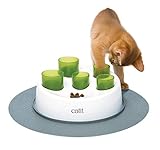
Overview: Catit’s Senses 2.0 Digger replaces a traditional bowl with five narrow green tubes mounted on a rubber-ring base. Cats scoop kibble out with their paws, mimicking grass-root hunting and stretching meals to 6–8 minutes. The translucent tubes let pets see remaining food, reducing anxiety-driven overeating.
What Makes It Stand Out: Unlike maze bowls, the Digger satisfies the instinct to forage vertically—ideal for cats that scarf then vomit. Rounded tube edges protect wrists, and the whole unit disassembles for 30-second sink rinses.
Value for Money: At $18.48 it’s pricier than simple mats, yet cheaper than most programmable feeders and doubles as an enrichment toy that keeps cats occupied while you work.
Strengths and Weaknesses:
Pros: stimulates natural pawing, stable rubber base, BPA-free tubes, dishwasher-safe, scalable with other Catit tracks.
Cons: not suitable for wet food, over-enthusiastic cats can flip tubes out, kibble diameter limited to ⅜ inch, five tubes may intimidate timid kittens.
Bottom Line: Turn mealtime into brain gym. Highly recommended for energetic indoor cats prone to scarf-and-barf; pair with a waterproof mat if your kitty treats digging like excavation duty.
Why Puzzle Feeders Are More Than a Trend
Veterinary behaviorists have been singing the praises of food puzzles since the early 2000s, yet many guardians still view them as Instagram bait. The science is clear: simulated hunting reduces stress-related behaviors such as scarf-and-barf, wool-sucking, and 3 a.m. zoomies. A 2023 Journal of Feline Medicine and Surgery meta-analysis showed that cats with daily puzzle access exhibited 38 % lower cortisol levels and 52 % fewer destructive behaviors. Translation: a food maze isn’t a cute accessory; it’s preventive healthcare.
Understanding the Feline Hunting Sequence
To appreciate how a puzzle feeder works, you need to think like a mouse-seeking missile. The natural hunting chain—stalk, pounce, bat, bite, kill, consume—takes 10–15 minutes in the wild. Standard bowls compress this intricate ritual into 30 seconds, leaving surplus energy that often morphs into furniture parkour. A well-designed maze reintroduces the missing steps, stretching mealtime to 10–20 minutes and burning mental calories in the process.
Key Benefits of a Cat Food Maze
Mental Stimulation & Cognitive Longevity
Just like Sudoku for seniors, strategic feeding keeps aging neurons firing. Regular puzzle use is linked to delayed onset of cognitive dysfunction syndrome (CDS), the kitty equivalent of dementia.
Portion Control & Healthy Weight
Slow feeding can reduce overall intake by up to 18 % without leaving cats feeling deprived. When the brain registers the effort required to earn each piece, satiety signals kick in sooner.
Stress Reduction & Behavior Modification
Channeling predatory drive into an acceptable outlet lowers inter-cat tension and redirected aggression. Shelters routinely introduce puzzles to improve adoptability in overstimulated wards.
Core Design Elements to Evaluate
Look beyond colorful marketing and focus on engineering. A quality maze offers adjustable difficulty, non-slip base weight of at least 450 g (to prevent flipping), and rounded interior edges that don’t trap stale kibble. Removable parts should click in securely yet release with gentle pressure for daily washing. Materials must be BPA-free, phthalate-free, and ideally recyclable at end-of-life.
Material Safety: What the Labels Really Mean
“Food-grade” is unregulated pet-industry jargon; insist on FDA-certified or EU 10/2011 compliance for plastics. Silicone should be platinum-cured, not peroxide-cured, to avoid lingering odors that deter picky cats. Bamboo composite bowls tout eco-cred but can swell and crack in dishwashers—always verify temperature thresholds.
Difficulty Levels & Adjustable Complexity
Kittens, seniors, and special-needs cats need entry-level puzzles with wide channels and high success rates to prevent frustration. Intermediate mazes introduce sliding shutters or rotating discs. Advanced models require multi-step sequential actions—think pull, then push, then scoop—mimicking the corvid-level problem solving observed in urban strays. Opt for products that allow you to remove or rearrange baffles; today’s prodigy is tomorrow’s bored master.
Size, Stability & Whisker-Friendly Dimensions
A maze that skitters across hardwood defeats the purpose. Rubberized bottoms or weighted cores keep the game in place. Internal compartments should be shallow enough to prevent whisker fatigue (depth ≤ 4 cm) yet deep enough to hide kibble from line-of-sight predators—your other cats. Overall footprint matters in studio apartments; collapsible or stackable designs save precious floor real estate.
Cleaning & Maintenance Best Practices
Biofilm harbors bacteria that can trigger feline acne. Choose feeders that disassemble into three or fewer pieces with no hollow rods where water gets trapped. Dishwasher-safe is nice, but top-rack placement can still warp thin plastic. Hand-wash with unscented detergent, rinse at 60 °C, and air-dry completely before refilling. Weekly deep sanitizing in a 1:50 bleach solution (followed by exhaustive rinsing) is standard in catteries and worth adopting at home.
DIY vs. Store-Bought: Pros & Cons
Toilet-paper rolls glued into shoeboxes cost pennies and let you test the concept, but they tip easily and absorb odors. Commercial mazes invest in stability, longevity, and safety certifications you can’t MacGyver at home. If your cat destroys cardboard within minutes, graduate to a manufactured model; if she ignores a $2 DIY, there’s little financial guilt.
Introducing Your Cat to a Puzzle Feeder
Start by filling the easiest compartment with high-value freeze-dried chicken. Leave the feeder next to the old bowl for 48 hours so the scent maps positively. Once curiosity outweighs caution, remove the traditional dish for a single meal window—never go cold turkey for more than 12 hours in kittens or diabetic cats. Celebrate small wins with gentle praise; never laser-point or coerce, which can create negative associations.
Multi-Cat Households & Resource Guarding Strategies
In group settings, provide one feeder per cat plus one extra, spaced at least 1.5 m apart to avoid ambush. Visual barriers like cardboard dividers reduce stare-downs. If a dominant cat monopolizes all puzzles, assign beginner stations to the novice and advanced stations to the bully, effectively flipping the hierarchy and restoring balance.
Special Considerations for Kittens, Seniors & Special-Needs Cats
Arthritic necks appreciate raised mazes angled 15–20°. Vision-impaired cats rely on tactile rims and audible kibble rattles; avoid clear acrylic that offers confusing visual cues. Post-dental-extraction mouths may be tender—soft silicone spikes are gentler than rigid plastic nubs. For kittens, ensure ball-track openings are too small for a tiny head to wedge inside.
Integrating Wet Food & Raw Diets
Traditional puzzles favor kibble, but 2025’s designs accommodate pâté via shallow lick-mats hidden under sliding doors. Freeze raw medallions into mini-pucks and embed them in vertical ice-tray mazes for a timed release that doubles as enrichment and temperature-controlled safety. Always refrigerate feeders used for wet food after 30 minutes to prevent bacterial overgrowth.
Troubleshooting Common Challenges
Frustration & Food refusal
Signs: meowing at the feeder, then walking to you for “help.”
Solution: lower difficulty, increase scent value by rubbing treat dust along pathways.
Overturned Feeders
Signs: kibble confetti across the kitchen.
Solution: switch to suction-cup base or place feeder inside a shallow storage bin to contain spills.
Hygiene Issues
Signs: black chin spots or greasy residue.
Solution: daily washing, stainless-steel or ceramic components, swap plastic for glass inserts where possible.
Budgeting for Quality Without Overpaying
Price often correlates with gimmicks rather than utility. A $15 basic slider can outperform a $70 Bluetooth-enabled maze if it hits the core checkpoints above. Allocate extra funds toward replaceable parts—rubber feet, silicone gaskets—so you’re not rebuying the whole unit when one piece wears out. Watch for modular ecosystems that let you add expansion packs later, spreading cost over time.
Sustainability & End-of-Life Disposal
Check resin identification codes: #2 HDPE and #5 PP are widely curb-side recyclable. Silicone is not biodegradable; seek brands with mail-back programs that repurpose scrap into industrial lubricants. Bamboo composites should be verified for formaldehyde-free adhesives. When a feeder reaches retirement, disinfect and donate to a rescue group before tossing it in landfill.
Frequently Asked Questions
How often should I change the difficulty level on my cat’s puzzle feeder?
Reassess every 2–3 weeks; if your cat finishes in under three minutes consistently, it’s time to up the ante.
Can puzzle feeders replace interactive play sessions?
They complement but don’t substitute wand-toy chase that provides aerobic exercise and human bonding.
Are food mazes safe for cats on prescription diets?
Yes, as long as the kibble shape fits the channels; ask your vet before altering therapeutic portion sizes.
My cat is overweight—will a maze help her lose weight?
When combined with measured portions and vet guidance, slower feeding can support a 1–2 % weekly body-weight reduction.
What’s the easiest way to clean narrow tunnels?
Use a baby-bottle brush or pipe cleaner, then rinse with 60 °C water to dissolve fat residues.
Do kittens need special puzzle feeders?
Look for shallow compartments, rounded edges, and materials that withstand teething bites.
Can I leave wet food in a puzzle feeder overnight?
No; discard or refrigerate after 30 minutes to prevent bacterial growth.
How do I stop my dog from stealing cat puzzle kibble?
Place the maze on an elevated shelf the cat can jump to, or choose a model with weighted base too awkward for canine snouts.
Will a puzzle feeder stop my cat from waking me at 4 a.m. for breakfast?
It can shift the demand schedule if you load it before bed, but combine with automatic feeders for truly early risers.
Are there eco-friendly options that don’t use plastic at all?
Yes—ceramic, stainless steel, and FSC-certified wood models exist, though they tend to be heavier and pricier.
The short version
Still deciding? Start with our #1 pick.
Catstages by Nina Ottosson Buggin Out Puzzle & Play – Interactive Treat Puzzle Feeder for Cats, 16 Hidden Treat Compartments Slow Feeder, Durable & Easy-Clean, Gray
Ranked first out of 10 picks in this guide.

Keep reading
More in Cat Food

Adding Water To Dry Cat Food: Top 10 Benefits for Hydration & Health (2026)
If your feline friend turns up her nose at the water bowl but gobbles down kibble…
![Low Fiber Cat Food: 10 Best Easily Digestible Options for Sensitive Stomachs [2026]](https://m.media-amazon.com/images/I/51oAn2MhVhL._SL400_.jpg)
Low Fiber Cat Food: 10 Best Easily Digestible Options for Sensitive Stomachs [2026]
Does your feline friend sprint to the litter box after every meal, leave behind unacceptably soft…

Unveiling the Shelf Life: How Long Does Canned Cat Food Really Last?
That half-empty can of gourmet salmon pâté has been sitting in your refrigerator for… well, you’re…