Best Senior Dog Food Large Breed: Top 10 for Joint Health & Mobility [2026]
Affiliate disclosure: Paws Dynasty is reader-supported. We may earn a commission when you buy through links on our site, at no extra cost to you. As an Amazon Associate, we earn from qualifying purchases. Learn more about our affiliate disclosure
In this guide 20 sections
Your big dog has spent years clearing the coffee table with one wag of the tail, but lately the tail wags a little slower and the hips need a gentle push before they’ll stand. Sound familiar? Large-breed seniors don’t simply “get old”—they experience a unique cascade of metabolic, muscular, and skeletal changes that can be dramatically slowed (or accelerated) by what’s in the food bowl. This guide walks you through the science, the label lingo, and the real-world feeding hacks that keep 70-pound retirees spry well into double-digit birthdays.
Whether you’re switching from an adult formula or shopping for your first “mature” bag, the goal isn’t just longevity—it’s quality of movement. Below you’ll learn how calorie density, joint-targeted nutrients, and even kibble shape can spell the difference between a dog who shuffles and one who still bounds.
Top 10 Best Senior Dog Food Large Breed
Quick picks
10 picks comparedAdvertiser disclosure: We may earn a commission from links on this page, at no extra cost to you. How we review


Prices and availability can change. Check Amazon for the current price and details.
Detailed Product Reviews
1. IAMS Proactive Health Healthy Aging Large Breed Dog Food for Mature and Senior Dogs with Real Chicken, 30 lb. Bag
Overview: IAMS Proactive Health Healthy Aging Large Breed Dog Food delivers targeted nutrition for senior dogs over 50 lbs. This 30-lb. bag centers on real, farm-raised chicken as its first ingredient, promising balanced support for the unique needs of aging large breeds.
What Makes It Stand Out: IAMS focuses on affordability without sacrificing core senior-dog essentials: glucosamine/chondroitin precursors for joints, a patented fiber-plus-prebiotic blend for gentle digestion, and antioxidants for immune defense. The kibble is sized for bigger mouths and contains no fillers like soy or wheat, making it a sensible “everyday premium” pick.
Value for Money: At $1.40 per pound, it’s the most budget-friendly senior large-breed recipe among major brands. You get clinically proven levels of key nutrients, a 100% complete-and-balanced AAFCO statement, and IAMS’ loyalty coupons that often drop the price below $38—excellent cost-per-feeding for multi-dog homes.
Strengths and Weaknesses:
Pros: Real chicken first; easy on sensitive stomachs; widely available; price.
Cons: Contains corn and by-product meal—fine for most dogs but not ideal for grain-free purists; joint-support dosage lower than premium vet brands.
Bottom Line: If you want reliable senior nutrition that won’t strain the wallet, IAMS Healthy Aging is a standout. It’s not the most exotic recipe, but it covers the aging-large-breed checklist better than most grocery-aisle competitors.
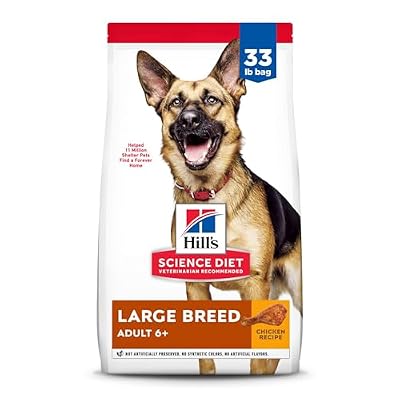
2. Hill’s Science Diet Large Breed Senior Dry Dog Food Adult 6+, Quality Protein for Joint Support & Lean Muscles, Chicken Recipe, 33 lb. Bag
Overview: Hill’s Science Diet Large Breed Senior 6+ is the veterinarian’s top-recommended aging diet, packaged here in a 33-lb. bag. The formula leans on decades of clinical research to protect joints, heart, kidneys, and skin in bigger, older dogs.
What Makes It Stand Out: Hill’s proves quality trumps trends: precisely calibrated glucosamine/chondroitin, omega-6/vitamin E ratios that heal dry coats within weeks, and controlled sodium/phosphorus to ease renal and cardiac workload. Every batch is fed in feeding trials—something few brands still do.
Value for Money: At $2.45 per pound it’s premium-priced, yet vet clinics routinely stock it because illness prevention offsets future medical bills. Frequent autoship discounts and Hill’s rebate program shave 10-15%, improving long-term value.
Strengths and Weaknesses:
Pros: Vet endorsement backed by peer-reviewed studies; palatability even for picky seniors; consistent nutrient batches; USA-made.
Cons: Contains brewers rice and whole-grain corn—safe but not “grain-free”; pricier than supermarket labels; large kibble may challenge tiny jaws.
Bottom Line: Owners who view food as preventive medicine will find the extra cost justified. For stable weight, glossy coats, and measurable joint improvement, Science Diet remains the evidence-backed gold standard.

3. Blue Buffalo Life Protection Formula Senior Dry Dog Food, Supports Joint Health and Mobility, Made with Natural Ingredients, Chicken & Brown Rice Recipe, 30-lb. Bag
Overview: Blue Buffalo Life Protection Formula Senior caters to dogs 7+ with a natural, antioxidant-forward recipe anchored by deboned chicken. The 30-lb. bag omits common allergens and adds Blue’s trademark LifeSource Bits—cold-pressed nutrient nuggets—to fight cellular aging.
What Makes It Stand Out: Blue differentiates through ingredient optics: no poultry by-product meals, no corn/wheat/soy, and a visible blend of blueberries, cranberries, and turmeric for oxidative defense. The phosphorus level is moderated, sparing senior kidneys, while L-carnitine helps maintain lean muscle mass.
Value for Money: $2.00 per pound sits mid-pack; you’re paying for the “holistic” label and ingredient purity rather than vet research. Periodic Chewy deals drop the price to $55, narrowing the gap with grocery brands.
Strengths and Weaknesses:
Pros: Clean ingredient list; LifeSource Bits entice picky eaters; supports coat and brain with fish-meal DHA; resealable bag.
Cons: Calorie-dense—portion control critical; some dogs pick out the dark Bits; glucosamine level lower than joint-specific formulas.
Bottom Line: For guardians who want recognizable ingredients and immune support without grain-free extremes, Blue Senior is a balanced, trustworthy choice. Just measure cups carefully to avoid senior weight creep.

4. Blue Buffalo Life Protection Formula Large Breed Senior Dry Dog Food, Promotes Joint Health and Immunity, Made with Natural Ingredients, Chicken & Brown Rice Recipe, 30-lb. Bag
Overview: Blue Buffalo Life Protection Formula Large Breed Senior fine-tunes the standard senior recipe for 55-lb.+ dogs, emphasizing joint integrity and controlled calcium. The 30-lb. bag keeps Blue’s “no junk” promise while upping glucosamine to 700 mg/kg.
What Makes It Stand Out: Tailored large-breed mineral ratios help prevent developmental bone issues in case younger seniors share the bowl. Added taurine and EPA from menhaden fish meal aid heart health, an oft-overlooked concern in aging giants. LifeSource Bits remain, delivering vitamins C & E for immune resilience.
Value for Money: $2.33 per pound is a 17% premium over Blue’s regular senior food, but still undercuts Hill’s and Orijen. Given the boosted joint package and large-bag convenience, the markup feels reasonable.
Strengths and Weaknesses:
Pros: Higher glucosamine/chondroitin than Blue standard senior; no by-product meal; includes taurine; kibble size perfect for big jaws.
Cons: Protein slightly lower than some performance seniors; bag isn’t always resealed well in transit; may soften stools during transition.
Bottom Line: Blue’s large-breed tweak hits the orthopedic sweet spot for retirees who still totter around the yard. If you like Blue’s ingredient ethics but need stronger joint support, this variant earns the extra cents per bowl.

5. Purina ONE High Protein Dry Senior Dog Food Plus Vibrant Maturity Adult 7 Plus Formula – 31.1 lb. Bag
Overview: Purina ONE Plus Vibrant Maturity 7+ targets mental youthfulness as much as physical health. The 31.1-lb. bag pairs high-protein chicken with medium-chain triglyceride (MCT) vegetable oil, shown in Purina studies to boost activity levels in dogs over seven by 20%.
What Makes It Stand Out: While competitors chase joint headlines, Purina ONE tackles canine cognitive decline: MCTs provide ketone energy to aging brains, improving alertness and owner-reported liveliness within 30 days. A dual-texture kibble—crunchy shells plus tender shredded pieces—keeps senior taste buds engaged when appetite wanes.
Value for Money: $49.98 for 31.1 lb. equates to ~$1.61 per pound, positioning it between budget grocery lines and super-premium brands. Given the proprietary cognition research and added glucosamine, the price feels like a bargain for senior enrichment.
Strengths and Weaknesses:
Pros: Clinically backed cognitive support; high-quality chicken first; omega-6 glow for coat; widely stocked at big-box stores.
Cons: Contains corn and soy—fine for most, yet not “grain-free”; MCT smell can seem oily to sensitive noses; protein (28%) may be high for dogs with early kidney issues.
Bottom Line: If your senior still fetches but forgets why halfway through, Purina ONE Vibrant Maturity offers an affordable brain boost alongside standard joint care. It’s science-driven nutrition without the specialist price tag.

6. Nutro Natural Choice Senior Large Breed Dry Dog Food, Chicken and Brown Rice, 30 lbs.
Overview: Nutro Natural Choice Senior Large Breed Dry Dog Food delivers targeted nutrition for aging large dogs through a chicken-first recipe packaged in a cost-effective 30 lb bag.
What Makes It Stand Out: The formula’s commitment to clean ingredients—non-GMO, no by-product meal, corn, wheat, or soy—sets a transparency benchmark while still hitting a mid-tier price point. Nutro’s “Feed Clean” philosophy is backed by USA cooking and global sourcing that prioritizes traceability.
Value for Money: At $2.50/lb you’re paying less than prescription diets yet more than grocery brands; the absence of cheap fillers and the inclusion of joint, digestion, and immunity support justify the premium over basic kibble.
Strengths and Weaknesses: Strengths include real deboned chicken leading the ingredient list, proven fiber blend for firm stools, and kibble size that encourages chewing to reduce dental tartar. Weaknesses: bag is not resealable, chicken-heavy recipe may not suit dogs with poultry sensitivities, and glucosamine level is modest compared with orthopedic-focused brands.
Bottom Line: A trustworthy, filler-free senior diet that balances quality and affordability—ideal for large-breed owners who want cleaner labels without jumping to veterinary prices.

7. VICTOR Super Premium Dog Food – Purpose – Senior Healthy Weight Management – Dry Dog Food for Adult Dogs – Gluten Free with Glucosamine and Chondroitin, for Hip and Joint Health, 15lbs
Overview: VICTOR Purpose Senior Healthy Weight Management is a gluten-free, Texas-crafted kibble designed to keep less-active seniors lean while protecting hips and joints.
What Makes It Stand Out: The proprietary VPRO blend—an exclusive mix of selenium, zinc, mineral complexes, and prebiotics—aims to “unlock” genetic potential, a science-forward angle rare in budget-friendly foods. Added L-Carnitine converts fat to energy, supporting weight control without starvation levels of fat.
Value for Money: $1.87/lb undercuts almost every premium senior formula; you receive multisource animal proteins, glucosamine/chondroitin, and USA manufacturing for close to grocery-store pricing.
Strengths and Weaknesses: Strengths include 78% animal protein, gluten-free grains for sensitive dogs, and a smaller 15 lb bag that stays fresh. Weaknesses: calorie density still requires strict portion control, kibble size is small for giant breeds, and fish meal can lend a noticeable odor.
Bottom Line: An economical, science-backed weight-control diet perfect for budget-minded owners who refuse to sacrifice joint support or domestic production quality.

8. Eukanuba Senior Large Breed Dry Dog Food, 30 lb
Overview: Eukanuba Senior Large Breed targets dogs 7+ years and 55+ lbs with a formula emphasizing muscular and cognitive longevity through enhanced glucosamine and brain-supporting DHA.
What Makes It Stand Out: The brand’s “50% more glucosamine” pledge (versus its adult recipe) delivers clinically meaningful joint support, while a tailored octacosanol-rich fat profile helps maintain senior stamina—tech borrowed from the sporting-dog line.
Value for Money: $2.90/lb sits in the upper-mid tier; you pay for decades of breeding-focused research, fixed antioxidant levels, and a 100% satisfaction guarantee.
Strengths and Weaknesses: Strengths include animal protein first, natural preservatives, and coat-specific omega-6 ratio. Weaknesses: contains corn and brewers rice—fillers some owners avoid—and the large kibble may challenge dogs with worn teeth.
Bottom Line: A research-driven choice for owners who prioritize joint and brain health and accept grain-inclusive formulas; worth the extra cents per bowl for visible mobility benefits.

9. Royal Canin Size Health Nutrition Large Aging 8+ Senior Dry Dog Food, 30 lb Bag
Overview: Royal Canin Size Health Nutrition Large Aging 8+ is a breed-size-specific diet engineered in France and crafted in the USA to address the nuanced physiology of aging giants.
What Makes It Stand Out: Royal Canin’s size-centric philosophy means every kibble dimension, mineral ratio, and fiber strain is optimized for 56–100 lb seniors; the formula even considers cardiac and renal aging patterns, not just joints.
Value for Money: At $3.67/lb this is the priciest option, yet you’re buying decades of veterinary nutrition data, rigorous batch testing, and a money-back palatability promise.
Strengths and Weaknesses: Strengths include highly digestible proteins that reduce nitrogen load on kidneys, precise phosphorus/sodium limits for heart health, and prebiotics that yield firm stools. Weaknesses: chicken by-product meal as first ingredient may rankle “real-meat” purists, and cost forces some owners to mix with cheaper kibble.
Bottom Line: If your senior’s bloodwork is edging toward early kidney or heart concern, this specialized nutrition can extend prime years—pay now, potentially save on vet bills later.

10. Purina ONE High Protein Dry Senior Dog Food Plus Vibrant Maturity Adult 7 Plus Formula – 8 lb. Bag
Overview: Purina ONE Vibrant Maturity 7+ offers an approachable 8 lb entry point into senior nutrition, pairing high protein with MCT-rich vegetable oil to recharge aging minds.
What Makes It Stand Out: Purina’s research showed 20% more activity in 7+ dogs fed MCT oil—a rare cognitive claim backed by peer-reviewed studies—while the dual-texture kibble keeps picky seniors interested without wet food add-ins.
Value for Money: $16.79 for 8 lbs equals $2.10/lb, placing it between grocery and premium; given the added neurology support and glucosamine, the price feels fair for small-bag convenience.
Strengths and Weaknesses: Strengths include real chicken first, natural glucosamine sources, USA production, and widely available coupons. Weaknesses: bag size is costlier per pound for large dogs, contains corn and soybean meal, and protein (28%) may be high for dogs with marginal kidney function.
Bottom Line: A smart, budget-conscious pick for small to medium seniors or as a rotational topper to rekindle appetite and mental spark—proof that brain fuel doesn’t have to break the bank.
Why Large-Breed Seniors Need Specialized Nutrition
Great Danes age faster on a cellular level than Chihuahuas; their musculoskeletal system bears more torque, their gut has less surface area per pound, and their epiphyseal plates close later yet degenerate sooner. A diet engineered for a 20-lb senior won’t deliver the right calcium-to-phosphorus ratio, glucosamine dose, or calorie count for an 80-lb shepherd mix. Oversize seniors therefore need macros and micros calibrated to slow sarcopenia, cushion cartilage, and prevent obesity-induced joint overload.
The Joint-Mobility Connection: What Happens Inside Aging Hips & Elbows
Articular cartilage is 80 % water. As collagen nets fray and glycosaminoglycans decline, the synovial fluid thins, turning each stride into sandpaper-on-sandpaper. Inflammation follows, triggering enzymes that chew even more cartilage. The cycle is irreversible, but the rate is negotiable—nutrients such as omega-3s, EPA/DHA, and undenatured collagen type-II can down-regulate inflammatory cytokines and help chondrocytes rebuild extracellular matrix.
Caloric Density vs. Lean Muscle: Striking the Right Balance
A 9-year-old Labrador’s metabolism drops 15–20 % compared with his 3-year-old self, yet his protein requirement increases to 25–30 % on a dry-matter basis to counteract muscle wasting. The trick is lowering total calories without diluting protein. Look for formulas that swap some fat for fiber (pumpkin, miscanthus grass, beet pulp) to create fullness while preserving lean mass.
Protein Quality Over Quantity: Amino-Acid Profiles That Matter
“Crude protein” is a blunt number; what counts is the digestibility and biological value. Senior large breeds thrive on diets where >90 % of the protein comes from animal sources—chicken meal, salmon, egg, hydrolyzed poultry liver—because these furnish the full spectrum of essential amino acids, especially leucine, which flips the muscle-building switch (mTOR) in older dogs.
Glucosamine, Chondroitin & MSM: Label Claims vs. Therapeutic Levels
The National Research Council hasn’t set minimums, but clinical studies show efficacy only when daily doses hit:
– Glucosamine HCl: 15–30 mg/kg
– Chondroitin sulfate: 10–15 mg/kg
– MSM: 25–50 mg/kg
If a 40-kg retriever needs 1 200 mg glucosamine, yet the kibble guarantees only 400 mg/kg of food, he’d have to eat 3 kg of kibble—an impossibility. Use guaranteed-analysis math, not marketing blurbs, to judge.
Omega-3 Fatty Acids: EPA/DHA Ratios That Reduce Inflammation
Fish oil beats flax every time because dogs convert ALA to EPA/DHA at <5 % efficiency. Aim for a diet with 0.4–1 % of total calories as combined EPA/DHA, or roughly 70–100 mg/100 kcal. Check that the fish source is specified (menhaden, anchovy, salmon) and preserved with mixed tocopherols, not ethoxyquin.
Controlled Calcium & Phosphorus: Protecting Kidneys & Bones
Large seniors need enough calcium to maintain bone density but not so much that it calcifies soft tissues or stresses aging kidneys. Ideal: Ca 0.8–1.1 %, P 0.6–0.9 % on a dry-matter basis, with a Ca:P ratio between 1.2:1 and 1.4:1. Avoid foods that list “meat and bone meal” generically; you can’t control the ratio.
Fiber & Prebiotics: Gut Health for Better Nutrient Absorption
A 2023 Journal of Animal Science study showed that senior dogs fed 4 % beet pulp plus 0.3 % FOS absorbed 11 % more protein and had 22 % lower fecal pH—both markers of improved colonic health. Look for combinations of soluble and insoluble fiber (pumpkin, psyllium, dried chicory root) to nourish microbiota and firm stools without blocking mineral uptake.
Antioxidants & Cognitive Support: Fighting Oxidative Stress
Beta-carotene, vitamin E, vitamin C, selenium, and lutein neutralize free radicals that accelerate joint and brain aging. Even more exciting: medium-chain triglycerides (MCTs) from coconut oil can provide ketone energy to neurons, improving leash responsiveness in dogs over 10 years. Seek formulas that guarantee vitamin E ≥ 150 IU/1 000 kcal and include MCTs or DHA for neuro-protection.
Kibble Size, Texture & Density: Dental & Digestive Considerations
Large-breed senior kibble should be:
– 15–20 % larger in diameter than adult kibble to encourage chewing (cleans teeth)
– 10 % less dense to float longer in gastric juice, reducing bloat risk
– Slightly porous so it shatters rather than shreds—gentler on worn molars
Run the “fingernail test”: if you can’t dent it with moderate thumb pressure, it’s too hard for receding gums.
Weight Management Strategies: Portion Control, Treat Budgets & Scoring
Body-condition score (BCS) 4/9 is the target—ribs palpable under a thin fat cover. Start with the bag’s lowest feeding guideline for ideal weight, then adjust 10 % every two weeks. Budget no more than 10 % of daily calories for treats, and swap high-fat biscuits for air-dried chicken breast or frozen green beans.
Transitioning Safely: 10-Day Switch Plans & Digestive Red Flags
Day 1–3: 25 % new / 75 % old
Day 4–6: 50 / 50
Day 7–9: 75 / 25
Day 10: 100 % new
Watch for reflux (lip-licking), loose stools, or refusal. If stools exceed 10 % moisture increase (cow-pie), back up one phase and add a tablespoon of plain canned pumpkin per 20 lb body weight.
Homemade & Fresh-Food Additions: What Helps vs. What Harms
Rotating in 10 % lightly steamed salmon or chicken thigh boosts palatability and taurine, but skip garlic, onions, and excessive broccoli—they oxidize red blood cells and suppress thyroid. Always balance Ca:P when adding meat by dusting 1 g finely ground eggshell per 1 lb muscle meat.
Reading Beyond the Buzzwords: Marketing Terms Decoded
“Holistic,” “premium,” and “human-grade” have zero legal definition. Instead, scan for:
– AAFCO nutritional adequacy statement for maintenance or all life stages
– Calorie content expressed as kcal/kg and kcal/cup
– Feeding trials conducted on senior dogs (rare but gold standard)
Vet Checks & Mobility Metrics: When to Adjust the Diet
Schedule a senior screen every six months. Ask for:
– Serum SDMA to catch kidney drift early
– Orthogonal joint radiographs to chart arthritis progression
– Gait-analysis pressure mat (available at rehab clinics) to quantify stride length
If stride length drops >15 % over six months, tighten calories 5 % and add omega-3s to 1.5 % of total calories.
Budgeting for Quality: Cost per Nutrient, Not per Bag
A $65 24-lb bag that delivers 4 200 kcal and 30 % protein costs $0.21 per 10 g protein, whereas a $45 30-lb bag at 27 % protein and 3 600 kcal rings in at $0.19 per 10 g protein. Factor in bioavailable protein, not sticker price, to find true value.
Sustainability & Ethical Sourcing: What Eco-Conscious Owners Should Know
Look for Marine Stewardship Council (MSC) logos on fish-based diets and chicken meal certified by the Global Animal Partnership (GAP). Avoid formulas whose first ingredient is vague “fish” sourced from trawler by-catch; overfishing threatens the very omega-3 chain your dog needs.
Frequently Asked Questions
1. At what age is a large-breed dog considered “senior”?
Most giant breeds (>80 lb) enter the senior phase around 6–7 years; large breeds (50–80 lb) around 7–8 years. Individual genetics and activity level can shift this window by ±1 year.
2. Can I just add joint supplements to my dog’s current adult food?
You can, but it’s hard to hit therapeutic doses without overfeeding calories. A senior-specific formula integrates the correct levels without weight gain.
3. Is grain-free safer for seniors with allergies?
True grain allergies are rare; protein sources (chicken, beef) trigger 90 % of reactions. Unless your vet has diagnosed a grain allergy, wholesome oats or brown rice provide beneficial fiber and spare kidney nitrogen load.
4. How do I calculate dry-matter protein when the bag lists “as fed”?
Subtract the moisture percentage from 100, then divide the reported protein % by the remaining dry fraction. Example: 24 % protein, 10 % moisture → 24 ÷ 0.90 = 26.7 % dry-matter protein.
5. My dog is a picky eater—will warming the food help?
Yes. Warming to body temperature (~38 °C) releases fat-soluble aromatics and increases palatability without altering nutrient value. Avoid microwaving fish-based diets; rapid oxidation can turn oils rancid.
6. Are raw diets appropriate for senior large breeds?
Raw diets can be higher in digestible protein, but bacterial load and unbalanced Ca:P ratios pose higher risks to older, immunocompromised dogs. If you go raw, choose a commercial formulation that meets AAFCO senior standards and has undergone high-pressure processing (HPP).
7. How often should I feed my senior dog?
Twice daily is ideal; it prevents post-prandial glucose spikes and reduces gastric distension—important for deep-chested breeds prone to bloat.
8. Can obesity reversal improve arthritis symptoms?
Absolutely. A 6 % body-weight reduction can decrease lameness scores by 30 %, per a University of Glasgow study. Combine calorie restriction with omega-3s for additive anti-inflammatory effect.
9. Is exercise still necessary if the food is joint-friendly?
Yes. Controlled, low-impact activity (20-min leash walks, swimming) stimulates synovial circulation and maintains muscle mass—both critical for joint stability.
10. What’s the single biggest red flag on a senior large-breed label?
“Meat and bone meal” listed high without specified animal species. It signals variable Ca:P ratios and low-quality protein—exactly what an aging, arthritic giant doesn’t need.
The short version
Still deciding? Start with our #1 pick.
IAMS Proactive Health Healthy Aging Large Breed Dog Food for Mature and Senior Dogs with Real Chicken, 30 lb. Bag
Ranked first out of 10 picks in this guide.

Keep reading
More in Dog Food
![Top 10 Science Diet Wet Dog Foods for 2026 [Vet’s #1 Choice]](https://m.media-amazon.com/images/I/51yWfa7U1CL._SL400_.jpg)
Top 10 Science Diet Wet Dog Foods for 2026 [Vet’s #1 Choice]
Your veterinarian’s eyes light up when you ask about canned food for your dog—not because it’s…

Recalls On Beneful Dog Food: Top 10 Safest Alternatives for Peace of Mind (2026)
If you’ve ever poured kibble into your dog’s bowl and wondered, “Is this really safe?”—you’re not…

Purina Pro Plan Sport Dog Food: 10 Best Formulas for Active Dogs (2026)
If your weekend calendar is packed with dock-diving, flyball tournaments, or sunrise trail runs, you already…