Few things ruin the serenity of a freshly scaped tank faster than a curtain of green algae or a creeping layer of mulm across the substrate. Whether you keep a single Betta in a nano cube or manage a sprawling 300-gallon Discus display, consistent, safe cleaning is the “secret sauce” veteran hobbyists swear by—but newcomers often overlook. The right aquarium cleaner doesn’t just pretty-up the glass; it protects finicky livestock, stabilizes water chemistry, and buys you precious free-time by automating the dirtiest chores.
Below you’ll find a deep-dive field guide to every major category of aquarium cleaner on the market in 2025, the physics (and marketing hype) behind each design, and the nuanced questions you should be asking before money leaves your wallet. Read once and you’ll spot gimmicks from a mile away, pair tools to your exact bioload, and keep every resident—from Caridina shrimp toAxolotl—safer in the process.
Top 10 Aquarium Cleaners
Detailed Product Reviews
1. Tetra Water Cleaner Gravel Siphon for Aquariums, Easily Clean Freshwater Aquariums
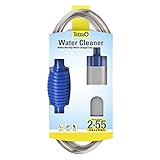
Overview: Tetra’s gravel siphon is the classic “no-frills” water-change wand that’s been helping aquarists knock out monthly maintenance for decades. Designed for tanks ≤ 55 gal, the 9-inch rigid tube attaches to a 6-foot flexible hose, priming bulb and a handy bucket clip—everything you need in one plastic bag.
What Makes It Stand Out: The oversized priming bulb gets water moving with two gentle squeezes (no mouth-siphoning swamp water) and the built-in clip keeps the hose anchored in your bucket so you can focus on vacuuming gravel instead of chasing a runaway line.
Value for Money: At under nine bucks it’s cheaper than a single neon tetra; spare parts are universal ⅜-inch tubing you can buy anywhere, so the whole rig is effectively lifetime-repairable for pennies.
Strengths and Weaknesses: Super-light, kink-resistant hose; wide-mouth bell prevents gravel jams; zero moving parts to break. On the downside, flow rate is dictated by your faucet height—deep 55-gallon stands drain slowly—and the stiff tube is awkward in nano tanks under 10 gal.
Bottom Line: If you want the simplest, most reliable way to perform 30 % water changes without electronics or batteries, this is the gold-standard siphon. Buy it, stash a spare, and you’re set for years.
2. Aqueon Aquarium Algae Cleaning Magnets Glass/Acrylic, Small, Black
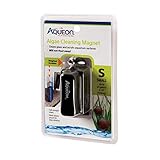
Overview: Aqueon’s small magnet cleaner sticks to glass or acrylic walls up to ¼-inch thick, letting you wipe algae without dunking an arm. Inside scrubber is weighted so it drops straight down if the two halves separate—no fishing with tongs.
What Makes It Stand Out: The curved, ribbed cleaning pad conforms to bow-front and cylindrical tanks, a detail most bargain squares miss; the outer handle is textured so it won’t slip when wet.
Value for Money: Eleven dollars lands you a rugged, non-rusting unit whose felt pad is reversible for twice the lifespan; generic replacement pads cost $3, cheaper than buying a whole new magnet.
👍 Pros
- Instant cleanup of light algae
- Zero setup
- And near-zero splash
👎 Cons
- Pad is too gentle for stubborn coraline or lime scale; magnet strength is modest—expect minor skips on ¼-inch glass; not safe for acrylic thicker than 3/16-inch
Bottom Line: For everyday film algae on small glass or thin acrylic tanks, this is the fastest, driest wipe-down you’ll find. Keep a scraper nearby for the tough stuff, but start here for daily sparkle.
3. QZQ Aquarium Gravel Cleaner [2025 Edition] Vacuum Fish Tank Vacuum Cleaner Tools for Aquarium Water Changer with Aquarium Thermometers Fish Net kit Use for Fish Tank Cleaning Gravel and Sand
![QZQ Aquarium Gravel Cleaner [2025 Edition] Vacuum Fish Tank Vacuum Cleaner Tools for Aquarium Water Changer with Aquarium Thermometers Fish Net kit Use for Fish Tank Cleaning Gravel and Sand](https://m.media-amazon.com/images/I/51S+2N20RtL._SL160_.jpg)
Overview: QZQ’s 2025 “all-in-one” kit turns the humble gravel vac into a Swiss-army toolbox: hand-pump starter, two extension tubes, algae scraper, fish net, thermometer strip and even a faucet connector for automated filling—an entire maintenance bay in one blister pack.
What Makes It Stand Out: The integrated strainer basket inside the bell prevents gravel or curious fry from shooting up the hose, while the oversized primer bulb creates robust siphon with three quick pumps—no electricity, no noise, no batteries.
Value for Money: Nineteen bucks buys four separate tools you’d normally piece together for $30+; all plastics feel thick and the silicone hose is kink-proof, so the kit should outlast the fish.
👍 Pros
- Tool-free assembly
- Adaptable 12–24-inch reach
- Bonus accessories actually useful
👎 Cons
- Instructions are tiny pictograms; the scraper blade is plastic
- Dull; bundled thermometer strip is off by ±2 °F
Bottom Line: If you run multiple tanks or hate the old shake-to-start hose dance, this bundle pays for itself in convenience alone. Just swap the scraper for a stainless blade and you’re golden.
4. DaToo Aquarium Mini Magnetic Scrubber Scraper Small Fish Tank Cleaner Nano Glass Aquarium Cleaning Tools with Super Strong Magnet

Overview: DaToo’s pocket-size magnet is purpose-built for pico and nano tanks ≤ 8 mm thick. Measuring just 4.5 × 2 inches, it scoots into corners that bigger cleaners can’t reach without bumping décor.
What Makes It Stand Out: N38 neodymium magnets deliver 140 N of force—strong enough to “feel” the scrub through thick eco-complete substrate on the pane; the flip-side abrasive felt obliterates spot algae in one pass.
Value for Money: Six dollars nets magnetic power that rivals $20 name-brand units; high-strength ABS housing is salt-water-safe and the magnets are glued, not press-fit, so they won’t swell and pop out.
👍 Pros
- Incredible grip
- Tiny footprint
- Ergonomic finger ridge stays comfy during vertical sweeps
👎 Cons
- Magnet is almost too strong—you’ll scratch acrylic if grit gets caught; outer handle lacks a safety float; not for 10 mm+ glass
Bottom Line: For desktop or bedside tanks where real estate is precious, DaToo delivers pro-level scrubbing power at impulse-buy pricing. Rinse pads before each use and your nano will sparkle.
5. AQUANEAT Aquarium Cleaning Tools, Fish Tank Cleaner Kit with Adjustable Long Handle, 5 in 1 Set Including Fish Net, Algae Scraper

Overview: AQUANEAT’s 5-in-1 pole kit telescopes from 9 to 32.5 inches, swapping between net, metal scraper, gravel rake, plant fork and flat sponge without forcing you to roll up your sleeves.
What Makes It Stand Out: Every attachment locks via spring-pin—no twist-off mid-rake disasters—and the stainless scraper blade is actually sharp, popping coralline algae sheets that plastic blades just smear.
Value for Money: Nine bucks equals $1.80 per tool; handle is anodized aluminum so it won’t snap like the all-plastic competitors in this price gutter.
👍 Pros
- Light
- Rust-resistant
- Reaches tank bottoms without torso dip; foam grip comfy for extended sessions
👎 Cons
- Rake prongs bend if you attack packed gravel; the net ring is riveted—not welded—so heavy fish can pop it; no algae pad for acrylic walls
Bottom Line: A solid “first kit” for new aquarists who want everything in one shrink-wrapped bundle. Treat the attachments gently and you’ll enjoy splash-free cleanups for many water changes to come.
6. SLSON Aquarium Algae Scraper Double Sided Sponge Brush Cleaner Long Handle Fish Tank Scrubber for Glass Aquariums and Home Kitchen,15.4 inches (1)

SLSON Aquarium Algae Scraper Double Sided Sponge Brush Cleaner Long Handle Fish Tank Scrubber for Glass Aquariums and Home Kitchen,15.4 inches (1)
Overview: The SLSON algae scraper is a budget-friendly, double-sided sponge brush designed for quick touch-ups on glass aquarium walls and even kitchen glassware. Its 15.4-inch plastic handle keeps hands dry while you wipe away green film or hard-water deposits.
What Makes It Stand Out: A generous 15-inch reach and a reversible sponge head let you flip to a fresh scrubbing surface mid-clean. The hanging hole keeps it drip-dry and ready beside the tank—no more lost brushes behind the stand.
Value for Money: At $5.98 it’s cheaper than a single algae pad from the big-box pet aisle, yet you get effectively two heads in one. Replacement might be needed every 6–8 months, but the cost per scrub is still pennies.
Strengths and Weaknesses:
+ Light, inexpensive, safe for glass
+ Works on kitchen jars or windows between fish chores
– Sponge shreds on sharp silicone seams
– Not for acrylic tanks (will scratch)
– Handle flexes if you press hard on stubborn algae
Bottom Line: For small glass tanks or spot-cleaning a nano setup, SLSON is a reliable, ultra-cheap option. Acrylic owners should skip it; glass aquarists on a shoestring should click “add to cart.”
7. AQUANEAT Fish Tank Cleaning Tools, Aquarium Double Sided Sponge Brush, Algae Scraper Cleaner with Long Handle

AQUANEAT Fish Tank Cleaning Tools, Aquarium Double Sided Sponge Brush, Algae Scraper Cleaner with Long Handle
Overview: A clone of budget brushes, AQUANEAT’s 12.5-inch wand offers the same two-sided sponge deal, trimming two inches off the handle and two dimes off the price versus rivals.
What Makes It Stand Out: The shorter handle fits cramped nano tanks and tight cabinets; 3” × 2.5” sponge size matches most small aquarium corners without bumping decorations.
Value for Money: $5.89 makes it one of the cheapest name-branded algae tools on Amazon—about the same as a coffee. Expect 4-6 months of weekly use before the foam starts to crumble, still excellent ROI.
Strengths and Weaknesses:
+ Price, comfort-grip texture
+ Dense foam lifts green dust in one pass
– Handle can snap if reefers lean hard on coralline
– Sponge glued, not screwed—no refills
– Strong chemical smell on arrival (rinse well)
Bottom Line: Ideal for desktop Betta tanks or kids’ first aquarium chores. Heavy-duty reef keepers with coralline farms should invest in a metal blade instead; everyone else can keep algae at bay for pocket change.
8. Laifoo 5ft-S Aquarium Siphon Vacuum Cleaner for Fish Tank Cleaning Gravel & Sand

Laifoo 5ft-S Aquarium Siphon Vacuum Cleaner for Fish Tank Cleaning Gravel & Sand
Overview: Laifoo’s hand-pump gravel vac rolls a 5-foot kink-resistant hose, sinkable intake tube and detachable strainer into a lightweight siphon aimed at 10- to 40-gallon setups.
What Makes It Stand Out: Integrated priming bulb—no mouth-sucking dirty tank water—earns instant gratitude from beginners. Crystal-clear hose doubles as a sight glass so you know when detritus stops flowing.
Value for Money: $11.99 sits in the sweet spot between airline-tube DIY jobs and bulky Python systems. The 3-month warranty plus responsive U.S. support adds confidence seldom seen in this price tier.
Strengths and Weaknesses:
+ Fast prime, soft vinyl safe for fish
+ Gravel guard keeps curious fry out
– 5 ft hose too short for large or tall tanks
– Bulb can leak if stored wet
– Flow rate modest; deep sand beds need patience
Bottom Line: Perfect starter siphon for small and medium aquariums. If your tank sits far from a sink, pair it with a hose coupler; otherwise it’s all you need for painless weekly water changes.
9. enomol Gravel Vacuum for Aquarium Water Changer Fish Tank Cleaning Tools,Siphon Universal Quick Pump Aquarium Water Changing (50ft)
enomol Gravel Vacuum for Aquarium Water Changer Fish Tank Cleaning Tools, Siphon Universal Quick Pump Aquarium Water Changing (50ft)
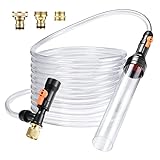
Overview: Enomol’s 50-foot faucet-driven kit targets big tanks, automating both drain-and-fill cycles via household water pressure—no buckets, no lifting, no spills. Five faucet adapters cover almost every laundry or garden tap.
What Makes It Stand Out: The dual-valve manifold lets you swap from siphon to refill without disconnecting anything, while the 16.5-inch gravel tube rinses substrate in real time, slashing maintenance on 75-gallon-plus systems.
Value for Money: At $45.99 it costs less than half of a comparable Python kit yet includes the same 50-foot reach. If you own a monster tank the time and back-pain savings repay the price within a month.
Strengths and Weaknesses:
+ Effortless 50% water changes in minutes
+ Adapters fit U.S. and metric taps
+ Silent operation; fish stay calm
– Requires threaded faucet; apartments with popup drains need extra parts
– Drainage uses tap water—slightly higher utility bill
– Hose coils fight you unless fully unrolled
Bottom Line: Highly recommended for dedicated aquarists running 55 gallons and up. Apartment dwellers should check faucet compatibility first; everyone else will wonder how they ever hauled buckets.
10. Luigi’s Fish Tank Cleaner – Turtle Tank Accessories – Gravel Vacuum for Aquarium – Hand Siphon Hose to Remove and Change Water or Sand in Minutes – Aquarium Cleaning Tools

Luigi’s Fish Tank Cleaner – Turtle Tank Accessories – Gravel Vacuum for Aquarium – Hand Siphon Hose to Remove and Change Water or Sand in Minutes
Overview: Luigi’s self-priming hand pump condenses water changes into a one-handed job: squeeze the orange bulb a few times and 30 liters evacuate in around five minutes through a 1.5-meter corrugated hose.
What Makes It Stand Out: Bulky turtle enclosures or paludariums with low water levels finally have a vac that won’t stall. The built-in plastic screen keeps hatchling turtles, shrimp or gravel out of the waste stream, protecting both livestock and drain buckets.
Value for Money: $12.99 pits it mid-range versus bargain bulbs, but a sturdier one-way valve and thicker hose earn back the extra dollars by not kinking or leaking after a month—typical of cheaper clones.
Strengths and Weaknesses:
+ Fast prime even in 2-inch water
+ Safe for delicate fry, sand, planted substrates
+ Compact—stores in a drawer
– Hose length not ideal for tanks farther than 5 ft from a bucket
– Flow slower on tanks over 40 gallons
– Clear hose yellows over time
Bottom Line: An excellent “grab-and-go” cleaner for turtle parents, shrimp breeders and anyone who loathes starter bulbs that collapse. Expect a year of hassle-free service—cheap insurance for a pristine tank.
Understanding the Aquarium Cleaner Ecosystem
Aquarium cleaners fall into three core families: mechanical, chemical, and biological. Mechanical devices physically export waste (think siphons or magnet scrapers). Chemical media alter dissolved pollutants (phosphate resins, sludge-reducing enzymes). Biological boosters accelerate existing bacterial consortia to out-compete algae. A balanced clean-up crew usually blends at least two families to avoid bottlenecks.
Mechanical Algae Scrapers: Blades, Pads, and Magnets
Algae scrapers rely on friction—either a user-controlled handheld pad or dual-paned magnetic assembly—to sheer stubborn biofilms off glass or acrylic. Look for reversible heads (felt for daily polishing, stainless or plastic blades for calcified spots) and rare-earth magnets rated for your pane thickness; weak magnets jump, scratch, or trap sand grains that act like sandpaper.
Electric Algae Cleaners: Are Robotic Glass Scrubbers Worth It?
Robotic scrubbers roam the pane on rubber tracks, swapping human elbow grease for mini-propellers and rechargeable lithium cells. Their appeal is consistency: two passes a day prevent green spot algae from ever anchoring. Downsides include up-front cost, periodic seal replacement, and limited corner reach. Consider them in high-Evaporation setups where daily manual wiping is impractical.
Gravel Vacuums: Siphoning Basics Every Aquarist Should Master
A gravel vacuum’s Python-style venturi tap creates a low-pressure column that lifts debris without stripping gravel. Diameter matters: wider tubes clog on fine sand, while narrow barrels choke in deep accumulations. Match tube width to substrate granule size—and always start siphons with a pump bulb, not your mouth, to avoid a bacterial gulp.
Manual vs. Battery-Operated Gravel Cleaners
Manual vacuums cost pennies, never leak AA-battery acid, and you “feel” the hit when you hit a shrimp hiding in the sand. Battery models add mini-impellers that can send mulm directly into a mesh cartridge, saving buckets and spilled water. Trade-off: they move less water per minute, so large debris may sink back down before it reaches the filter bag.
Water-Changer Systems: How to Drain and Refill Without Buckets
Hoses that thread onto kitchen faucets exploit municipal pressure to drain and refill in one motion. Built-in vacuum valves let you churn substrate mid-drain. The Achilles heel is temperature variance—match tap output to tank water with an in-line thermometer or risk thermal shock. Install a carbon-block refill cartridge if your city uses chloramine.
Magnetic vs. Handheld Glass Cleaners: Safety, Scratch-Risk, and Ergonomics
Magnetic pairs keep your hands dry but invite trapped sand grains that gouge acrylic. Handheld scrapers need you to roll up sleeves yet offer tactile feedback and tapered blades that reach silicone corners. A hybrid approach—magnet for daily swipes, handheld for fortnightly deep cleans—minimizes both fatigue and scratch incidents.
Specialty Pads and Scrapers for Acrylic Tanks
Acrylic scratches at a Mohs hardness of ~3, versus plate glass at 5.5. Manufacturers counter with polyether foam pads, plastic razor blades, and lubricating liquid polymers that reduce friction. Skip melamine sponges (micro-abrasive) and never use metal blades unless specifically labeled “acrylic-safe.” Light pressure and a 45° angle remain the golden rules.
Algae-Eating Organisms: Natural Cleaners in a Bottle
Living “clean-up crews” (Amano shrimp, Nerite snails, Otocinclus) graze 24/7 on microalgae, reaching nooks no scraper can. Quarantine new arrivals 2–4 weeks; wild-caught snails often carry trematodes. Supplement calcium for snails and avoid copper-based medications. Remember: they add bioload—one medium Nerite ≈ 0.5 g of daily waste—so adjust feeding accordingly.
Chemical Filter Media: Resins, Pads, and Enzymatic Additives
Phosphate-adsorbing resins starve green hair algae by driving PO₄ below 0.03 ppm. Enzymatic blocks accelerate sludge digestion but can crash dissolved oxygen at night. Always run activated carbon afterward to remove released organics. Test with a colorimeter, not strip tests, when chasing sub-ppm nutrient levels for prize-grade Crystal Red shrimp.
Automatic Glass Cleaners vs. UV Sterilizers: Which Controls Algae Better?
Automatic scrubbers remove visible algae physically; UV sterilizers prevent its water-borne spores from reproducing. In tanks with heavy stocking, a UV unit (≈ 15 W per 100 gal) can halve green-water blooms in four days but won’t touch attached algae on glass or leaves. Combining both methods creates a “belt-and-suspenders” approach for show aquaria.
Features That Matter in a Gravel Vacuum: Flow Rate, Adjustability, and Self-Start
Target flow equal to 25% of tank volume in five minutes (e.g., 20 gal tank → 5 GPM) to lift debris before it redistributes. Thumb-operated flow gates let you dial back over powerful taps so substrate stays put. Self-priming pump bulbs must be silicone, not PVC, to avoid cracking in cold climates.
Ergonomics and Build Materials: Why Handle Length and Hose Bore Matter
A 24-inch handle saves your back in 24-inch-deep tanks; choose telescopic aluminum over straight plastic so sections won’t snap under torque. Hose bore of ½-inch suits nano tanks (less water swap), while ¾-inch halves drain time in 100-gallon systems. Clear vinyl tubing lets you spot trapped fish or fry before it’s too late.
Maintenance and Longevity: Protecting Seals, Magnets, and Blades
Rinse magnetic scrubbers in RO water to dissolve salt creep that crystallizes between felt and housing. Lubricate O-rings on battery vacuums with pure silicone grease once a quarter, and store blades in a dry sleeve—stainless can pit in humid cabinets. Replace worn felt pads early; frayed fibers trap grit that etches glass over months.
Common Cleaning Mistakes That Harm Fish and Corals
Never dose vinegar or citric acid inside the display tank to “loosen” algae—it drops pH and burns gill tissue. Avoid 100% water changes; bacterial biota need time to recolonize filter media. Siphon on a gentle slope so substrate slides back down, preventing bare-patch anaerobic zones that later release hydrogen sulfide.
Cost vs. Performance: Budgeting for a Comprehensive Cleaning Arsenal
Allocate roughly 1% of tank set-up cost per month toward cleaning tools and consumables. A $1,000 system therefore budgets ~$10 monthly (replacement pads, carbon, diatom-boosting enzymes). Skip “all-in-one” kits if you run specialized biotopes—reef, black-water, high-energy planted—because cross-over parts often compromise on critical specs like magnet pull or hose diameter.
Frequently Asked Questions
- How often should I scrape algae in a high-light planted aquarium?
- Can I use a metal razor blade on low-iron, starfire glass without scratching?
- What’s the safest way to start a gravel siphon in a shrimp-only tank?
- Are battery-powered vacuums strong enough to extract cyanobacteria mats?
- Do UV sterilizers also kill beneficial nitrifying bacteria?
- How do I know if phosphate resins are depleted and need replacement?
- Is it normal for magnets to make squeaking noises during cleaning?
- Can I run chemical filter media while medicating the tank with antibiotics?
- How do I calibrate faucet-water temperature to match my discus display?
- What backup cleaning method should I keep ready during a power outage?