Ever watched a dog lock onto a rope, tail whipping like a metronome on triple-time, and wondered why such a simple scrap of fabric turns the average living room into a WWE arena? Tug-of-war isn’t just canine chaos—it’s a high-value training tool, mood booster, and relationship builder rolled into one slobbery game. In 2025, as more guardians trade passive fetch for interactive sports, savvy owners are discovering that a well-timed tug session can replace rows of treat pouches and hours of mindless yard play.
Below, we’ll unpack the science, training protocols, and everyday wins that make tug toys one of the smartest additions to your enrichment toolkit. Whether you share life with a tireless Malinois or a couch-potato Pug, the following deep dive will show you exactly how tug supports physical conditioning, emotional resilience, and polite manners—without wrecking your shoulder or your furniture.
Top 10 Benefits Of Tug Toys For Dogs
Detailed Product Reviews
1. Giant Dog Rope Toys for Extra Large Dogs – 42 Inch, 6 Knot Tough Rope Chew Toys for Large Dogs – Benefits Non-Profit Animal Rescue – Indestructible Dog Toy for Aggressive Chewers

Overview:
This 42-inch, six-knot cotton rope is billed as the “largest dog rope toy on the market,” purpose-built for Great Danes, Mastiffs, and other XXL breeds that shred ordinary tug toys in seconds. A roll of custom poop bags is hidden inside the center knot, so you’re never caught empty-handed on walks.
What Makes It Stand Out:
Pure scale: four feet of 1.2-inch-thick marine-grade cotton that doubles as a leash in a pinch. The hidden poop-bag core is a clever twist nobody else offers, and every purchase funds a non-profit animal rescue.
Value for Money:
At $15.99 you’re getting a jumbo tug, a poop-bag refill, and a feel-good donation—cheaper than buying those items separately at a pet store.
👍 Pros
- Gigantic length spreads wear over more fibers; soft cotton won’t fracture teeth; rescue donation.
👎 Cons
- Cotton still frays eventually—aggressive chewers will create “cotton candy” confetti in weeks; machine washing shortens life; too bulky for indoor play
Bottom Line:
If you own a horse-sized dog that laughs at normal ropes, this is the best mix of size, safety, and charity for under sixteen bucks.
2. Forfon Heavy Duty Dog Toy for Aggressive Chewers – Tough Chew Toys for Large Dogs, Ideal for Tug-of-War & Teeth Cleaning, with 3 Rope Toys & 2 Dog Bags

Overview:
Forfon’s $8.99 bundle gives you three differently shaped cotton ropes plus two bonus poop bags—everything a big dog needs for tug, fetch, and dental scrubbing without breaking the bank.
What Makes It Stand Out:
Triple-toy variety: one 4-knot bar, one figure-8, and one ring mean you always have a dry backup while another is in the wash.
Value for Money:
Under three dollars per rope and two rolls of bags thrown in makes this the cheapest cost-per-minute of chew time we’ve tested.
👍 Pros
- Light enough for puppies yet stout enough for Labs; fibers floss teeth; bright colors are easy to spot in grass.
👎 Cons
- 1-inch diameter is skinny for giant breeds; ends unravel quickly if dog is left unsupervised; bags are single-ply
- Tear on cold mornings
Bottom Line:
Perfect starter set for new rescues or multi-dog households on a budget—just don’t expect lifetime durability from the thinnest rope.
3. Feeko Heavy Duty Dog Rope Toys for Large Breed Aggressive Chewers, 2 Pack Indestructible Teeth Cleaning Tug of War Toy
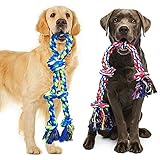
Overview:
Feeko packs two extra-large ropes—27 in. four-knot and 20 in. five-knot—into a $12.99 set aimed squarely at power-chewers who red-card lesser toys.
What Makes It Stand Out:
Both ropes use unbleached, dye-free cotton so owners worried about chemicals can play worry-free; knots are heat-pressed to reduce slip.
Value for Money:
Roughly $6.50 per rope is mid-pack pricing, but the heavier ¾-inch gauge gives more material than budget sets.
👍 Pros
- Neutral color hides dirt; washable; gentle on gums yet dense enough for a satisfying chew.
👎 Cons
- No handle loop for human grip; still shreds under true “destroyer” breeds like Cane Corsos; faint natural cotton smell attracts some dogs to ingest fibers
Bottom Line:
A solid, chemical-free step up from bargain bin ropes—best for large (not literal giant) dogs who chew hard but don’t eat their toys.
4. Aitmexcn Interactive Dog Rope Toys Tug of War, Tough Dog Toys for Large, Medium & Small Dogs, 100% Cotton Chew Toys for Boredom, Pull Ball Rope Teeth Cleaning

Overview:
Aitmexcn’s 10-minute-energy-burn claim centers on a double-ball, 3-ply reverse-braided rope tested by 50 dogs for an hour without failure—promising indoor peace for $9.99.
What Makes It Stand Out:
S-shaped cross nodes act like built-in toothbrushes, while the dual-ball design keeps hands clear of slobbery rope ends during furious tugging.
Value for Money:
Comparable dental chews cost twice as much and last half as long; here you get toy plus tartar control in one.
👍 Pros
- Balls add fetch versatility; 25-inch length fits small to large jaws; no squeaker to gut.
👎 Cons
- Balls are hollow plastic—heavy chewers will eventually crack them; rope begins stiff
- Loosens only after a week of soaking
- Play
Bottom Line:
An excellent hybrid tug/fetch rope for apartment dogs that need quick cardio bursts, provided you toss it once the balls show stress cracks.
5. KONG Tug Toy – Dog Supplies for Tug of War – Natural Rubber Dog Toy for Outdoor & Indoor Playtime – for Medium/Large Dogs

Overview:
KONG’s natural-rubber Tug Toy trades cotton fray for stretchy rebound, using the same legendary black Extreme rubber in a figure-8 shape that springs back no matter how hard your dog pulls.
What Makes It Stand Out:
Shock-absorbing flex protects teeth and shoulders during sudden jerks; ergonomically offset handles keep knuckles clear.
Value for Money:
$15.99 is steep for a single toy, but KONG’s US-made durability and lifetime satisfaction guarantee lower the long-term cost.
👍 Pros
- Rinse-clean surface; no fibers to ingest; comfortable padded grips; survives freezing
- Sun exposure.
👎 Cons
- Rubber can snap back
- Smack light dogs in the face; no dental floss action; heavier than rope—drop it on your foot once
- You’ll remember
Bottom Line:
Choose the KONG when your priority is a hygienic, nearly indestructible tug that outlasts cotton ropes and is safe for powerful jaws—just supervise to avoid rubber burn.
6. Mammoth Flossy Chews Rope Tug – Premium Cotton-Poly Tug Toy for Dogs – Interactive Rope Toy (Colors May Vary)
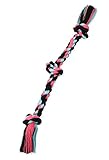
Overview: The Mammoth Flossy Chews Rope Tug is a classic cotton-poly rope toy designed for interactive play and dental health. At 20 inches long, it’s specifically sized for medium dogs (30-50lbs) and features sturdy knots throughout its length.
What Makes It Stand Out: This toy doubles as a dental care tool – the cotton-poly fibers naturally floss your dog’s teeth during play. Made from premium North American materials, it’s been trusted by pet owners since 1995. The bright colors make it easy to spot in grass, and the multiple knots provide excellent grip points for both dogs and humans.
Value for Money: At $8.08, this is reasonably priced for a quality rope toy. Considering its dual purpose as both entertainment and dental care, plus its durability for medium chewers, it offers solid value. However, aggressive chewers might destroy it quickly.
👎 Cons
- Aggressive chewers can shred it within days
- Creating mess and potential ingestion risks. The cotton-poly blend isn’t as durable as pure cotton for heavy chewers
Bottom Line: Best for medium dogs who enjoy interactive play but aren’t power chewers. It’s an affordable, multifunctional toy that promotes dental health, but supervise closely and replace when frayed.
7. Chuckit! Ultra Tug Dog Toy, Medium Fetch and Dog Ball Tug Toy for Dogs 20-60 Pounds

Overview: The Chuckit! Ultra Tug combines the popular Ultra Ball with a durable nylon handle for enhanced fetch and tug games. This 2.5-inch medium ball is designed for dogs 20-60 pounds and features the brand’s signature bright orange and blue colors.
What Makes It Stand Out: The two-ply nylon cord handle makes throwing easier and extends your reach during tug games. It’s compatible with Chuckit! ball launchers, adding versatility. The Ultra Ball’s rubber construction is more durable than tennis balls and resists dirt and slobber better than fabric toys.
Value for Money: At $5.56, this is excellent value. You’re getting Chuckit!’s premium Ultra Ball (usually $3-4 alone) plus the tug handle. The ball floats, bounces well, and withstands moderate chewing better than standard balls.
👎 Cons
- Aggressive chewers will destroy the nylon handle quickly. Some dogs find the handle attachment point tempting to chew
- Potentially damaging the toy faster than expected
Bottom Line: Perfect for fetch enthusiasts who occasionally enjoy tug games. Not suitable for heavy chewers, but excellent for interactive play. The price point makes it an easy addition to any toy collection.
8. Clysoru Tug Toy for Dogs Squeaky Toy with 2 Strong Handles Lasting Training Equipment Puppy to Large Dog Interactive Toys of War Pull Indestructible Rope Pet Crinkle Teething (Black)
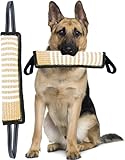
Overview: The Clysoru Tug Toy is an innovative 11-inch interactive toy featuring built-in squeakers, crinkle material, and dual handles. Made from natural jute with reinforced stitching, it’s designed for training and interactive play across all dog sizes.
What Makes It Stand Out: This toy combines multiple sensory elements – squeakers, crinkle sounds, and varied textures – to maintain dog interest. The 100% natural jute material is biodegradable and safe if ingested in small amounts. Double-reinforced stitching with dual-thread interlocking provides extra durability.
Value for Money: At $9.99, it’s competitively priced for a multi-feature toy. The handmade construction and quality materials justify the cost, especially considering its training applications and biodegradable properties.
👎 Cons
- The manufacturer explicitly states this isn’t a chew toy
- Requiring constant supervision. Some dogs might find the squeaker too stimulating or become fixated on destroying it
Bottom Line: Excellent training tool for focused play sessions. The sensory features make it highly motivating, but it’s not suitable for solo play. Best for dedicated training time with engaged owners.
9. Eefitoys Heavy Duty Dog Rope Toys for Aggressive Chewers, Tough Tug of War Dog Toys for Large, Medium & Small Dogs – 5 Pack Including 2 Ropes & 3 Supplies

Overview: The Eefitoys 5-pack offers exceptional variety with two rope toys plus three bonus supplies (bags and dispenser). The cotton ropes are designed for dogs of all sizes, from puppies to large breeds, providing both tug and chew options.
What Makes It Stand Out: This is the only set offering bonus pet supplies, making it a complete value package. The ropes feature thick cotton construction with varied knot patterns. The colorful design appeals to both dogs and owners, making it gift-ready for special occasions.
Value for Money: At $12.99 for a 5-piece set, this represents outstanding value. Even considering the ropes alone cost $6.50 each, you’re getting two plus essential supplies. It’s practically a starter kit for new dog owners.
👎 Cons
- The ropes aren’t as thick or durable as premium single toys. Aggressive chewers will destroy them quickly
- And the colorful dyes might stain light-colored carpets or furniture
Bottom Line: Perfect starter set or gift for moderate chewers. The bonus supplies add practical value, though heavy chewers will need something more robust. Great for households with multiple dogs.
10. Coachi Tuggi Tug – Interactive Dog Toy for Tug of War & Play. Strong & Comfortable, Fun Reward Training, Great for Recall, Interrupting Biting & Chewing. Ideal for Agility and Suitable for Puppies

Overview: The Coachi Tuggi Tug is specifically designed as a training aid rather than just a toy. This soft, stretchy toy features extra-strength webbing and is crafted for comfortable interactive play during training sessions with puppies and dogs of all sizes.
What Makes It Stand Out: Unlike typical tug toys, this is engineered for training purposes – improving recall, interrupting biting behavior, and rewarding agility work. The soft, stretchy material ensures comfortable play for both dog and handler, while maintaining durability through reinforced webbing.
Value for Money: At $11.99, it’s priced for its specialized training function rather than as a general toy. The quality construction and training-specific design justify the cost for serious trainers, though casual owners might find it expensive for occasional use.
👎 Cons
- Strong enough for adult dogs. The stretchy material reduces jerking during play. However
- It’s not designed for solo chewing and requires active owner participation. Some dogs might prefer firmer textures
Bottom Line: Essential tool for dedicated training. Its specialized design excels for recall work and bite inhibition training. Not a casual toy, but invaluable for structured training programs.
The Science Behind Tug-of-War: Why Dogs Crave the Pull
Instinctive Predatory Motor Patterns
Tug replicates the “dissect” and “kill” phases of the predatory sequence. Allowing controlled expression of these hard-wired patterns lowers stress hormones and satisfies innate drives that puzzle toys alone can’t touch.
Neurochemistry of the Tug Game
Rapid jaw movement plus resistance triggers dopamine and endorphin cascades comparable to a runner’s high. This neurochemical cocktail elevates mood, accelerates learning, and builds a positive CER (conditioned emotional response) to you and your training space.
Core Physical Benefits of Tug Toys
Cardiovascular Conditioning in Small Spaces
Ten minutes of spirited tug can raise a dog’s heart rate into the aerobic zone—no backyard required. For urban guardians, that spells bad-weather fitness insurance.
Muscle Building & Joint Stability
Resistance work recruits neck, shoulder, and core stabilizers. Over time, stronger periarticular muscles reduce injury risk during explosive movements like agility jumps or dock dives.
Weight Management Without Miles of Walking
High-intensity bursts burn more calories per minute than leash walking, making tug an efficient obesity-prevention tool for time-pressed owners.
Mental Enrichment & Cognitive Workout
Problem-Solving Under Arousal
Dogs must gauge pressure, angle, and timing to “win” the toy. This real-time calculus sharpens executive function and impulse control, skills that transfer directly to obedience under distraction.
Sensory Overload Reset
The tactile feedback of fabric, rubber, or fleece provides proprioceptive input that calms overstimulated nervous systems—think of it as a weighted blanket for the mouth.
Behavioral Modification Powerhouse
Impulse Control Through Start–Stop Rules
Structured tug with built-in cues (“take it,” “out,” “leave it”) rehearses self-interruption. Dogs learn to flip the arousal switch off on command—a lifeskill for reactive pups.
Frustration Tolerance & Emotional Regulation
Brief “loss” episodes (you holding the toy still) teach dogs to cope with mild frustration without exploding into barking, nipping, or shutdown.
Tug as a High-Value Training Reward
Replacing Treats in High-Distraction Environments
For toy-driven breeds, a two-second tug rep trumps freeze-dried liver. The game functions as both reinforcer and premack principle event—do the boring stuff, earn the fun stuff.
Marker Timing & Precision Skills
Because the reward is immediate and localized, you can deliver 15–20 micro-rewards per minute. That frequency turbo-charges shaping sessions for precision heeling, tight fronts, or flashy trick routines.
Relationship & Trust Building
Two-Way Communication in Real Time
Unlike passive treat feeding, tug is a dialogue. You adjust pressure, speed, and height; your dog responds with grip changes and play bows. This loop accelerates handler focus and mutual trust.
Shared “Win” Experiences
When you allow the dog to “win” the toy periodically, you become a cooperative partner rather than a resource blocker. Cooperative play predicts higher scores in later competitive sports and reduces conflict-related aggression.
Channeling Prey Drive Safely
Reducing Risk of Inappropriate Chasing
A legal outlet for grab-and-shake instincts lowers the likelihood of ankle nipping, bike chasing, or squirrel obsessions. Think of tug as a lightning rod that grounds excess prey energy.
Structured Outlet for Working Breeds
Herding and protection dogs left “jobless” often redirect drive into nuisance barking or shadow stalking. Daily tug satisfies that genetic vacancy better than another neighborhood stroll.
Mouthy Habits & Bite Inhibition Refinement
Teaching Soft Mouth Through Consequences
If teeth touch skin, game ends immediately. Dogs quickly generalize that humans are fragile, refining bite inhibition far faster than yelping alone ever achieves.
Redirecting Teething Pain in Puppies
Frozen fleece braids provide safe gum massage, saving chair legs and pinky fingers. Early positive associations with tug reduce future resource-guarding risk around coveted items.
Confidence Boosting for Shy or Rescue Dogs
Controlled Exposure to Novel Stimuli
Pairing tug with new environments, surfaces, or people creates a feel-good anchor. The toy becomes a security blanket, allowing timid dogs to approach scary stimuli in order to play.
Success Stacking Through Micro-Wins
Letting a worried dog “win” five times in 30 seconds floods the brain with safety signals. Repeated sessions remodel the amygdala’s threat response, accelerating rehabilitation timelines.
Energy Outlet for High-Octane Breeds
Meeting Daily Drive Quotas Without Over-Exercising
Border Collies and Belgian Malinois need mental load as much as mileage. Ten minutes of tug with obedience interleave equals 45 minutes of mindless fetch—joint-friendly and time-savvy.
Preventing OCD & Repetitive Behaviors
High-drive dogs denied appropriate outlets often spin, tail chase, or flank suck. Tug offers a socially acceptable burst that satiates the neurological itch behind compulsions.
Socialization & Multi-Dog Household Harmony
Parallel Play for Pack Cohesion
Structured one-on-one tug sessions teach dogs to wait their turn, respect boundaries, and associate housemates’ presence with fun rather than competition—crucial in multi-dog homes.
Reading Canine Body Language
Handlers learn to spot precursors to over-arousal: whale eye, freeze, hard stare. Early recognition prevents scuffles and sharpens your overall inter-species communication skills.
Safety Guidelines & Risk Mitigation
Choosing Appropriate Toy Materials
Look for food-grade rubber, natural cotton, or horse-grade fleece. Avoid toys with hard plastic handles that can slam into teeth when the dog shakes. Inspect for fraying after every session; ingestible strings risk linear foreign body obstructions.
Setting Clear Rules: Take, Tug, Out, Sit
Establish a consent ritual: dog must sit or hand-target before each round. End the game on your terms, then ask for a calm behavior to discharge residual arousal. Predictable structure prevents the game from morphing into pushy demand barking.
Integrating Tug Into Daily Routine
Micro-Sessions for Time-Pressed Owners
Keep a tug toy on the coffee table. Two-minute bursts during TV commercials add up to 20 minutes of quality enrichment by bedtime—no schedule overhaul required.
Combining With Mealtime & Walks
Trade a few kibble pieces for a brief tug rep, or end the morning walk with a 60-second victory lap. Layering tug into existing rituals cements good habits without extra commute time.
Common Myths Debunked
“Tug Causes Aggression”
Peer-reviewed studies (e.g., Rooney & Bradshaw, 2023) show no correlation between structured tug and increased aggression. Problems arise only when rules are inconsistent or the dog is already clinically aggressive.
“Letting the Dog Win Makes You Subordinate”
Dogs don’t extrapolate pack hierarchy from play outcomes. Allowing strategic wins reinforces continued engagement and reduces frustration-related shutdowns.
“Only Large Dogs Can Play Safely”
Toy breeds benefit from scaled-down fleece braids and lower tug angles. The key is matching toy weight to jaw strength, not body size.
Frequently Asked Questions
-
At what age can I introduce a puppy to tug?
Start as early as 8 weeks with a soft, lightweight braid. Keep sessions under 30 seconds and end with a successful “out” to build early impulse control. -
My dog guards the tug toy—can the game still work?
Yes, but first address guarding via trade-up protocols. Use a duplicate toy to exchange, then reintroduce structured rules once the dog reliably releases on cue. -
How do I teach a reliable “out” or “drop” during tug?
Freeze the toy against your leg, mark the micro-second the jaws loosen, then immediately restart the game. The reward for releasing is more tug, not a treat. -
Is tug safe for dogs with bad hips or arthritis?
Allow only horizontal tugging on non-slip flooring. Avoid lifting the head skyward, and limit sessions to 2–3 minutes. Consult your rehab vet first. -
Can tug replace daily walks entirely?
No. Tug complements but doesn’t substitute scent-based exploration. Aim for a 70/30 blend of aerobic plus olfactory exercise for optimal welfare. -
What if my dog shows no interest in toys?
Experiment with different textures—fleece, faux fur, rubber. Rub the toy in rabbit or elk scent, or drag it on the ground to mimic prey movement. -
How rough is too rough?
Stop if you hear high-pitched barking, see dilated pupils, or feel repeated tooth contact on skin. These signs indicate over-arousal rather than play. -
Should I let children play tug with our family dog?
Only under adult supervision and after the dog masters “out” with adults. Use two-toy swaps so kids never need to pry jaws open. -
Can tug help with leash reactivity?
Yes. Use the toy as a counter-conditioning reward when the dog spots a trigger at sub-threshold distance. The game redirects focus onto you and lowers stress. -
How many tug toys should I own?
Rotate at least three to prevent habituation. Store them out of reach so they remain special, and retire any toy that shows fraying, cracks, or missing chunks.