There’s nothing quite like watching a turtle glide around its sparkling-clear tank—until you realize that beautiful water comes at the price of daily maintenance. Turtle waste, uneaten food, and shed shell fragments create a mess that ordinary filters can’t fully tackle. That’s where the right gravel vacuum comes in, transforming the dreaded chore of substrate cleaning into a quick, breezy routine that keeps both you and your hard-shelled companion happier and healthier.
In 2025, the gravel-vacuum landscape has evolved far beyond simple “squeeze bulbs and hoses.” Today’s tools blend sophisticated suction control, ergonomic triggers, multi-stage filtration, and even water-change automation. Whether you’re caring for a single baby musk turtle or a trio of full-grown red-eared sliders, choosing the right vacuum is less about hype and more about matching the device to your tank size, décor, and turtle species. This guide breaks down everything you need to know—so you can spend more time admiring your little aquapod and less time wrestling with turkey basters.
Top 10 Turtle Tank Gravel Vacuum
Detailed Product Reviews
1. Tetra Water Cleaner Gravel Siphon for Aquariums, Easily Clean Freshwater Aquariums
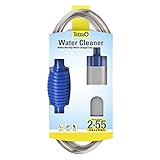
Overview: The Tetra Water Cleaner is a simple, bulb-primed gravel siphon aimed at aquariums of up to 55 gallons for hassle-free, once-a-month water changes.
What Makes It Stand Out: Its no-frills, gravity-fed design keeps costs rock-bottom while bundling a priming bulb and bucket clip—features usually sold separately on bargain siphons.
Value for Money: At under nine bucks, it’s cheaper than a bag of substrate and lasts years if kept free of sharp gravel; Tetra’s brand familiarity and included priming gear justify every cent for low-tech keepers.
Strengths and Weaknesses: Pros—zero moving parts, silent operation, works in power outages, and teaches beginners the basics. Cons—hand cramp-primed bulb can fail over time, no flow control, unsuitable for tanks above 55 gallons.
Bottom Line: Perfect starter tool for budget-minded aquarists with small to mid-sized freshwater setups who just need to “suck and go.”
2. UPETTOOLS Aquarium Gravel Cleaner – Electric Automatic Removable Vacuum Water Changer Sand Algae Cleaner Filter Changer 110V/28W

Overview: UPETTOOLS’ electric vacuum morphs six chores—water change, sand wash, filtration, debris cleanup, shower, and adjustable flow—into one compact 28 W pump.
What Makes It Stand Out: The 1700 L/H flow drains a 180-gallon tank in half an hour, while the 23.6-37.7 in telescopic tube tackles everything from Betta bowls to 4-ft cichlid tanks; 3-year warranty and 24/7 support are unheard-of at this price.
Value for Money: At $36, you get the toolset and peace of mind comparable units normally charge $60+ for, amortized to mere pennies per cleaning.
Strengths and Weaknesses: Pros—electric ease, consistent suction, saltwater-ready, universal adjustable height. Cons—the 110 V motor needs close water proximity, noise slightly higher than small fountains, primer bulb still advised if power dips occur.
Bottom Line: Best bang-for-buck plug-and-play cleaner for enthusiastic aquarists who want pro-grade speed and versatility without the premium.
3. QZQ Aquarium Gravel Cleaner [2025 Edition] Vacuum Fish Tank Vacuum Cleaner Tools for Aquarium Water Changer with Aquarium Thermometers Fish Net kit Use for Fish Tank Cleaning Gravel and Sand
![QZQ Aquarium Gravel Cleaner [2025 Edition] Vacuum Fish Tank Vacuum Cleaner Tools for Aquarium Water Changer with Aquarium Thermometers Fish Net kit Use for Fish Tank Cleaning Gravel and Sand](https://m.media-amazon.com/images/I/51S+2N20RtL._SL160_.jpg)
Overview: QZQ’s manual 2025 Edition combines a bulb-press gravel vacuum, algae scraper, thermometer strips, and basic aquascaping nets into a silent, cordless kit.
What Makes It Stand Out: Triple-length hoses and a clip-on filter basket let large and nano tanks alike stay spotless without sucking fish; bundled accessories replace three separate purchases.
Value for Money: Sub-$19 despite the accessory bundle makes this a Black-Friday-grab year-round if you already needed a net and thermometer upgrades.
Strengths and Weaknesses: Pros—no electricity, whisper-quiet, zero risk of electrical fault, generous accessories. Cons—hand fatigue on deeper tanks, suction slower than electric rivals, tubes can kink when stored rolled.
Bottom Line: Ideal dorm or bedroom setup helper where outlets are scarce and residents value silence over speed.
4. Suness Electric Aquarium Vacuum Gravel Cleaner: 36W Fish Tank Cleaner Vacuum with Strong Suction for Water Change Wash Sand Algae Cleaner Water Shower and Water Circulation, Timed Off

Overview: The plug-in Suness cleaner upgrades the concept further with 36 W adjustable power, auto-off timer, and 99 % three-stage filtration for tanks of any water height.
What Makes It Stand Out: You can let it run on a 60-minute timer while tending fish, and telescopic 2-step tubes plus 1.5 m hose adapt from a 10-gallon cube to a 200-gallon monster; reusable bio-balls and carbon keep ongoing costs low.
Value for Money: At $70 it’s double entry-level prices yet pays off for big-tank owners who prize time, since it slashes manual work by ~90%.
Strengths and Weaknesses: Pros—timer = hands-free safe shutoff, washable filter media, shoots water up/out turtle docks too. Cons—pricey upfront, external controller isn’t waterproof, O-ring maintenance required yearly.
Bottom Line: Splurge-worthy powerhouse for large or high-maintenance aquariums where reliability and automation outweigh sticker shock.
5. AQQA Aquarium Vacuum Gravel Cleaner Electric Fish & Turtle Tank Water Changer 6 in 1 Multi-Functional Aquarium Cleaning Tools Set for Water Cleaning & Circulation (20W, 320GPH)
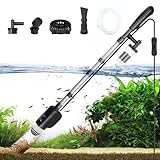
Overview: AQQA squeezes six functions into a modest 20 W, 320 GPH electric cleaner at just above entry-level pricing.
What Makes It Stand Out: The flexible detachable extension tubes stretch to nearly 29 inches, paired with 6.5 ft of hose—great for 200-gallon setups—while included triple filter sponges handle turtle waste without extra purchases.
Value for Money: $31 nets you mid-range specs plus spares; comparable kits often omit spare sponges or cost $40+.
Strengths and Weaknesses: Pros—quiet 20 W, adjustable flow valve, external switch removes plug yanking, free spare sponges. Cons—clog-risk on fine sand without pre-washing sponges, shorter 110 V cord limits outlet placement.
Bottom Line: Strikes the sweet spot for hobbyists wanting electric convenience and versatility on a mid-level budget without going full pro-gadget territory.
6. Fish Tank Cleaner – Aquarium Gravel Cleaner, 530GPH/32W Electric Fish Tank Cleaning Tools, Adjustable Water Flow Aquarium Cleaner Kit, Turtle Tank Gravel Cleaner Vacuum for Wash Sand, Water Changing

Overview: The Mildhug 530GPH Electric Aquarium Gravel Cleaner is a 32-watt, 47-inch telescoping multi-tool that promises to turn tedious tank maintenance into a one-hand operation. Its marketing centers on a 6-in-1 design: water changing, sand washing, debris removal, algae brushing, filtration and water circulation all in a single plug-and-play unit.
What Makes It Stand Out: Few gravel vacuums combine this much power (530 gallons per hour) with the freedom to work in tanks as low as 2 inches of water. The 4-layer washable sponge keeps biological media alive whereas lesser units dump it down the drain.
Value for Money: At $69.99 it’s the priciest model here, but you’re buying the convenience of never again needing buckets, hoses, or starter bulbs—plus the reusable filter should outlast scores of disposable filter pads.
👍 Pros
- Rapid gravel agitation and debris removal
- Submersible pump allows total water-level flexibility
- Telescopic wand fits 1 to 4-foot tanks.
–
👎 Cons
- Motor must stay dry when priming—wet hands
- Splashes can trip the short GFCI; stiff hose kinks if twisted
Bottom Line: For dedicated aquarists tired of bucket brigades but unwilling to drill their tank for pumps, it’s the best all-in-one electric cleaner under $70. Casual beta fish owners can pass—manual siphons suffice.
7. AQQA Electric Aquarium Gravel Cleaner, 6 in 1 Automatic Fish Tank Cleaning Tools Gravel Vacuum for Aquarium, Suitable for Change Water Wash Sand Water Filter and Water Circulation (320GPH, 20W)
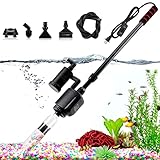
Overview: The AQQA 320GPH Electric Gravel Cleaner is a budget-minded 6-in-1 kit packing a 20-watt pump and a handful of switch-out heads for water changes, sand washing, debris scooping, algae scraping, filtration and circulation in tanks up to 40 inches deep.
What Makes It Stand Out: It delivers 90 percent of flagship features at half the price plus a detachable “shower” cup that doubles as a gentle rinsing station for turtles—a quirky bonus absent from most rivals.
Value for Money: At $31.49 it undercuts almost every electric rival while including replacement filter sponges and a full accessory set. One year warranty and lifetime chat support sweeten the deal.
👍 Pros
- Quick tool-free swaps between heads
- Strong suction for 20-40 gal tanks
- Filter cup catches fine debris without draining the tank.
–
👎 Cons
- Requires full submersion for optimal flow—nearly empty aquariums lose suction; 320GPH max slows noticeably on deep tanks with thick gravel
Bottom Line: Beginners and small-tank keepers get electric convenience without sticker shock. Its limitations show on 55-gal and larger, but below that the AQQA punches far above its price class.
8. AQQA Aquarium Gravel Cleaner, 6-in-1 Electric Fish Tanks Gravel Vacuum Cleaner Set for Remove Dirt, Change Water, Wash Sand, Water Shower, Water Circulation (20W, 320GPH)

Overview: AQQA’s latest 6-in-1 Aquarium Gravel Cleaner refines the entry-level electric genre with 320GPH flow, modular tubes from 16.9–38.4 in, and a stack-and-lock assembly that switches jobs—water change, sand wash, debris pickup, gentle shower, filtration or circulation—without extra tools.
What Makes It Stand Out: The telescopic design compresses for storage and extends in 4-inch increments, eliminating the wobble common in slide-over extensions from competing brands.
Value for Money: At $35.99 it’s only marginally more than Product 7 yet ships with improved mesh guards and washable filter pouches you can launder indefinitely—no recurring media cost.
👍 Pros
- Tool-free maintenance
- Quiet 20W motor
- Reliable suction to 1.5 inches depth
- Collapses to travel size.
–
👎 Cons
- Clamp-on hose slips off if left pressurized; suction falls off once sand bed exceeds 2 inches
Bottom Line: A tidy middle ground—neither bargain bin nor premium—perfect for 20-45-gallon planted tanks. Larger or heavily stocked aquariums will outgrow its modest flow rate.
9. Laifoo 5ft Aquarium Siphon Vacuum Cleaner for Fish Tank Cleaning Gravel & Sand
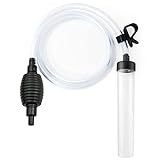
Overview: The Laifoo 5 ft Aquarium Siphon Vacuum is a purely manual cleaner—clear 60-inch vinyl hose with built-in filter screen and a simple squeeze-bulb starter. No wires, pumps, or plastic trays needed.
What Makes It Stand Out: The kink-resistant ⅝-inch hose and detachable strainer won the hearts of betta and shrimp keepers; even tiny fry remain unharmed while detritus flows out.
Value for Money: At $14.90 it undercuts every powered rival by an order of magnitude yet will likely last longer—no electronics or impellers to corrode.
👍 Pros
- Foolproof one-hand priming bulb
- Clear hose shows debris moving
- Lifetime of free replacements within 3 months.
–
👎 Cons
- Manual labor—each 5-gallon change equals 20 squeezes
- A shoulder workout; hose stiffens in cold water
Bottom Line: If you keep tanks up to 30 gallons, can lift buckets, and prefer absolute control with zero parts failure, this is the gravel cleaner to own. Larger or multiple tanks warrant electric options.
10. Luigi’s Fish Tank Cleaner – Gravel Pump Vacuum for Aquarium – Hand Siphon Hose to Remove and Change Water or Sand in Minutes – Fish Aquarium Accessories, Supplies & Cleaning Tools

Overview: Luigi’s Hand Siphon Gravel Pump is a no-frills PVC tube with integrated fish guard and a one-way priming bulb. Marketed as “set-and-forget” for small tank hobbyists who need fast 5-liter water changes in five minutes flat.
What Makes It Stand Out: The molded fish guard stops shrimp and fry evacuations while the rigid valve stops back-flow, something missing from cheaper tubes.
Value for Money: At $12.99 it’s the least expensive reviewed, yet sturdy enough for weekly use. Replacement cost is below the price of dinner.
👍 Pros
- Instant setup
- No dripping once the siphon starts
- Lightweight—fits in a tackle box.
–
👎 Cons
- Short 3-foot length restricts it to tanks under 20 gallons; stiff hose limits maneuvering around décor
Bottom Line: Perfect starter siphon for kids’ guppy tanks, hospital quarantine setups, or nano reefs. Serious aquarists will quickly outgrow its scale.
Why Turtles Need Specialized Gravel Vacuums
Turtles are messy bioload powerhouses. They poop—a lot—producing nitrogen-rich waste that sinks deep into gravel and sand, creating anaerobic pockets teeming with harmful bacteria. An aquarium vacuum built for fish often lacks the flow rate, nozzle width, and debris capacity to dislodge dense turtle waste. Worse, fish-oriented vacuums can suck up tiny hatchlings or crack fragile turtle eggs buried in the substrate. Specialized turtle models put safety first: wider shrouds, adjustable guards, and tapered tips that reach tight crevices without collateral damage.
Key Differences Between Fish and Turtle Tank Vacuums
Fish tanks rarely test the mechanical limits of a vacuum; turtle setups do. Turtles shred plants, gnaw decorations, and generate tons of particulates that quickly clog delicate fish-focused siphons. A turtle-grade unit therefore prioritizes:
- Coarser debris intake without nozzle blockages.
- Higher gallon-per-hour throughput to capture suspended waste before it settles again.
- Robust hoses that won’t kink under the extra head pressure of deeper turtle enclosures.
- Egg-guard or hatchling-safe strainers built into the intake.
Gravel Vacuum Types Explained
Squeeze-Bulb Starters
Classic rubber bulbs are inexpensive and portable; a few squeezes get water moving without mouth siphoning. Ideal for nano to medium tanks, but be mindful of hand fatigue during larger water changes.
Hand-Pump Trigger Models
Pistol-style pistons create one-way flow with each pull of the trigger. These give you precise control and maintain suction even if you pause mid-task—perfect when your turtle decides the vacuum looks suspiciously like lettuce.
Battery & USB-Powered Systems
Lithium-ion or AAA-powered units generate continuous suction for deeper tanks. USB-rechargeable motors eliminate the need for electrical outlets near water, though battery life is the limiting factor for 100-gallon+ setups.
Auto-Draining Electric Vacuums
Think “Roomba for your substrate.” These plug into a faucet and use Venturi pressure to siphon and refill simultaneously. They’re time-savers, but you’ll need threaded tap access and must watch water temperature swings.
Hybrid Siphon & Water-Change Stations
The most versatile option: an all-in-one station that both drains and dechlorinates on the refill side. Integrated heaters and adjustable flow keep thermal shock at bay—golden for large, temperature-sensitive species.
Gravel, Sand, or Bare-Bottom: Choosing Substrate Compatibility
Fine sand stubbornly resists detritus removal, while pea gravel traps waste that only the right nozzle can unlock. Bare-bottom tanks are easy to vacuum but risk a slippery turtle that struggles to grip while feeding. Most turtle vacuums ship with interchangeable heads—shovel-like for sand, narrow brushes for gravel, and low-profile discs for bare glass. If you currently use crushed coral to boost pH, ensure the vacuum’s impeller is calcium-safe and won’t seize up under alkaline back-flushes.
Suction Power vs. Delicate Decor: Finding the Sweet Spot
Too little suction leaves sludge behind; too much rockets your expensive dragon stone across the tank. Look for stepless regulators or thumb-bleed valves on the vacuum wand. Small vents let you dial down flow near fragile basking structures and crank it up along open-bottom regions.
Nozzle Design: Size, Shape, and Reach
- Wide-Mouth Plates: Spread suction evenly across a 2–3 inch swath.
- Cylindrical Tips: Dig into corners and under log hides.
- Rotary Brushes: Agitate substrate to free trapped debris with minimal clouding.
- Telescoping Tubes: Extend from 8 to 24 inches so you don’t soak your sleeve on a 150-gallon masterpiece.
Filtration & Sentiment Control Systems
Some vacuums now integrate coarse sponge filters or disposable micron socks inside the discharge line. They capture trash before it reaches your sink or floor bucket, sparing municipal plumbing and wildlife from pharmaceutical-laden turtle water. Look for reusable media you can rinse under tap rather than replace every week.
Ease of Maintenance & Self-Cleaning Features
Nothing ruins the rhythm of a water change quicker than a clogged vacuum bladder. Modern designs include quick-release cartridges and anti-flap valves you can pop apart with one hand—ideal when the other is fending off a curious snapping turtle. Choose models with smooth, ribless hoses molders; debris slides right out instead of clinging to ridges.
Durability & UV Resistance for Longevity
Turtles bask under intense UVB lighting, which can embrittle conventional PVC hoses. Top-tier vacuums coat tubes with polyurethane sleeves rated to withstand 800+ hours of UV exposure without yellowing or cracking. Brass or acetal valves resist chloramine corrosion better than chromed zinc fittings.
Size, Ergonomics, and Handling Comfort
A vacuum weighing a ton might sound powerful, but you’ll curse its bulk when perched on a stool over a 125-gallon tall tank. Anti-slip TPE grips and rotatable wand joints keep wrists and shoulders relaxed during 20-minute cleanings. Fold-flat storage hooks make the unit disappear behind your stand between sessions.
Aquarium Volume, Depth, and Flow Rate Considerations
As a rule of thumb, target a flow rate that evacuates 15–20 % of your tank volume every three minutes. An eight-foot hose achieves effective siphon head in tanks up to 24 inches deep, but tall paludariums at 30 inches may need the “quick start” of an electric model. Prevent siphon locks by ensuring the discharge hose’s end sits at least 3 feet below the tank rim.
Noise Levels, Pet Safety, and Turtle Stress Factors
Turtles don’t flinch at random splashes the way fish do, yet they despise erratic hose vibrations that rattle basking docks. Soft-start motors reduce water turbulence that can startle sensitive hatchlings. Place thick rubber grommets where the hose exits the tank rim to absorb micro-motions.
Budget-Friendly Picks vs. Premium Solutions
A bare-bones squeeze-bulb costs less than a Saturday pizza, perfect for emergency quick cleans. Mid-range triggers (about the price of a box of reptile pellets) add ergonomic triggers and dual nozzles. Premium water-change stations flirt with triple-digit price tags but save untold hours every month. Calculate cost against time; if a $10 vacuum wastes 30 minutes fighting clogs, it’s no bargain.
Eco-Friendly & Energy-Saving Vacuum Options
Solar-rechargeable siphon pumps use trickle-charged battery packs lasting an entire work week on one overnight soak. Recycled ocean-plastic housings and lead-free brass give eco-conscious keepers peace of mind. Pair any vacuum with a plant-based microfiber pad under the catch bucket so you can compost recovered waste instead of flushing it.
Compatibility with Automatic Water Change Systems
Top-spec vacuums now plug right into ATO (Automatic Top-Off) controllers through standard hose barbs. The vacuum drains pre-set volumes into a floor drain while the ATO refills with dechlorinated, temperature-matched water. Configure your controller to shut off when the vacuum nozzle returns to its dock—hands-free “set and forget” cleanliness for tech-savvy aquarists.
Avoiding Common Gravel Vacuum Mistakes
- Over-Graveling: Too much substrate depth creates rabbit holes where waste hides from even the best suction.
- Killer Vacuum Burps: Forgetting to bleed trapped air collapses the hose mid-flow and shocks your turtle.
- Skipping Pre-Filters: Dumping effluent straight down the sink risks clogging P-traps with calcium sand grains.
- One-Size-Fits-All Thinking: A narrow 30-watt electric model won’t handle ¾-inch river rock in a three-foot-deep enclosure.
Step-by-Step Guide to Safely Vacuum a Turtle Tank
- Power Down – Switch off heaters and filters to prevent damage from low water levels.
- Open Nozzle Vent – Dial in moderate suction.
- Start Opposite the Basking Zone – Let your turtle retreat instead of swimming into the hose.
- Pulse & Lift – Insert the nozzle, tilt, then lift to “burp” trapped debris, repeat.
- Keep 20 % Water Volume – Never drain more than a quarter tank at once; rapid water chemistry swings stress chelonians.
- Refill & Treat – Add dechlorinated water matched to existing temperature.
- Restart Equipment Gently – Use flow-restricting valves to reintroduce filtration gradually.
Troubleshooting Clogs and Poor Suction
A sudden drop in suction is usually a clog near the intake guard or kink in the first 12 inches of hose. Detach and reverse-flow tap water to flush; stubborn turtle pellets may need a pipe cleaner. If the pump runs but output is weak, check the inlet strainer for calcium buildup—soak overnight in a 1:3 vinegar-water bath.
Safety Certification and Regulatory Labels to Look For
Seek UL-, CE-, or ETL-certified motors to guarantee splash-zone safety. RoHS compliance means zero lead solder joints inside the housing. If you notice a UPC code pattern with “Q7P” or similar, you’re holding a model engineered for reptiles rather than generic aquarium use.
Futureproofing: Modular Upgrades & Attachments
Smart vendors sell add-on extension poles, carbon-dosed filter socks, or in-line LED spotlights for algae removal. Opt for wands with standard ½-inch barb fittings so clip-on gadgets stay compatible across product generations. Your turtle won’t care if your gizmo’s branded 2025 or 2035—your wallet will.
Frequently Asked Questions
-
Can I just use my old fish gravel vacuum for a turtle tank?
Technically yes, but you’ll fight frequent clogs and risk stressing or harming the turtle. Turtle-specific models handle coarser debris and include safety guards. -
How often should I vacuum my turtle’s substrate?
Light spot-cleaning every other day keeps nitrates down; full gravel turnover should happen once every two to four weeks depending on bioload and tank maturity. -
Will a gravel vacuum remove good bacteria?
Minimal. Beneficial bacteria live on every surface—glass, décor, and especially the filter—not just the substrate. Gentle vacuuming removes detritus without crashing the cycle. -
What if my turtle is aggressive or bites the hose?
Use a nozzle shroud and feed your turtle before cleaning. Aggressive species may need to be redirected with a small food stimulus at the opposite end of the tank. -
Are battery models powerful enough for 100-gallon setups?
Yes, provided they offer at least 150 GPH and you recharge between sessions. Permanent electric siphons paired with faucet Venturi are more convenient for truly large tanks. -
Can I vacuum sand with a gravel-specific head?
Only if you dial flow to the lowest setting and use a wide, flat plate. Otherwise, expect sandstorm chaos or impeller erosion from silicates. -
Do I need to turn off the filter?
Turn off canisters or HOBs before a major drain to prevent running dry. Internal sponge filters can stay on if they remain at least half-submerged. -
How do I prevent foul odors from the waste hose?
Rinse with warm water and bactericidal rinse after every use. A shot of enzyme cleaner helps dissolve residual sludge in the bends. -
Is heated refill water necessary?
Sudden temperature swings above 2 °F can lower immunity in turtles. Use a thermostatic mixer or pre-heat refill buckets to tank temperature. -
Can I use tap water directly with an auto-refill vacuum?
Only if your municipality uses chloramine-free, well-balanced water—or you hook the line to an in-line carbon block. For most keepers, a dechlorination reservoir remains the safest step.