If you’ve ever wrestled a 5-gallon shop-vac around a 125-gallon display tank, you already know the truth: a regular gravel vac built for nano tanks is like dusting a warehouse with a feather duster. Whether you run a high-tech planted setup, a stacked Tanganyikan cichlid palace, or even a brackish stingray pool, the realities are the same—deep substrate beds, tons of mulm, and zero tolerance for cloudy water after every water change. That’s why bigger aquariums demand a completely different set of tools: beefier suction heads, hurricane-proof hoses, and construction-site levels of build quality.
In 2025, “large gravel vacuum cleaner” no longer means simply lengthening the hose of yesterday’s 8-cup siphon. Today’s category includes motor-assisted units, battery backpacks, venturi-powered mega-cleaners, and even semi-automatic systems that attach straight to your sump. The problem? With all that innovation comes marketing noise: flow specs that read like a leaf-blower invoice and “self-priming” claims that still leave you with a mouthful of fish water. This buyer’s guide distills two decades of tank-maintenance trial and error into the essential features, sizing formulas, and power strategies you’ll need to sift through every shiny new option and zero-in on the tool your tank (and your back) will love.
Top 10 Large Gravel Vacuum
Detailed Product Reviews
1. Python Pro-Clean Aquarium Gravel Washer & Siphon Kit, Large

Overview: Python’s Pro-Clean is the no-frills gravel washer that veteran aquarists have relied on for years. The large model targets tanks 55–100+ gallons, using simple siphon power to pull detritus out while sliding through the substrate with no jams.
What Makes It Stand Out: Zero moving parts mean nothing to break or leak; the hose’s extra flexibility frees you to reach all corners without kinking, and the generous diameter empties buckets fast even during 50 % water changes.
Value for Money: Twenty-seven bucks buys pro-grade vinyl tubing that would cost more at a hardware store, plus a perfectly weighted gravel tube—no pumps, batteries, or replacement parts ever needed.
👎 Cons
- It is strictly manual—no self-priming
- No flow valve
- And beginners may fumble the first start-up
- Risking minor spills
Bottom Line: If you want pure, durable simplicity in a big tank siphon, this remains the gold standard.
2. Fluval Medium/Large Gravel Vacuum Cleaner, 11081

Overview: Fluval’s 11081 pairs an “Easy Start” priming pump with a thumb-controlled regulator, letting you throttle suction on the fly. A gravel guard keeps food and plant fragments from gumming up your hose.
What Makes It Stand Out: Tube extension snaps on to reach tanks up to 24 in deep, while the flow regulator prevents sand avalanches and is saltwater-safe.
Value for Money: One extra dollar over generic brands buys thoughtful controls, adapter tubes, and Fluval’s reputation—justify the bump for aquarists who change water weekly.
Strengths and Weaknesses: Practically no-spill priming, precise flow control, works on sand or gravel. Detachable parts slightly raise per-piece replacement cost if you misplace clips.
Bottom Line: The best “set-it-and-forget-it” cleaner for medium tanks under 100 gallons.
3. imagitarium Aquatic Gravel Vacuum X-Large
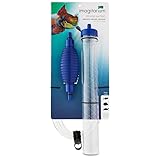
Overview: Imagitarium’s X-Large vac is the broad-mouth brute, built to gulp debris from deep gravel beds in oversized freshwater, saltwater, or turtle habitats.
What Makes It Stand Out: Oversized intake cylinder plus thick-walled hose yields aggressive suction that lifts heavy waste without disturbing gravel.
Value for Money: Premium price for a single-section tube; pays off only if your tank truly needs the gulp factor.
Strengths and Weaknesses: Incredible suction, turtle-proof durability. Lacks self-primer, regulator, or length options, and the stiff hose is awkward in tight cabinets.
Bottom Line: Buy when raw power matters more than finesse—otherwise, look elsewhere.
4. Tetra Water Cleaner Gravel Siphon for Aquariums, Easily Clean Freshwater Aquariums

Overview: Tetra trims the feature list to the essentials, packaging a 55-gallon-capable siphon with priming bulb and bucket clip at an impulse-buy price.
What Makes It Stand Out: Complete kit at entry-level cost—it truly is grab-and-go for novice keepers.
Value for Money: Under nine dollars, you get a functioning gravel vac plus accessories; you will not find better gear at this price bracket.
Strengths and Weaknesses: Ultra-cheap,lightweight,functional; tubing kinks easily, suction is mild, and the bulb may crack after a year of heavy use.
Bottom Line: Perfect starter kit—use, learn the chore, and upgrade later without regret.
5. QZQ Aquarium Gravel Cleaner [2025 Edition] Vacuum Fish Tank Vacuum Cleaner Tools for Aquarium Water Changer with Aquarium Thermometers Fish Net kit Use for Fish Tank Cleaning Gravel and Sand
![QZQ Aquarium Gravel Cleaner [2025 Edition] Vacuum Fish Tank Vacuum Cleaner Tools for Aquarium Water Changer with Aquarium Thermometers Fish Net kit Use for Fish Tank Cleaning Gravel and Sand](https://m.media-amazon.com/images/I/51S+2N20RtL._SL160_.jpg)
Overview: QZQ’s 2025 kit bundles a hand-powered vac, thermometer, net, algae scraper, and extension tubes in a single tote-friendly pouch designed for multiple tank sizes.
What Makes It Stand Out: Snap-on attachments convert one handle into gravel vac, spot scraper, or fine-particle pick-up tool; the thumb pump priming system works in seconds without electricity.
Value for Money: Nineteen dollars nets a 13-piece cleaning station—far cheaper than buying each item separately at pet-store mark-ups.
Strengths and Weaknesses: Riches of accessories, no cords, surprisingly strong flow; all-plastic construction feels light-duty, and the lengthy hose tangles if not coiled carefully.
Bottom Line: Ideal for apartment or dorm setups where convenience and quiet trump industrial toughness.
6. Aqueon Aquarium Siphon Vacuum Gravel Cleaner Large – 16 Inches
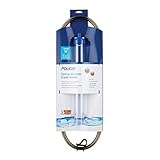
Overview: Aqueon’s 16-inch manually-operated siphon is a veteran among gravel vacuums, sticking to the classic squeeze-and-drain approach favored by beginners and old-school aquarists alike.
What Makes It Stand Out: The large diameter tube moves a substantial water volume quickly, yet the gentle entry angle won’t uproot plants or startle shy fish. Plastic feels tank-safe, and the 6-foot hose keeps your work surface dry without extra adapters.
Value for Money: At ~$26 you get a straightforward, no-batteries tool that should outlast cheaper versions with thin vinyl hoses. Replacement parts are inexpensive and widely available, keeping lifetime costs low.
Strengths and Weaknesses:
+ Simple to prime once you master three quick pumps
+ Hose clip prevents dreaded bucket spills
− No off switch; you’re at gravity’s mercy for flow rate
− Cleaning deep tanks over 18 inches requires awkward tilting
Bottom Line: Buy it if you want rugged simplicity and don’t mind staying with the bucket method; skip if your priority is tap-to-drain automation.
7. enomol Gravel Vacuum for Aquarium Water Changer Fish Tank Cleaning Tools,Siphon Universal Quick Pump Aquarium Water Changing (50ft)
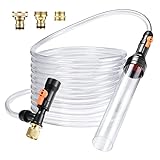
Overview: enomol reimagines water changes by leveraging household tap pressure to push and pull water through a generous 50-foot hose, eliminating the endless bucket brigade.
What Makes It Stand Out: Four faucet adapters plus a quick-release valve arrangement let most households connect in under a minute, while the 16.5-inch cleaning tube contains an integrated filter so detritus leaves, gravel stays.
Value for Money: At $46 it’s double a basic siphon, but one drain-and-refill cycle on a 55-gallon tank recoups at least 20 minutes of labor—worth the premium for busy keepers.
Strengths and Weaknesses:
+ Saves your back; drains straight to sink or yard
+ Surprisingly quiet once primed
− Requires threaded faucet—many apartment spray heads won’t fit
− Long hose coils like a garden hose; storage needs planning
Bottom Line: Recommended for anyone with compatible faucets who keeps medium-to-large tanks; apartment dwellers should validate their spigot threads first.
8. Laifoo 25ft Aquarium Vacuum Gravel Cleaner Fish Tank Cleaner Siphon Water Changer
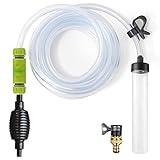
Overview: Laifoo delivers a 25-foot middlesibling between short manual wands and 50-foot tap-driven monsters, offering hose length without mandate for special fittings.
What Makes It Stand Out: The siphon-ball primer removes the clumsy mouth-starter risk; five gentle pinches launch the flow. Clear, BPA-free hose resists kinking and lets you see when it’s truly clean.
Value for Money: Right under thirty bucks, it includes enough adapters for most indoor faucets, plus hose strap for tidy storage—a solid price for an upgrade over 6-foot models.
Strengths and Weaknesses:
+ 25 ft reaches across rooms or balcony drains
+ Gentle agitation nozzle won’t suck up fry
− Connector compatibility warning is easy to overlook—double-check before ordering
− Inlet screen clogs quickly in heavily planted tanks
Bottom Line: Excellent pick for 20-40-gallon owners who want moderate reach and simple priming, provided they own a matching faucet.
9. AREPK Compact Aquarium Siphon Vacuum and Water Changer Kit with Cleaning Brush. Perfect for Simultaneous Water Changing and Cleaning in Small Fish Tanks. Gravel and Sand Cleaning.

Overview: AREPK downsizes into the nano segment with a pint-size kit offering interchangeable heads for spot-scrubbing, sand-rinsing, and debris-siphoning without buckets.
What Makes It Stand Out: A thumb-pump check valve primes in seconds, then detaches so you can hold the thin straw head precisely between tight rockwork or delicate plant stems—something long poles never achieve.
Value for Money: At $18, this tool costs about one take-out dinner and outlives fragile airline-tubing hacks, making it ideal for budget betta or shrimp tanks.
Strengths and Weaknesses:
+ Sponge head doubles as algae scraper during drain
+ Compact tube lets you clean 3-gallon cubes without upending the whole tank
− Hose suction rate drops dramatically over five minutes—plan smaller changes
− No storage bag included; small parts scatter easily
Bottom Line: Perfect first vacuum for novice nano-aquarists or keepers with many small tanks; upgrade only when you exceed 10 gallons or need longer reach.
10. FOUSIUTIM Electric Aquarium Gravel Cleaner, 6-in-1 Automatic Fish Tank Cleaner Vacuum – 32W 530GPH Powerful Gravel Vacuum for Aquarium, Sand Washer (Blue with Temperature Sticker)

Overview: FOUSIUTIM packages a submersible electric pump, extension tube, and sponge filter into one bright-blue wand promising hands-off gravel cleaning powered from standard 110 V.
What Makes It Stand Out: A telescopic pole adjusts to 24 inches and a removable shower head turns the wand into a mini fountain recirculator for spot debris blowing—a legitimate six-function multitool.
Value for Money: $50 positions it among budget electric cleaners; factoring included replacement sponges and 24/7 customer promise offsets the plastic build.
Strengths and Weaknesses:
+ 32 W motor clears cloudy water fast without manual siphon exhaustion
+ IP68 waterproofing inspires confidence for submersion
− Power cord placement can bump against tank lids on shallow setups
− Gravel guard wears thin after aggressive sand washing
Bottom Line: Ideal for aquarists who prize effortless deep cleans; pair with a GFCI outlet and enjoy push-button convenience.
Why a Standard Siphon Falls Short in Big Tanks
When volume scales up linearly, debris load scales up exponentially. A single Oscar or flowerhorn can produce more waste in a week than a whole school of tetras does in a month. Standard 2″ cylinders clog instantly on uneaten pellets the size of marbles, and their narrow hoses collapse under negative pressure once the water column exceeds four feet. You’ll either stall mid-siphon or void your aquarium stand warranty by bending a plastic spigot ninety degrees to reach a bucket. That’s not just inefficient—it risks scratching glass, cracking acrylic seams, and disturbing the root mat of that carpet you spent six months coaxing into place.
How to Accurately Size a Gravel Vacuum for Tanks Over 75 Gallons
Forget “bigger is always better.” Too wide a vacuum head flattens your aquascape into a barnyard, while too narrow means three-hour cleaning sessions. The sweet spot is a function of grain diameter, stock bioload, and how often you’re willing to crack the lid. We’ll unpack the math, plus a few field-tested rules of thumb, so you can choose a cleaner that hits the efficiency-cruising speed without turning your tank into a shock-wave experiment.
Motor-Driven vs. Manual Siphon: Which Is Safer for Heavy Stock?
Electric (or battery) vacuums deliver raw suction and can even return filtered water, but careless users have sucked up prized discus at 350 gph. Manual options are almost idiot-proof, yet after forty minutes of hand-pumping you’ll regret skipping gym day. We’ll compare torque curves, fail-safes, and the one fail-proof trick every motor-powered model needs to stay fish-proof.
Key Features That Separate Pros from Hobbyists
Here’s where spec sheets turn into real-world gains: variable flow gates, macro-switchable impeller cages, double-barrier micron socks, and thumb-controlled purge valves. We explain each feature in the context of cichlid rubble piles versus shrimp-safe Amazonia layers so you can actually tell the difference between gold-plated gimmickry and next-level convenience.
Hose Length, Diameter & Flow Rate Explained
Trying to pull 200 gph through a 12-foot section of ½” vinyl hose is like trying to drink a milkshake through a coffee stirrer. We break down how pressure loss really works and give you cut-and-paste calculators for head pressure, kink radius, and laminar vs. turbulent flow—no engineering degree required.
Substrate Compatibility: Sand, Gravel, and Specialty Media Dilemmas
Blasting sand with jetted water turns your tank into a soupy Sahara, while delicate gravel lifts straight into the impeller. Inside we map the safe flow settings for everything from pool-filter sand to Turface, plus how to retrofit any vacuum with aftermarket guards that turn it into a surgical nozzle.
Debris Collection & Waste Removal: Bucket vs. Direct-Drain
If you change 40 gallons at a time, a 5-gal bucket marathon is water-change purgatory. We weigh the pros and cons of hard-piped waste lines, garden-hose adapters, and micro-drain hose reels so you can pick a setup that won’t flood the living room when the ball valve sticks open at 2:00 a.m.
Ergonomics & Build Quality: Handle Design, Telescopic Wands, and Weight
After fifteen minutes, seemingly minor details like a squishy grip or off-center pivot point make your hand numb. Alloy vs. glass-filled nylon, twist-lock vs. cam-lever extensions, and silicone sleeves—all dissected with the same scrutiny we give tank seams.
Battery Tech in 2025: What to Look for (and What to Ignore)
Lithium-FePO4, Li-ion in blister packs, and slide-in tool-battery form factors—each comes with charge-cycle caveats. We cut the hype around “120-minute runtime” claims and show you the real draw of 12 V vs. 18 V ecosystems when the impeller meets six inches of compacted detritus.
Price Expectations: Budget Entry vs. Pro-Tier Units
Entry-level $50 options can absolutely punch above their weight, but pro-grade $400 systems promise serviceable impellers and five-year warranties. We map where the value cliffs are (hint: don’t skimp on hose locks) and how to spot planned obsolescence before it bites your wallet.
Step-by-Step Maintenance Guide to Make Any Vacuum Last a Decade
Stray grains in the impeller are the #1 killer of brushes and seals. A five-minute teardown routine, quarterly O-ring refresh, and one weird but life-saving tip involving zip ties will keep your investment running like new long after the registration card gets coffee-stained.
Safety Protocols When Vacuuming Deep or Tall Aquariums
Overhead water heaters, pressurized CO2 manifolds, and 8-foot drop-offs turn a simple vac session into an OSHA nightmare. We translate lab-grade electrical codes and aquarium-specific grounding tricks into a pre-session checklist you can tape inside the cabinet.
Preparing Your Livestock & Plants for High-Flow Cleaning
Melting crypts and ripped finnage are preventable casualties. We detail blackout techniques, temporary flow deflectors, and pH buffering tricks so your most sensitive angelfish thinks the entire event was merely a minor nuisance.
Troubleshooting Common Issues: Clogs, Leaks, and Suction Loss
Every owner will eventually face the dreaded stall-out. Whether it’s a hairline crack in the hand valve or a snail wedged perpendicular in the throat, we give you a diagnostic flowchart and cheap hardware-store field fixes that take minutes, not hours.
Eco-Friendly Waste Disposal & Water Conservation Tips
Why pour 3,000 gallons a year down the drain when nutrient-rich waste can replace half of your garden fertilizer bill? From sump-return skimmers to inline micron-canisters, we spell out zero-plumbing green upgrades that your HOA will applaud.
Future-Proofing: Modular Accessories & Upcoming Tech
Hydrogen peroxide dosing ports, magnetic quick-clean pads, and even app-controlled flow governors—the wave of 2026 is already early-adopting on Kickstarter. We predict the three emerging trends that won’t fizzle, so you can buy into an ecosystem now instead of a dead-end gadget.
Frequently Asked Questions
-
How wide should the vacuum head be for a 150-gallon African cichlid tank with mixed gravel sizes?
Use a 3.5–4 cm slot width; any smaller and rubble jams, any larger and you’ll syphon the fish pellets faster than the waste. -
Can I run a battery unit off my cordless drill batteries?
Only if voltage and connector spec match exactly; mismatched packs can melt trigger assemblies and void warranties. -
What flow rate minimizes clouding in fine sand?
Target 60–80 gph through a diffuser plate. Most “low” settings on midsize motor units fall right in that pocket. -
Is it safe to leave a venturi pump running while I sip coffee?
Yes, as long as you’ve set the anti-siphon break at least six inches above waterline. NEVER rely solely on ball valves. -
Do aluminum tubes scratch glass?
Untreated aluminum can. Look for anodized or powder-coated models, or sleeve the last 10 cm in heat-shrink. -
How often should O-rings be replaced?
Inspect monthly, lubricate with silicone grease quarterly, and fully swap every two years to prevent micro-cracks. -
Will a gravel vac remove beneficial bacteria?
Trace amounts—inconsequential compared to the mulm it removes. Just don’t scrub bio-films off hardscape aggressively. -
Can I vacuum planted tank substrate bare-handed to feel for root snags?
Risky. Use a rubber-gloved hand inside the hose for 2–3″ tops, then switch to the wand the moment resistance spikes. -
Do direct-drain systems require backflow preventers by code?
Most municipalities do not, but retrofitting a $6 check valve maintains flood insurance eligibility and sanity. -
How do I clean the hose after using it in a quarantine tank?
Rinse with 1:20 bleach solution, then a 3× tap water flush plus Prime dechlorinator. Hang vertically to dry for 48 hours.