KONG has become the Kleenex of chew toys—genericized because the brand owns the category. The signature snowman silhouette solves more daily behavior headaches than any other piece of dog gear, yet the catalog now sprawls across dozens of rubber formulations, textiles, and tech-enhanced feeders. Sifting through the rainbow of options can feel like decoding a Pantone chart while your teenager tugs your sleeve. Below, we unpack the science, sizing strategy, and enrichment theory that separate a gimmick from a genuinely life-changing KONG purchase in 2025.
By the end of this guide you’ll know how to match polymer hardness to your individual dog’s bite force, how to stuff for maximum duration without calorie overload, and how to rotate toys so the novelty never fades. The goal: fewer destroyed shoes, calmer evenings, and a dog who actually looks forward to kennel time.
Top 10 Kong Dog
Detailed Product Reviews
1. KONG Classic Stuffable Dog Toy – Fetch & Chew Toy for Dogs – Treat-Filling Capabilities & Erratic Bounce for Extended Play Time – Durable Natural Rubber Material – for Medium Dogs

Overview:
The KONG Classic is the benchmark for stuffable dog toys, designed for medium-size moderate chewers. Its hollow center lets you load kibble, peanut butter, or KONG’s own fillers, turning a simple rubber toy into a long-lasting enrichment game. An erratic bounce adds fetch value, while dishwasher-safe natural rubber keeps clean-up easy.
What Makes It Stand Out:
Few toys combine chewing satisfaction, mental stimulation, and treat-dispensing in one rugged piece. Veterinarians and trainers endorse the Classic for everything from crate training to separation-anxiety management, and the made-in-USA formula has a 45-year track record.
Value for Money:
$11.99 sits in the sweet spot for a toy that can replace several cheaper ones. When stuffed and frozen, it occupies dogs for 30-60 min, saving furniture, shoes, and your sanity—cheap insurance considering the cost of destructive chewing.
👍 Pros
- Durable for average chewers; unpredictable bounce livens fetch; freezer-safe; dishwasher-safe; widely available refills.
👎 Cons
- Power chewers can shear off chunks (opt for the black Extreme); medium size leaves big-dog jaws wanting more; rubber scent is noticeable at first
Bottom Line:
If you own a moderate-chewing medium dog, buy one before you buy anything else. Stuff it, freeze it, and watch boredom disappear.
2. KONG Puppy – Natural Teething Rubber Chew Toy for Dogs – Stuffable Dog Toy for Extended Playtime – Chew & Fetch Toy for Puppies – for Small Puppies – Blue

Overview:
KONG Puppy swaps the standard red rubber for a softer, baby-teeth-friendly compound aimed at small breeds under 20 lb. It stuffs, bounces, and floats like the adult Classic but dental-flosses aching gums instead of bruising them.
What Makes It Stand Out:
Most puppy toys are either plush or rock-hard nylon. KONG’s puppy-specific durometer sits perfectly in-between, letting little jaws compress the toy safely while still surviving razor milk teeth. Its unpredictable roll slows down fast eaters when kibble-stuffed.
Value for Money:
$7.49 undercuts most boutique teething toys and includes a satisfaction guarantee. Replacing gnawed sofa corners or pair of shoes already pays for it twice over.
👍 Pros
- Gentle on 28 baby teeth; fits small mouths; freezer soothes gums; pairs with training pastes; inexpensive starter KONG.
👎 Cons
- Larger puppies outgrow it quickly; power-chewer adolescents can shred the softer rubber; pastel colors show dirt
Bottom Line:
For small-breed puppies, this is the safest, longest-lasting teether you’ll find under ten bucks. Size up once adult molars arrive.
3. KONG – Easy Treat – Dog Treat Paste – Peanut Butter – 8 Ounce

Overview:
KONG Easy Treat is a peanut-butter-flavored paste designed to plug and smear inside any KONG toy. The 8-oz aerosol-style can delivers a mess-free ribbon of lickable goodness that extends playtime and doubles as a high-value training reward.
What Makes It Stand Out:
No knives, no sticky fingers—just a 360° nozzle that fills crevices in seconds. The low-calorie formula (≈9 kcal/tsp) avoids the salt and sugar found in human peanut butter, and the shelf-stable can lives happily in a cupboard for months.
Value for Money:
$6.99 works out to roughly 50 standard fillings. Compared with jarred natural PB (and the waste from washing oily spoons), it’s both cheaper and cleaner per use.
👍 Pros
- Instant stuffing; dog-safe ingredients; fits any KONG or similar toy; good for training trails
- Pill masking
- And grooming distractions.
👎 Cons
- Spray propellant hisses (sound-shy dogs may spook); cheese & bacon flavors stain light carpet if dropped; meat pastes separate if stored hot
Bottom Line:
Keep a can next to the toy basket. Five seconds of spraying equals fifteen minutes of quiet—worth every penny for busy owners.
4. KONG Extreme Dog Toy – Fetch & Chew Toy – Treat-Filling Capabilities & Erratic Bounce for Extended Play Time Most Durable Natural Rubber Material – for Power Chewers – for Large Dogs

Overview:
Marketed in matte black, the KONG Extreme targets dogs who turn Classic reds into confetti. The ultra-dense rubber withstands jaws that crunch rawhides, yet still stuffs, bounces, and cleans just like the original.
What Makes It Stand Out:
Among “indestructible” claims, the Extreme actually survives German Shepherds, Pit Bulls, and heavy mastiff mixes. Its snowman shape creates unpredictable ricochets that satisfy prey drive, while large hollow cavity holds an entire meal for maximum mental work.
Value for Money:
$14.99 feels steep until you calculate how many $5 plushies it replaces; owners report months to years of daily chewing. It’s effectively insurance against emergency vet visits for swallowed squeakers.
👍 Pros
- Toughest KONG formula; vet & trainer approved; dishwasher safe; available up to XXL for giant breeds; compatible with Easy Treat line.
👎 Cons
- Weight makes it a hazard on hardwood at shin height; very firm rubber can fracture senior teeth if dog slams it on concrete; black color easily lost in grass
Bottom Line:
If your dog destroys the Classic, upgrade immediately. Extreme works for 90% of power chewers and saves money in the long run.
5. KONG Classic Medium Dog Toy Red Medium Pack of 2

Overview:
This listing ships two KONG Classics in medium for owners who want a rotation system: one stuffed and frozen while the other is in use, or one for upstairs and one for down. Each toy is identical to individual retail units—same red rubber, same 2.75-inch width.
What Makes It Stand Out:
Buying a duo means you can freeze one while the other entertains, eliminating the dreaded “it’s still in the dishwasher” whine. Having a spare also simplifies multi-pet households, preventing resource-guarding squabbles.
Value for Money:
At $21.40 you pay about $10.70 each versus $11.99 singly—roughly a 10% savings plus shared shipping. Over a year the difference funds a can of Easy Treat paste, but the real payoff is convenience.
👍 Pros
- Cheaper than separate purchases; keeps a sterile spare; halves prep time—you can batch-stuff on Sunday; ideal for fosters or dog-sitting side gigs.
👎 Cons
- No size mixing—both are medium; double the rubber odor on first open; buyers with only one moderate chewer may find the second unused for months
Bottom Line:
For households committed to the KONG lifestyle, the two-pack is convenient and modestly cheaper. Singles suffice if your dog isn’t a daily user.
6. KONG Ring – Natural Rubber Ring Toy for Healthy Chewing Habits – Chew Toy Supports Dog Dental Health – Dog Toy Supports Instincts During Playtime – for Medium/Large Dogs
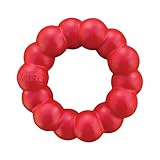
Overview: The KONG Ring is a circular chew toy engineered from the brand’s signature natural rubber, sized for medium-to-large power chewers. Its simple ring shape invites tugging, chewing, and fetching while doubling as a gentle dental tool that massages gums and helps scrape plaque during every chomp.
What Makes It Stand Out: Unlike textured dental toys that can feel gimmicky, the Ring’s uninterrupted smooth surface distributes bite pressure evenly, reducing the risk of slab fractures while still providing satisfying resistance. The 360° profile means there are no weak “handles” for dogs to gnaw off, extending safe usability.
Value for Money: At $9.99 you’re buying months—sometimes years—of supervised chewing from a single, dishwasher-safe piece of American-made rubber. Comparable rubber rings from boutique brands run $15-$20 and rarely outlast the KONG anyway.
👎 Cons
- Aggressive mastiff-types can eventually notch the surface
- And the lack of treat cavity means lower mental stimulation than other KONG shapes
Bottom Line: If your goal is a fuss-free, long-lasting chew that protects teeth instead of grinding them down, the KONG Ring belongs in your toy basket. Rotate it with treat-stuffing toys to keep routine fresh.
7. KONG Flyer – Durable Dog Toy for Outdoor Playtime – Natural Rubber Flying Disc, Dog Toy for Fetch – Safer Disc for Healthy Activity – for Medium/Large Dogs

Overview: The KONG Flyer reimagines the classic plastic disc as a floppy, forgiving ring of natural rubber that sails 40-60 yards yet folds gently when caught by airborne jaws. Designed for medium/large dogs, it trades rigid edges for a soft bite zone, making fetch sessions safer on mouths and human shins alike.
What Makes It Stand Out: The rubber compound gives a “rebound” effect—if your dog whiffs the catch, the disc often springs off the ground for a second grab, keeping excitement high without extra throws. Its flexibility also means it rolls up to stow in a back pocket.
Value for Money: $13.99 lands you a Made-in-USA flyer that survives countless tree impacts and sunscreen-coated hands. One Flyer easily outlives three $5 lawn-brand discs that crack within a week.
Strengths and Weaknesses: Flies true in moderate wind, floats on water, and doubles as a temporary water bowl. Heavy slobber or snow can weigh it down, shortening flight, and power chewers will puncture the center if left unattended—supervision is mandatory.
Bottom Line: For active owners seeking a shoulder-friendly, dog-mouth-friendly alternative to rigid discs, the KONG Flyer is the gold standard. Just don’t expect it to moonlight as a chew toy.
8. KONG Goodie Bone – Classic Durable Natural Rubber Dog Bone, Supports Mental Engagement – Treat Dispensing – Red – for Medium Dogs

Overview: The KONG Goodie Bone is a tried-and-true rubber bone whose patented Goodie Grippers turn each end into a treat-dispensing challenge. Sized for medium dogs, it satisfies two canine imperatives—chewing and foraging—in one bright red package trusted by vets and trainers worldwide.
What Makes It Stand Out: Unlike basic hollow bones, the star-shaped grippers grip biscuits or paste, forcing dogs to excavate rewards gradually. This extends engagement time and reduces calorie intake rate, ideal for fast eaters or rainy-day boredom.
Value for Money: At $11.99 you receive a toy that pulls double duty as both durable chew and mentally stimulating puzzle. Refill costs are pennies (kibble, canned food, carrot sticks), making it one of the cheapest enrichment options per use.
Strengths and Weaknesses: Holds up to aggressive chewing; dishwasher safe; fits most standard treats. Grippers can be too tight for tiny kibble, leading to frustrated puppies, and the straight shape doesn’t bounce unpredictably like the original KONG, so fetch appeal is limited.
Bottom Line: Stuff it, freeze it, hand it over—peace reigns for 20-40 minutes. For households that value calm occupation over airborne fetch, the Goodie Bone is a no-brainer addition to the toy rotation.
9. KONG 2 Pack Large Classic

Overview: The KONG 2-Pack Large Classic delivers two identical snowman-shaped rubber toys—originals that launched the KONG empire—sold together at a modest discount. Each piece features the trademark hollow center and erratic bounce, giving large-breed owners an immediate backup when one is in the freezer or lost under the couch.
What Makes It Stand Out: Buying the twin pack eliminates “KONG downtime.” While one is stuffed, frozen, and gradually emptied, the second can be loaded differently (peanut butter today, canned pumpkin tomorrow) to maintain novelty. The strategy also reduces sibling rivalry in multi-dog homes.
Value for Money: At $23.39 you’re paying roughly $11.70 per Classic versus $13-$14 individually—a 15% savings that compounds when you factor in avoided shipping or extra trips to the pet store.
Strengths and Weaknesses: Legendary durability, vet endorsement, and versatile stuffing options remain. On the flip side, the Large size is too bulky for dogs under 30 lb, and power chewers may still destroy the top nub if left unsupervised—nothing is truly indestructible.
Bottom Line: For committed KONG stuffers, the two-pack is the most economical way to ensure one toy is always clean, stuffed, and ready. Rotate, freeze, repeat—sanity saved.
10. KONG Extreme Tires – KONG’s Most Durable Natural Rubber Chew & Fetch Toy – Treat Dispenser Dog Tire Toy – Pet Supplies for Outdoor & Indoor Play – For Medium/Large Dogs

Overview: The KONG Extreme Tires is a tire-shaped chew and fetch toy molded from the company’s black Extreme rubber—KONG’s toughest formula—targeted at champion destroyers among medium and large breeds. Measuring 4.5″ across, the hollow inner track can be wedged with treats to morph the tire into a rolling puzzle.
What Makes It Stand Out: The sidewalls are engineered to collapse and rebound, offering a satisfying “give” that occupying jaws crave while preventing the catastrophic cracks seen in stiffer toys. On hardwood floors it wobbles unpredictably, sparking chase instincts even without human participation.
Value for Money: $10.99 buys USA-made durability that routinely outlives $20 “indestructible” nylon bones that splinter into sharp slabs—making this one of the lowest cost-per-chewing-hour toys on the market.
Strengths and Weaknesses: Survives heavy gnawing, floats for pool play, and its compact size suits apartment tugging. Treat insertion is shallower than classic KONGs, so high-value rewards fly out quickly, and dirt embedded in the tread needs a bottle-brush scrub.
Bottom Line: For dogs that turn red KONG Classics into confetti, the Extreme Tires delivers the same enrichment with armor-plated toughness. Pair with supervised play and you’ll finally buy a toy that outlasts the receipt.
The KONG Origin Story and Why It Still Matters in 2025
KONG’s rubber roots trace back to 1970, when founder Joe Markham salvaged a suspension bushing off a Volkswagen and discovered his graduate-school German Shepherd loved gnawing the sooty donut. Five decades later, the global dog-owning population has tripled and enrichment is no longer a luxury—it’s prescribed by veterinarians to prevent cognitive decline. The company has iterated through eight rubber recipes and expanded into nine product families, yet the classic asymmetric shape remains unchanged because it mirrors the irregular bones wild canids chew.
Understanding that lineage helps modern shoppers appreciate why KONG is still willing to spend two years field-testing a single durometer tweak when cheaper knock-offs hit Amazon every week. The payoff for you: fewer cracked premolars, reduced separation-anxiety vocalizations, and a toy that survives teething, hurricanes, and the neighbor’s adolescent Rottweiler.
Decoding KONG’s Rubber Spectrum: From Puppy Pink to Extreme Black
Durometer, not color, dictates durability. The puppy formula sits at 70–75 Shore A—pliable enough to dent with a fingernail—whereas the black Extreme hovers around 95, challenging even hyena-level jaws. Between those poles you’ll find senior compounds for geriatric gums, a lavender “calming” variant infused with lavender scent, and the new 2024 “Tuff” marbled line that blends two durometers in one toy for erratic bounce.
When sourcing, ignore marketing adjectives and look for the embossed code on the bottom rim. “K90” equals Extreme; “K45” equals classic red; “K30” signifies puppy. If the toy is sourced from a licensed distributor it will always carry this mark—counterfeits rarely duplicate micro-text.
Size Science: Matching Diameter to Jaw Mechanics
Behavioral studies out of Utrecht University show that dogs spend 40% longer chewing when the toy circumference equals 110% of the distance between the canine tips. Go too small and swallowing risk skyrockets; too large and dogs abandon the project within two minutes. KONG’s nine sizes roughly map to breed averages, but palate width—not body weight—matters most.
Measure your dog’s widest jaw opening with a soft ruler, add 10–15 mm, then consult KONG’s unpublished but widely circulated “Mouth Gape Matrix” available on their vet portal. Mixed-breed adoptees often fall between sizes; in those cases buy both, keep the receipt, and observe which diameter triggers the signature “side-chewing” motion that keeps carnassial teeth engaged.
Classic Stuffing Strategies: From Simple Novice to Gourmet Enrichment
A hollow toy is only as good as its payload. Veterinary nutritionists now recommend the “50-25-25” formula: 50% complete-and-balanced kibble, 25% high-moisture topper, 25% low-calorie produce. Layer textures so dogs must excavate soft purée before reaching the crunchy core; this prolongs licking time which in turn releases serotonin.
Freeze in stages—first a bottom plug of wet food, then a middle layer of kibble plus bone broth, finish with a top seal of Greek yogurt. The graduation prevents a single frozen plug from shooting out like a hockey puck, an outcome that frustrates many beginners and teaches dogs to give up. For obese-prone Labradors, swap calorie-dense fillings for bell-pepper dices and shaved zucchini; the crunch is satisfying at roughly one calorie per tablespoon.
Freezing Techniques for Extended Licking Sessions
Licking releases endorphins, but only if the task requires 10–25 minutes of steady work. Achieving that in a 72 °F kitchen demands a blast freezer set to −10 °C, colder than residential appliances. Commercial-grade units create micro-crystal structures that shave seconds off each lick, stretching duration without turning the plug into an ice cube that fractures teeth.
For home use, pre-chill the KONG in the freezer empty, then load layers no thicker than 1 cm, returning the toy to the freezer between additions. A silicon mini-muffin tray acts as a curing rack, preventing the rubber base from warming against a room-temperature shelf. Rotate three identical toys so a new frozen one is always ready; dogs learn schedules quickly and will harass you during thaw gaps.
Dental Health: Ridges, Bumps, and Gum Stimulation Explained
Periodontal disease affects 80% of dogs by age three. KONG’s raised dental ridges are not decorative—they generate lateral pressure that mimics the scaling action of a dental curette. The key is the 1.5 mm ridge height: tall enough to push gingiva aside but short enough to avoid abrading exposed root surfaces in toy-obsessed power chewers.
Use a dental-specific paste instead of peanut butter; enzymatic gels seep into the ridge troughs, coating molars during chew sessions. A 2023 Journal of Veterinary Dentistry study showed twice-weekly KONG dental sessions reduced plaque scores by 18% over eight weeks—roughly equivalent to brushing every other day, but without the wrestling match.
Mental Enrichment: Turning Mealtime into a Canine Puzzle
Wild dogs spend up to 60% of daylight scavenging. Replacing that with a 30-second bowl slurp is like compressing an eight-hour workday into a TikTok clip—boredom is inevitable. Loading breakfast into multiple KONGs and scattering them around the house reinstates nose-work, increasing olfactory neuron turnover and delaying cognitive aging.
Hide toys at three height levels—floor, chair seat, and windowsill—to vary neck posture and activate different muscle groups. GPS-tracking data from companion-animal studies reveal dogs cover an extra 0.7 km during “treasure hunt” feeding versus bowl feeding, burning roughly 18% more calories without formal walks.
Safety Checkpoints: Wear Patterns That Signal Replacement
Rubber tensile strength drops 30% after 500 hours of cumulative chew time. Inspect weekly for “moon craters”—concave depressions where the outer wall thins to less than 2 mm. Once you can pinch the wall and feel your fingers meet, the structural safety margin is gone. Likewise, surface fissures under 1 mm propagate rapidly under shear stress; replace at first sight.
Discoloration from UV exposure indicates chain scission within the polymer matrix, weakening the toy long before visible cracks appear. If your patio doubles as the play yard, rotate toys indoors every 48 hours or invest in UV-blocking storage bins. Finally, erratic bounce often foreshadows catastrophic splits; if the toy no longer ricochets true, retire it.
Dishwasher vs. Hand-Wash: Sanitation Myths Debunked
High-temp dishwasher cycles (≥ 65 °C) oxidize rubber, accelerating chalking. KONG’s veterinary team recommends low-temp sanitizing cycles capped at 55 °C for no longer than 15 minutes, followed by immediate air-drying to prevent biofilm in the hollow cavity. Skip citrus-based detergents; d-limonene leaches plasticizers and can trigger contact cheilitis around dogs’ lips.
For raw-fed households exposed to Salmonella, dunk in a 1:30 bleach solution for two minutes, rinse thoroughly, then finish with accelerated hydrogen-peroxide wipes that leave no residue. Ultrasonic cleaners marketed for baby bottles achieve 99.9% microbial kill without heat, extending toy life by roughly 20%.
Multi-Dog Households: Preventing Resource Guarding
Resource guarding peaks when high-value toys appear sporadically. Operant-conditioning protocols recommend assigning unique colors to each dog—even if sizes match—so predictability replaces competition. Rotate on a strict timetable visible to the pack: morning freezer session for Dog A, midday for Dog B, post-walk for Dog C.
Use parallel feeding stations at least two metres apart and tether each KONG to a heavy furniture leg with a short carabiner so a dog can’t bolt with the prize. Over time, remove tethers once autoshaping teaches dogs that relinquishing the toy leads to an even tastier refill, extinguishing hoarding behavior.
Traveling With KONG: Airline Regulations and Road-Trip Hacks
Frozen KONGs are TSA-approved carry-on items classified as “frozen solid food,” but they must remain rock-solid at security. Pack in an insulated lunch bag with two ice packs; if thaw is detected, agents may confiscate the toy as a “gel-like substance.”
On road trips, pre-stuff toys with dehydrated mixes, add water at rest stops, then chill in a plug-in car cooler. Silicone travel caps prevent filling leakage in backpacks; they double as mini bowls when inverted. For camping, thread a glow-stick through the top hole to create a neon beacon that prevents midnight barefoot landmines.
Eco-Friendly Disposal and KONG’s Recycling Pilot Program
Agricultural-grade rubber is not curbside-recyclable. KONG’s 2024 take-back pilot now operates in 17 states: mail five worn toys, receive a prepaid label and a 15% discount code. Returned items are cryo-shredded into arena-footing mulch that cushions horse dressage rings, diverting 12 tons annually from landfill.
Consumers outside the pilot can repurpose intact bases as desk succulent planters; drill drainage holes and the natural rubber inhibits root rot. Cut worn walls into jar openers or furniture-floor protectors—one large Extreme yields eight 3 cm discs that outperform commercial felt pads under heavy couches.
Price Psychology: Budget, Mid-Tier, and Premium Explained
Raw Malaysian rubber prices jumped 22% in 2023 after monsoon flooding; retail MSRPs followed. Yet unit cost should be calculated per chew-hour, not sticker price. A $16 Extreme that survives 500 hours costs $0.032 per hour—cheaper than any subscription chew box.
Budget tiers usually reflect packaging simplification rather than compositional compromise. Two-packs sold at warehouse clubs omit retail hang-tags, trimming 30 ¢ off manufacturing cost. Premium “Artist Series” toys boost price 18% for limited-run colors; unless you’re collecting, functional life is identical.
Integrating KONG Into a Behavior-Modification Plan
Separation anxiety cases respond best to 20-minute pre-departure KONG sessions paired with graduated absence drills. Use a baby gate to create visual separation while you remain in the house; incrementally increase distance as cortisol assays (collected via saliva swabs) drop below 0.5 µg/dL.
For reactive dogs, cue a “go to mat” behavior and deliver a frozen KONG as the stimulus dog passes 20 m away. The counter-conditioning protocol converts the sight of a trigger into a predictor of gourmet bliss, flipping the emotional valence. Document thresholds with a smartphone GPS app; progress is measurable when distance decreases without vocalization.
Common Buying Mistakes and How to Avoid Them
Grabbing the same size your neighbor buys is mistake #1. Second is assuming “Extreme” equals indestructible—no toy survives unchecked compulsive chewing. Third is ignoring breed morphology: brachycephalic dogs (pugs, bulldogs) can suffocate in narrow deep hallows; select the “Goodie Bone” profile instead.
Lastly, first-time owners often overfill, translating into calorie blowouts. Vet nutritionists cap enrichment feeding at 10% of daily caloric intake; adjust main-meal portions downward on heavy KONG days. Keep a simple spreadsheet linking stuffing recipes to calorie counts—apps such as Cronometer now include whole-food entries for dogs.
Frequently Asked Questions
1. How do I know when my puppy is ready to graduate from the pink puppy KONG to the classic red?
Switch once adult canine teeth fully erupt and the puppy can dent the pink wall beyond 2 mm within 30 seconds—usually around 7 months for medium breeds.
2. Can I microwave a KONG to soften fillings?
Never expose rubber to microwave heat; it creates hot spots above 100 °C that degrade polymer bonds and risk oral burns. Thaw at room temp or use warm water baths below 60 °C.
3. Are black Extreme KONGs safe for senior dogs with worn molars?
Only if your vet confirms no significant enamel loss. Consider the purple senior formula instead; it offers comparable durability with 20% lower durometer to protect compromised teeth.
4. How many KONGs should I own for one dog?
Minimum of three: one in use, one freezing/dehydrating, one ready-clean. Rotation prevents downtime and sustains novelty, cutting boredom-related destructive behavior by up to 50%.
5. Is there a weight limit for the largest KONG size?
The XX-large suits dogs above 30 kg, but jaw girth, not mass, determines suitability. Measure canine-tip distance; if under 75 mm, drop a size regardless of body weight to avoid over-sizing.
6. What’s the safest way to remove an overly compressed KONG from a cramped airline carrier?
Use a plastic spoon handle to break suction at the small hole, then twist laterally—not vertically—to avoid jabbing gums or stressing the temporomandibular joint in tight spaces.
7. Can KONG stuffing replace a meal?
Yes, provided the blend meets WSAVA nutrient profiles. Use a gram scale to hit target calories and balance macros; many DIY recipes omit trace minerals—add a commercial vitamin premix if substituting more than one meal daily.
8. My dog destroys every toy in minutes; should I skip straight to the black Extreme?
First confirm that the size is correct; undersized toys invite gnaw-to-destroy behavior. If sizing is right, escalate to black, but pair with impulse-control training since no polymer can out-engineer unchecked arousal.
9. Are scented KONGs (lavender, vanilla) safe for scent-work dogs?
They’re non-toxic but can contaminate target odors in competitive nose-work. Purists should stick with classic unscented red or black, reserving scented variants for non-training environments.
10. What’s the easiest way to travel internationally with pre-stuffed KONGs?
Dehydrate stuffing inside the toy, then rehydrate with warm water at your destination. Dry weight avoids customs restrictions on meat imports and eliminates thawing headaches during multi-leg flights.