Airtight Cat Food Container: 10 Best Options to Keep Food Fresh & Pests Out [2026]
Affiliate disclosure: Paws Dynasty is reader-supported. We may earn a commission when you buy through links on our site, at no extra cost to you. As an Amazon Associate, we earn from qualifying purchases. Learn more about our affiliate disclosure
In this guide 17 sections
It’s 3 a.m. and you’re jolted awake by the unmistakable sound of your cat knocking over the food bag—again. By sunrise you find kibble scattered across the pantry and a parade of tiny ants marching toward the mother lode. If this scene feels familiar, you’re not alone. Dry cat food can lose 30 % of its antioxidant value within two weeks once the bag is opened, while household pests can sniff out those fatty acids in hours. The simplest, most cost-effective line of defense? An airtight cat food container engineered to lock in nutrition and lock out everything from pantry moths to humidity.
Below, you’ll learn exactly what separates a “pretty” bin from a genuinely hermetic fortress, how to decode marketing jargon like “vapor-lock” and “silicone seal,” and which design tweaks make the difference between a container that lasts a decade and one that cracks after a winter in the garage. No rankings, no product placements—just the hard science and insider know-how you need to shop smarter in 2025.
Top 10 Airtight Cat Food Container
Quick picks
10 picks comparedAdvertiser disclosure: We may earn a commission from links on this page, at no extra cost to you. How we review





Prices and availability can change. Check Amazon for the current price and details.
Detailed Product Reviews
1. Gamma2 Vittles Vault Pet Food Storage Containers – Sealed Dog and Cat Food Storage Container, Fits up to 25lbs, Made in the USA – [12″L x 13.75″H]
Overview: Gamma2’s Vittles Vault is a rugged, USA-made airtight container engineered to keep 25 lbs of pet food farm-fresh. The heavy-duty HDPE pail uses a patented Gamma Seal lid that spins on/off with a reassuring “whoosh,” locking out air, moisture and pests.
What Makes It Stand Out: The threaded, double-gasket system is unique among food bins—once closed, you can smell literally nothing, proving the seal is absolute. The squat, square-shouldered shape also resists crushing in garages or barns, and the food-grade plastic is BPA-free and UV-stable.
Value for Money: Mid-priced for its capacity, the Vault pays for itself by stopping food spoilage and pest losses. Users routinely report kibble staying crisp for months, meaning fewer stale-bag throwaways.
Strengths and Weaknesses: Strengths—airtightness you can hear, chew-proof plastic, stackable rim, and true 25 lb capacity even for large kibble. Weaknesses—no wheels, slightly bulky footprint for small pantries, and the opaque body forces you to open it to check levels.
Bottom Line: If you buy pet food in bulk and want “set-it-and-forget-it” freshness, the Vittles Vault is the most bullet-proof choice short of a metal drum. Highly recommended for multi-pet homes or anyone storing in garages/barns.

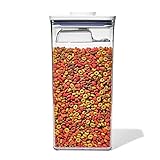
2. OXO Good Grips Pet POP Container – 6.0 Qt/5.7 L with Half Scoop, Ideal for up to 6.5lbs of Dog Food or 4.5lbs of Cat Food, Airtight Dog and Cat Food Storage Container, BPA Free, Clear
Overview: OXO’s 6 Qt POP Container brings modern pantry aesthetics to pet storage. The square, crystal-clear BPA-free plastic shows off kibble while the signature pop-button lid creates an audible airtight seal and doubles as a handle for the included ½-cup scoop.
What Makes It Stand Out: OXO’s one-touch button is addictively easy—press to seal, press again to open—making daily feeding a one-handed job. The modular square design lines up like Lego on shelves, and the curved interior corners let every last crumble slide out.
Value for Money: At $24.99 it’s pricier per quart than bulk tubs, but you’re paying for precision engineering, a lifetime warranty, and a scoop that docks neatly inside the lid so you never misplace it.
Strengths and Weaknesses: Strengths—space-saving footprint, crystal visibility, dishwasher-safe body, and satisfying button seal. Weaknesses—only 6.5 lb capacity (fine for cats, small dogs), lid must be fully opened each time (no pour spout), and the button can trap kibble dust if over-filled.
Bottom Line: Perfect for apartment dwellers or cat owners who want countertop-worthy storage without sacrificing freshness. Buy one for food and another for treats; they’ll stack beautifully and still cost less than a single “smart” feeder.

3. IRIS USA Airtight Pet Food Storage Container with Wheels, Black, 30 lb Capacity – BPA-Free Clear Plastic Bin with Snap-Lid Seal to Keep Kibble, Pellets or Seeds Fresh for Dogs, Cats and Birds
Overview: IRIS USA’s 33 Qt wheeled bin is the SUV of pet storage: big, black, and ready to roll. The clear BPA-free body holds a full 30 lb bag of kibble, while the snap-lock lid with foam gasket keeps humidity and ants at bay.
What Makes It Stand Out: Four swiveling casters click on in seconds, letting you glide the bin from pantry to feeding station without dead-lifting 30 lbs. The low, rectangular profile also slides under many counters, something tall kitchen trash cans can’t manage.
Value for Money: At $23.99 it undercuts most competitors by $5–10 while adding wheels—an undeniable bargain for anyone who buys large bags and hates dragging them across the house.
Strengths and Weaknesses: Strengths—smooth roll, tight snap latches, wide mouth for easy scooping, and translucent sides for at-a-glance inventory. Weaknesses—casters can pop off on rough garage floors, lid requires two-hand pressure to seal, and the black color shows dust quickly.
Bottom Line: If you need serious capacity without serious lifting, this is the bin to beat. Great for multi-dog households or owners with mobility issues; just click on the wheels and push.

4. IRIS USA Dog Food Storage Container, 30 lbs & 11 lbs Combo, Cat Food Storage Container, Dog Treat Container, Airtight, Stackable, 2-Cup Scoop, Wheels, Easy Mobility, Black
Overview: IRIS delivers a two-tier food system: a 30 lb base bin on wheels and a 11 lb topper that snaps securely above it. Both containers share airtight snap-lock lids, a shared 2-cup scoop, and a unified footprint that saves floor space.
What Makes It Stand Out: The stack-and-seal design lets you segregate dog and cat food, kibble and treats, or regular and prescription diets without buying two separate units. Yet the whole tower still rolls as one, thanks to the castered base.
Value for Money: At $29.99 for 41 Qt of total storage plus a scoop and wheels, the combo costs less than buying two individual IRIS bins—effectively getting the small bin free.
Strengths and Weaknesses: Strengths—space-saving vertical storage, clear bodies for quick level checks, scoop stores inside lid, and sturdy interlock that won’t topple when rolling. Weaknesses—tower height (24.6″) may not fit under some shelves, and you must unstack to open the lower bin.
Bottom Line: Ideal for multi-pet homes that need segregated storage but hate clutter. Roll the whole pantry to the bowl, feed both species, and roll it back—one unit, zero hassle.

5. IRIS USA Dog Food Storage Container, 10 Pound, Airtight Seal and Buckle, Easy 1 Hand Opening Hinged Lid, Versatile, Space Saving Compact Size, Pearl/Black
Overview: IRIS’s 10 lb “mini vault” is a lunch-box-sized container for small pets or short-term storage. The pearl-tinted body and black hinged lid give it a modern look that won’t scream “pet supplies” on a kitchen shelf.
What Makes It Stand Out: A single-handed buckle flips the hinged lid 180°, letting you scoop with the same hand—perfect when you’re holding a wriggling Chihuahua. At under 13″ tall it tucks into cabinets or RV cupboards where bigger bins simply won’t go.
Value for Money: At $14.99 it’s the cheapest airtight option from a major brand, costing about the same as two disposable cereal bins but lasting for years.
Strengths and Weaknesses: Strengths—one-hand operation, compact footprint, translucent sides, BPA-free, and Made in USA. Weaknesses—only 10 lb capacity means frequent refills for medium dogs, and the thin plastic flexes if you over-tighten the buckle.
Bottom Line: Buy this for cats, small-breed dogs, or as a dedicated treat jar. It’s inexpensive, idiot-proof, cute enough for the countertop, and the easiest lid mechanism in the lineup.

6. 12.75 Quart WeatherPro® Airtight Pet Food Container, Gray
Overview: The 12.75 Quart WeatherPro® Airtight Pet Food Container is a straightforward, no-frills storage solution designed to keep dry pet food fresh while offering visibility and convenience. Made in the USA and BPA-free, it holds approximately 10 pounds of kibble.
What Makes It Stand Out: Its airtight snap-lock latches and translucent body are the key highlights. The clear design lets you monitor food levels at a glance, and the wide top makes scooping and cleaning easier than with narrow-mouthed bins.
Value for Money: At $18.99, this container offers solid functionality for the price. It’s not fancy, but it delivers on its core promise: keeping food fresh and accessible without breaking the bank.
Strengths and Weaknesses: Strengths include its airtight seal, lightweight design, and clear body for easy monitoring. It’s also stackable and comes in multiple sizes. Weaknesses include a somewhat flimsy latch mechanism that may wear over time and a shape that can be awkward to fit in tight pantry spaces.
Bottom Line: If you want a reliable, budget-friendly container that does the job without flair, this is a solid pick. It’s practical, safe, and user-friendly—ideal for pet owners who value function over form.

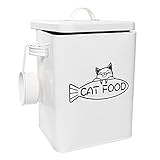
7. Vumdua Dog and Cat Food Storage Container, Farmhouse Pet Food Containers with Lid and Dry Food Scoop, Durable Airtight Great Gift for Pet Owners
Overview: The Vumdua Farmhouse Pet Food Storage Container blends rustic charm with utility. Made from powder-coated galvanized steel, it holds 5–6 pounds of dry food and includes a matching metal scoop.
What Makes It Stand Out: Its farmhouse aesthetic is a major draw. Unlike plastic bins, this metal container resists odors and wear, and the included scoop hooks neatly on the side for convenience.
Value for Money: At $22.99, it’s slightly pricier than plastic alternatives, but the durable build and stylish design justify the cost for those who want their pet supplies to look good on display.
Strengths and Weaknesses: Strengths include its sturdy metal construction, airtight lid, and attractive design. It’s also easy to wipe clean. Weaknesses include its smaller capacity and lack of transparency, so you’ll need to open it to check food levels.
Bottom Line: This container is perfect for pet owners who want a durable, stylish storage option that complements kitchen or pantry décor. It’s not the biggest, but it’s built to last and looks great doing it.

8. Cat Food Storage Container with Scoop – 5-7 lb (25 Cup) Capacity Metal Cat Food Container with Airtight Bamboo Lid and Metal Scoop – Airtight Pet Food Storage Containers 5 lb – 7 lb Kibble Container
Overview: This 5–7 lb metal cat food container combines modern design with functional storage. Featuring a bamboo lid and matte black finish, it includes a 1/3-cup metal scoop and holds about 25 cups of kibble.
What Makes It Stand Out: The bamboo lid with a rubber seal adds a premium touch, while the sleek metal body resists wear and odor absorption. The included scoop is conveniently stored under the lid.
Value for Money: At $29.99, it’s on the higher end for small containers, but the materials and design elevate it. It’s ideal for those who want a countertop-worthy storage piece.
Strengths and Weaknesses: Strengths include its airtight seal, stylish appearance, and durable metal build. The wide opening makes scooping easy. Weaknesses include its limited capacity and the need for hand washing.
Bottom Line: If you’re willing to pay a bit more for a container that looks good and performs well, this is a top-tier choice. It’s compact, elegant, and functional—perfect for style-conscious pet owners.

9. Ctomche Pet Food Storage Container Airtight Cat Food Container with Measuring Cup and Pour Spout Portable Pet Food Dispenser for Cat Transparent Leakproof Cat Food Container for Travel 2.8L
Overview: The Ctomche Pet Food Storage Container is a compact, travel-friendly option with a pour spout and measuring cup. Holding 2–3 lbs of food, it’s designed for convenience and portability.
What Makes It Stand Out: The pour spout and included measuring cup make feeding on the go or at home cleaner and more precise. Its tall, slim design fits easily in cabinets or pantries.
Value for Money: At $21.49, it’s slightly pricey for its size, but the added features—like the spout and cup—add value for those who prioritize ease of use and portion control.
Strengths and Weaknesses: Strengths include its airtight seal, BPA-free transparent body, and compact footprint. The pour spout is a unique and practical feature. Weaknesses include limited capacity and a lid that may be tricky to secure tightly over time.
Bottom Line: This container is ideal for small-breed owners or those who need a secondary, portable storage option. It’s not for bulk storage, but it excels in convenience and control.

10. ANVS Airtight Collapsible Pet Food Container With Casters, Scoop and Small Container – Keeps Up To 20lbs Dry Dog Food Fresh (Grey)
Overview: The ANVS Airtight Collapsible Pet Food Container is a versatile, space-saving solution that holds up to 20 lbs of dry food. It includes a scoop and small inner container, plus caster wheels for mobility.
What Makes It Stand Out: Its collapsible design is a game-changer for small spaces. The added wheels and bonus scoop make it highly functional for large-volume storage.
Value for Money: At $21.99, this container offers excellent value. The combination of capacity, portability, and collapsibility makes it a standout in its price range.
Strengths and Weaknesses: Strengths include its large capacity, airtight seal, and collapsible build. The wheels are a nice touch for easy movement. Weaknesses include a slightly flimsy feel when collapsed and a lid that may not seal as tightly over time.
Bottom Line: For pet owners with limited space or large bags of food, this is a smart, budget-friendly choice. It’s practical, portable, and surprisingly spacious—ideal for multi-pet households.
Why Airtight Storage Matters for Feline Health
Oxidation doesn’t just make kibble stale; it degrades taurine, thiamine, and the very fats that keep your cat’s coat glossy. Once those nutrients break down, no amount of “complete and balanced” labeling on the bag can restore them. Airtight storage slows the oxidative cascade by limiting oxygen exposure to 1–2 %, roughly the same standard used for human-grade emergency food caches.
The Science of Kibble Degradation
Lipid Oxidation and Rancidity
When oxygen attacks the polyunsaturated fats sprayed on kibble during manufacturing, it spawns malondialdehyde—an off-smelling compound cats instinctively reject. Rancid fats also create free radicals that can stress feline kidneys over time.
Vitamin Loss Timeline
Vitamin A and the B-complex group are the first casualties, dropping 10–15 % every week after the bag is opened at room temperature. Airtight containers with UV-blocking pigments can stretch that loss to less than 5 % per month.
Pest Contamination Risks
Indian meal moth larvae can chew through standard polyethylene in under 48 hours, leaving behind silk webbing and fecal pellets that harbor salmonella. Airtight containers made from polypropylene or stainless steel deny pests both scent and access.
Key Features to Look for in 2025
Hermetic Seals vs. Snap Latches
Gaskets made from food-grade silicone achieve a true hermetic seal (≤0.2 in³/hr air exchange). Snap-latch lids may feel tight, but they often allow 5–10 times more airflow—enough for odors to escape and pests to detect.
FDA-Approved Food-Grade Plastics
Look for resin identification codes #2 (HDPE), #4 (LDPE), or #5 (PP). Avoid #7 polycarbonate unless the label explicitly states “BPA-free” and “phthalate-free,” as some linings still leach endocrine disruptors at cat-food pH levels.
UV-Blocking and Opaque Walls
Light accelerates oxidation more than oxygen itself. Containers tinted with carbon-black or titanium-dioxide pigments block 98 % of UV-A and UV-B, extending shelf life by up to 40 % in sunny kitchens.
Stackability and Space Efficiency
Modular designs with recessed lids let you stack 25-lb bins safely up to three high—critical for apartment dwellers—without compromising seal integrity.
Sizing Guidelines: Matching Container to Cat Count
A single indoor cat consumes roughly 6–8 oz of dry food daily. Multiply by 30 days, then add 10 % for spillage and density variations: you’ll need a 6–7 qt minimum. Multi-cat households should size up in 5 qt increments to avoid opening the lid twice a day, which introduces oxygen spikes.
Material Deep Dive: Plastic vs. Stainless vs. Glass
Plastic is lightweight and affordable, but it micro-scratches over time—harboring rancid fat residues. Stainless steel resists acids and claws, yet can dent if dropped. Glass is chemically inert and dishwasher-safe, but weighs 2.5× more—impractical for 30-lb bags unless you opt for slim, reinforced jars with silicone sleeves.
Seal Technologies Explained
Silicone Gaskets
Compression-set resistance is key. Premium gaskets rebound to 90 % of original thickness after 10,000 lid closures, maintaining a 0.02 in gap-free seal.
One-Way CO₂ Valves
Originally designed for coffee, these valves allow off-gassing of natural kibble volatiles without letting air in—useful if you buy freshly extruded small-batch food.
Double-Rim Locking Lids
A secondary rim channels condensation away from the gasket, preventing mildew in humid climates like Florida or Louisiana.
Mobility: Wheels, Handles, and Ergonomic Design
A fully loaded 25-lb container tops 30 lbs. Look for recessed wheels with a ¼-inch axle diameter; anything smaller will buckle under dynamic load. Soft-grip, nylon-reinforced handles reduce wrist torque by 18 % compared with rigid plastic.
Smart Features: Sensors, Apps, and Automation
2025 models integrate Bluetooth scales that log every scoop, pushing data to vet-approved apps that track caloric intake. Some lids sport NFC tags; tapping your phone records batch codes for recall alerts. Battery life now exceeds 18 months thanks to low-power e-ink screens.
Cleaning and Maintenance Best Practices
Disassemble the gasket and spout weekly; lipids migrate into micro-crevices and turn rancid even in “clean” bins. Use a 1:10 diluted chlorine rinse followed by a 200 ppm quaternary-ammonium sanitizing bath—both FDA-approved for food-contact surfaces. Air-dry upside-down for 24 h to prevent trapped moisture.
Budget vs. Premium: Where Extra Dollars Go
Premium containers invest in virgin (not recycled) resins free of plasticizers, plus gasket formulations tested to ASTM D2000 standards. Budget bins may share the same outer shape but substitute TPE gaskets that harden below 40 °F, losing seal tension in unheated garages.
Environmental and Sustainability Considerations
Seek brands offering take-back programs; polypropylene is recyclable (#5), but only 3 % of curbside programs accept it. Post-consumer stainless steel contains up to 70 % recycled content and is infinitely reusable. Glass jars with silicone sleeves eliminate plastic entirely—ideal for zero-waste households.
Common Buyer Mistakes to Avoid
Over-Sizing
Bigger isn’t better if you empty a 6-lb bag every three weeks; headspace oxygen skyrockets. Match container volume to your refill cycle plus one week.
Ignoring Temperature Swings
Storing bins against exterior garage walls subjects kibble to 30 °F–90 °F swings, accelerating fat seepage and vitamin loss even with perfect seals.
Forgetting the Scoop
A scoop left inside introduces fresh oxygen and oils each time you open the lid. Opt for tethered, over-the-edge scoop hangers that suspend the cup above the kibble line.
Integrating Containers Into Pet-Feeding Stations
Slide-under designs (≤11 in height) fit below laundry-room shelves, while flip-top styles double as feeding platforms for senior cats—elevating bowls 4–6 in reduces cervical strain. Choose matte finishes to minimize reflection anxiety in skittish felines.
Traveling and Camping With Airtight Storage
TSA allows sealed pet-food containers in carry-on if the gasket is intact. Look at the 7 qt size—large enough for a long weekend, small enough to fit under an airline seat. Campers should pair stainless models with bear-proof latches; odor containment keeps raccoons and coyotes at bay.
Frequently Asked Questions
How often should I replace the silicone gasket in my cat food container?
Every 18–24 months, or sooner if you notice permanent compression dents or a loose lid fit.
Can I store wet and dry food in the same airtight bin?
No—residual moisture from wet food introduces microbial risk. Use separate, washable inserts if you must house both.
Is it safe to keep the container in an unheated garage during winter?
Only if the plastic is rated to −20 °F; otherwise gaskets may stiffen and crack, breaking the seal.
Do airtight containers eliminate the need for original bag barcodes?
Keep the barcode and batch number inside the bin or snap a photo; you’ll need it for recall notifications.
Are stainless steel containers dishwasher-safe?
Yes, but remove the silicone gasket first—high heat can warp it in under 30 minutes.
How do I remove the plastic smell from a new container?
Wash with a 50:50 vinegar-water solution, rinse, then leave overnight with a bowl of activated charcoal.
Can pests chew through silicone seals?
Rarely; silicone’s Shore A 60 hardness exceeds the bite tolerance of most rodents, but keep the bin off the floor for extra security.
What size container do I need for a 22-lb bag?
Allow 10 % headspace for easy pouring—opt for a 28–30 qt capacity.
Do Bluetooth-enabled bins pose any radiation risk to my cat?
No—BLE (Bluetooth Low Energy) emits <1 mW, far below the 10 mW limit considered safe for pets.
Are tinted containers better than clear ones for long-term storage?
Absolutely—tinting blocks UV light that accelerates vitamin degradation, keeping food fresher up to 40 % longer.
The short version
Still deciding? Start with our #1 pick.
Gamma2 Vittles Vault Pet Food Storage Containers - Sealed Dog and Cat Food Storage Container, Fits up to 25lbs, Made in the USA - [12
Ranked first out of 10 picks in this guide.

Keep reading
More in Cat Food

Adding Water To Dry Cat Food: Top 10 Benefits for Hydration & Health (2026)
If your feline friend turns up her nose at the water bowl but gobbles down kibble…
![Low Fiber Cat Food: 10 Best Easily Digestible Options for Sensitive Stomachs [2026]](https://m.media-amazon.com/images/I/51oAn2MhVhL._SL400_.jpg)
Low Fiber Cat Food: 10 Best Easily Digestible Options for Sensitive Stomachs [2026]
Does your feline friend sprint to the litter box after every meal, leave behind unacceptably soft…

Unveiling the Shelf Life: How Long Does Canned Cat Food Really Last?
That half-empty can of gourmet salmon pâté has been sitting in your refrigerator for… well, you’re…